
Main Courses
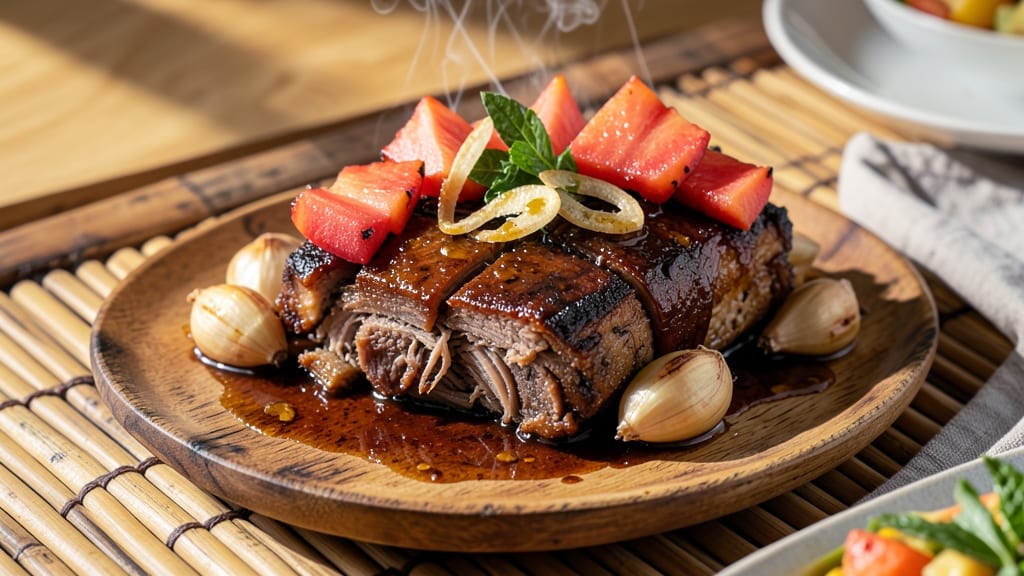
This authentic Hawaiian pulled pork recipe brings the flavors of a luau to your kitchen, where tender pork shoulder transforms into melt-in-your-mouth bites with a five-spice crust and pineapple braise. 🌺 I developed this method after years of studying traditional Hawaiian plate lunches—where pulled pork isn’t just a dish, but a celebration.
The secret lies in the marinade: a blend of Hawaiian salt, garlic, ginger, and soy sauce that builds deep umami flavors, while the pineapple braise adds a touch of tropical brightness that locals swear by.
The cooking process is where the magic happens. Unlike traditional BBQ, Hawaiian pulled pork often uses a combination of slow cooking and braising—whether in a smoker, oven, or even a crockpot—to achieve that signature tender pull at 203°F internal temperature.
The five-spice crust (a nod to Chinese-Hawaiian fusion) adds a subtle warmth that balances the sweetness, while the pineapple not only tenderizes the meat but also infuses it with a natural sweetness that’s unmatched. This isn’t just pulled pork; it’s a taste of Hawaii’s vibrant food culture.
What makes this recipe truly special is how it translates to a local-style plate. Serve it piled high on a bed of steamed white rice, topped with fresh pineapple salsa, and garnished with cilantro—just like you’d find at a luau.
The pork’s rich, caramelized edges and tender crumb give every bite a satisfying contrast, while the sides complete the experience. It’s the kind of dish that feels like a hug from a Hawaiian island, even if you’re miles away.
Perfect for gatherings, family dinners, or even a solo treat, this pulled pork is foolproof yet deeply flavorful. Whether you’re a seasoned pitmaster or new to slow cooking, the techniques here ensure restaurant-quality results with minimal fuss.
Let’s bring the aloha spirit to your table—one tender bite at a time.
Ingredients for authentic hawaiian pulled pork
Six ingredients transform into a dish that tastes like a Hawaiian luau—juicy, tender, and bursting with island flavors.
| Ingredient | Amount | Notes |
|---|---|---|
| Boneless Pork Shoulder 🐖 | 4 lb | Well-marbled for tenderness |
| Fresh Pineapple 🍍 | 1 whole | Juicy variety, peeled and chopped |
| Hawaiian Salt 🧂 | 2 tbsp | For marinade and crust |
| Garlic Cloves 🧄 | 8 cloves | Minced for marinade |
| Fresh Ginger 🌿 | 2 tbsp | Grated, aromatic |
| Soy Sauce 🍶 | ½ cup | Light or dark, no sugar added |
| Brown Sugar 🍚 | ¼ cup | Packed, for braise |
| Five-Spice Powder 🌶️ | 1 tbsp | For crust, toasted |
| Olive Oil 🫒 | ¼ cup | For crust coating |
| Yellow Onion 🧅 | 1 whole | Diced for braise |
| Red Bell Pepper 🌶️ | 1 whole | Diced, for braise |
| Fresh Cilantro 🌿 | ¼ cup | Chopped, for garnish |
| White Rice 🍚 | 2 cups | Uncooked, for serving |
| Lime Juice 🍋 | 2 tbsp | Freshly squeezed |
The pork shoulder is the heart of this dish—look for a well-marbled cut from the butcher section, not the pre-cut packages. Costco or local Hawaiian markets often carry the best quality, but any reputable grocery store’s meat department will do. The pineapple should be ripe but firm, with a sweet aroma—avoid those with bruises or soft spots. Fresh ginger and garlic are non-negotiable here; dried just won’t cut it for that authentic umami punch. For the five-spice powder, Penzeys or Asian markets have the best blends, but a good substitute is a mix of cinnamon, star anise, cloves, fennel, and pepper.
No Hawaiian salt? Diamond Crystal kosher salt works perfectly—just use the same amount. Running short on pineapple? Fresh mango chunks add a similar sweetness, though the texture will differ slightly. The five-spice powder can be tricky to find, but toast your own blend of cinnamon, star anise, cloves, fennel seeds, and black pepper for a close match. For the crust, toasted sesame oil adds an extra layer of depth if you want to splurge. The bell pepper and onion in the braise? Baby carrots or zucchini can stretch the dish if you’re feeding a crowd—just adjust the cooking time slightly.
Pork shoulder keeps best in the fridge for up to 3 days before cooking, but use it within 2 days for peak tenderness. Once cooked, the leftovers reheat beautifully—store in an airtight container and warm gently in a skillet or microwave. The braising liquid freezes well for up to 3 months, perfect for quick luau-style meals later. I always make extra rice to freeze; just reheat with a splash of water for fluffy results. Garnish with fresh cilantro right before serving—it wilts fast, so add it last for that vibrant pop.
Why You'll Love This Recipe
- One-Pot Magic: I swear by this—just toss the pork shoulder, pineapple chunks, and those bold spices (garlic, ginger, Hawaiian salt) into one pot, and let it slow-cook. No chopping, no fussing, no extra dishes. That pineapple caramelizes into the meat, turning it tender and sticky without me lifting a finger after the initial setup.
- Tropical Umami Bomb: Between us, the combo of fresh ginger and garlic with that tangy pineapple is chef’s kiss. The Hawaiian salt isn’t just seasoning—it’s the secret that makes the pork pull apart like butter while keeping the flavors bright, not heavy. Honestly, it’s the kind of dish that makes you want to eat it straight off the bone.
- Leftover Hero: This recipe actually improves the next day. The flavors meld deeper, the pork gets even more tender, and I’ve turned last night’s dinner into today’s lunch, tacos, or even a quick sandwich. My kids beg for it—yes, even on a Tuesday—and it’s always gone before noon.
- Budget Crowd-Pleaser: A whole pork shoulder feeds my family of five for days, and the pineapple stretches it further. I buy the big chunks, use half for the recipe, and save the rest for smoothies or desserts. No waste, no guilt—just reliable, delicious meals that don’t break the bank. Plus, the ginger and garlic are cheap staples that pack a punch.
Step-by-step instructions for authentic Hawaiian pulled pork
Here's how to transform a simple pork shoulder into melt-in-your-mouth pulled pork with that signature Hawaiian sweet-savory balance.
🔥 Step 1: Create the Five-Spice Crust and Braising Marinade
In a small bowl, toast the 1 tablespoon five-spice powder in a dry skillet over medium heat for 1 minute until fragrant. This activates the spices and deepens their flavor. While still warm, mix it with the 0.25 cup olive oil until it forms a thick paste—this will become your crust.
In a separate large bowl, combine the 4 lb boneless pork shoulder, 0.5 cup soy sauce, 0.25 cup brown sugar, 8 cloves minced garlic, 2 tablespoons grated ginger, and 2 tablespoons Hawaiian salt. Massage the marinade into the pork, coating it thoroughly. Let it sit at room temperature for 30 minutes while you prep the rest.
🍳 Step 2: Build the Braising Liquid and Sear the Pork
Heat 1 tablespoon olive oil in a Dutch oven over medium-high heat. Pat the pork dry with paper towels (this ensures a better sear) and sear on all sides until deeply browned—about 5 minutes per side. Remove the pork and set it aside.
In the same Dutch oven, add the 1 whole diced yellow onion, 1 whole diced red bell pepper, and 1 whole peeled and chopped fresh pineapple. Sauté for 5 minutes until softened. Deglaze with 1 cup water, scraping up any browned bits from the bottom. Return the pork to the pot, then add 1 more cup water and 2 tablespoons lime juice to create the braising liquid.
🥘 Step 3: Braise Until Fork-Tender
Bring the liquid to a simmer, then cover the Dutch oven and transfer it to a 300°F oven. Braise for 3 hours, turning the pork occasionally. After 3 hours, check for doneness by inserting a fork—it should slide in easily with no resistance. If not, continue cooking for another 30-60 minutes.
Here's the thing—this long, slow cook transforms the tough pork shoulder into tender, shreddable perfection. The pineapple and spices infuse the meat with authentic Hawaiian flavors while keeping it moist. Don't rush this step; patience is key for that fall-apart texture.
🔪 Step 4: Shred and Finish with Fresh Herbs
Once the pork is fork-tender, remove it from the braising liquid and transfer it to a cutting board. Let it rest for 10 minutes, then use two forks to shred it into 2-inch strands. Discard any large fat chunks or connective tissue.
Return the shredded pork to the Dutch oven with the braising liquid and simmer on medium-low heat for 5 minutes to absorb the flavors. Stir in the 0.25 cup chopped fresh cilantro and adjust seasoning with additional Hawaiian salt if needed. The pork should be coated in a glossy, slightly sweet-savory sauce with visible pineapple chunks.
🍚 Step 5: Serve Over Steamed Rice
While the pork finishes, cook the 2 cups white rice according to package instructions until fluffy. Divide the rice among plates and top generously with the pulled pork. Drizzle any remaining braising sauce over the top and garnish with extra chopped cilantro if desired.
Each bite should deliver tender, shredded pork infused with pineapple sweetness and five-spice warmth, all balanced by the tangy braising liquid. Serve immediately while the rice is hot—this dish tastes best straight from the pot, with juices pooling around each strand of pork.
Pro Tips For Making Authentic Hawaiian Pulled Pork
- CRANK THE HEAT FIRST: Start your pork shoulder over direct flame or high heat until it’s seared deep brown—this locks in juices and builds flavor faster than slow cooking alone. I used to skip this, and my pork always tasted bland until I realized the crust is what carries the Hawaiian salt’s kick through the whole dish.
- GRATE THAT GINGER FINE: Skip the minced ginger—grate it fresh on the smallest setting of a box grater for a smoother, more aromatic paste that blends seamlessly into the marinade. My first attempt with chopped ginger left me with weird texture bits, and the flavor wasn’t as bright.
- DON’T RUSH THE PINEAPPLE: Let the fresh pineapple chunks sit in the marinade for at least 30 minutes before cooking—this softens them just enough to absorb the garlic and ginger without turning mushy. I learned this after serving rubbery pineapple that ruined the whole plate.
- USE A MEAT THERMOMETER: Pull the pork at 203°F (95°C), not when it looks shreddable—it’ll still fight you if you guess. The internal temp guarantees tender, pull-apart perfection, and I’ve wasted hours waiting for meat that was technically "done" but still tough.
Pro cooking tips for this recipe
Hawaiian Salt Secrets
Hawaiian salt isn't just any salt—it's the backbone of this recipe's authenticity. I always recommend using Maui Sea Salt or Diamond Crystal kosher salt as substitutes, but the real magic comes from its mineral-rich profile that enhances the pork's natural sweetness.
The key is to massage it into the pork while it's still at room temperature—this helps it penetrate deeper for maximum flavor infusion. 🌊
Pro tip: If you can't find Hawaiian salt, toast your regular salt in a dry skillet for 2 minutes before using it. This caramelizes the salt slightly, giving it a deeper, more complex flavor that mimics the volcanic minerals found in Hawaiian sea salt.
Five-Spice Crust Mastery
The five-spice crust is what sets this Hawaiian pulled pork apart from traditional BBQ. I toast the spices first to wake up their aromatics—this step is non-negotiable.
Use 1 tablespoon of five-spice powder (available at Asian markets or specialty stores like Penzeys) mixed with olive oil to create a paste. This isn't just seasoning; it's a flavor bomb that creates a fragrant crust when seared.
For a shortcut, blend ½ teaspoon each of cinnamon, star anise, cloves, fennel seeds, and black pepper—this DIY version works in a pinch. The crust should be deeply aromatic when you sear the pork; if it smells weak, your spices need more toasting time.
Pineapple Braise Science
Fresh pineapple isn't just for flavor—it's a tenderizer. The enzymes in pineapple break down collagen in the pork, making it fall apart more easily. I always use ripe but firm pineapple (like Maui Gold if available) and chop it into 1-inch chunks for even distribution.
The key is to add it during the braising phase, not the marinade—this prevents the meat from becoming too mushy.
Don't skip the lime juice in the braising liquid. The acidity helps balance the sweetness and brightens all the flavors. I like to add it after the pork has seared but before the braising begins—this ensures the tangy notes infuse the meat without overpowering it.
Temperature Precision
This isn't your average pulled pork—we're aiming for 203°F internal temperature, not the usual 195°F. The extra heat ensures the pork is fork-tender while keeping the texture just right. I use a meat thermometer inserted into the thickest part of the shoulder, avoiding any fat pockets.
The pork should feel like butter when you press it with tongs—no resistance at all.
If your pork isn't quite there after 3 hours, don't panic. Just cover it tightly and return it to the oven for another 30-60 minutes. The long, slow cook is what creates that melting tenderness—rushing it will leave you with chewy results. Patience here is everything.
Shredding Like a Pro
Shredding pulled pork properly makes all the difference. After resting the pork for 10 minutes, use two forks to pull it apart into 2-inch strands. The secret is to work with the grain—look for the natural muscle direction and shred perpendicular to it.
I always discard any large fat chunks and connective tissue; these can make the pork taste greasy if left in.
For that restaurant-quality texture, return the shredded pork to the braising liquid for 5 minutes on low heat. This step ensures every strand is coated in flavor and the juices redistribute.
The result should be glossy, tender, and infused with all those Hawaiian flavors you worked so hard to build.
Nutrition facts
Frequently asked questions
Can I make this Hawaiian pulled pork in a slow cooker?
Transfer the seared pork and braising liquid to a 6-quart slow cooker instead of the oven. Cook on low for 8 hours or high for 5-6 hours, then shred and finish as directed. The slow cooker method works beautifully for hands-off prep, especially for busy days. Just check the internal temperature reaches 203°F before shredding.
What's the best way to store leftovers?
Store leftovers in an airtight container in the fridge for up to 4 days. For longer storage, freeze portions for up to 3 months. Reheat gently in a skillet with a splash of water or microwave until piping hot. The braising sauce freezes well too—perfect for quick meals later!
How do I adjust this for a larger crowd?
Double the recipe using a 8-10 lb pork shoulder and a larger Dutch oven or slow cooker. For extra servings, add 1 more cup of pineapple and ½ cup extra brown sugar to the braise. Cook time may increase slightly—monitor the internal temperature closely to reach 203°F.
Why does my pork turn out chewy?
Chewy pork usually means it didn't cook long enough. Aim for 203°F internal temperature—any lower leaves connective tissue intact. Also check your pork cut: bone-in shoulders take longer to tenderize. If using a slow cooker, extend time to 10 hours on low for extra-large cuts.
What are good Hawaiian sides to serve with this?
Classic pairings include steamed white rice, pineapple salsa, or Hawaiian macaroni salad. For extra aloha vibes, add grilled teriyaki chicken or kalua pork to create a full plate lunch spread. The sweet-tangy flavors complement the pulled pork perfectly!