
Main Courses
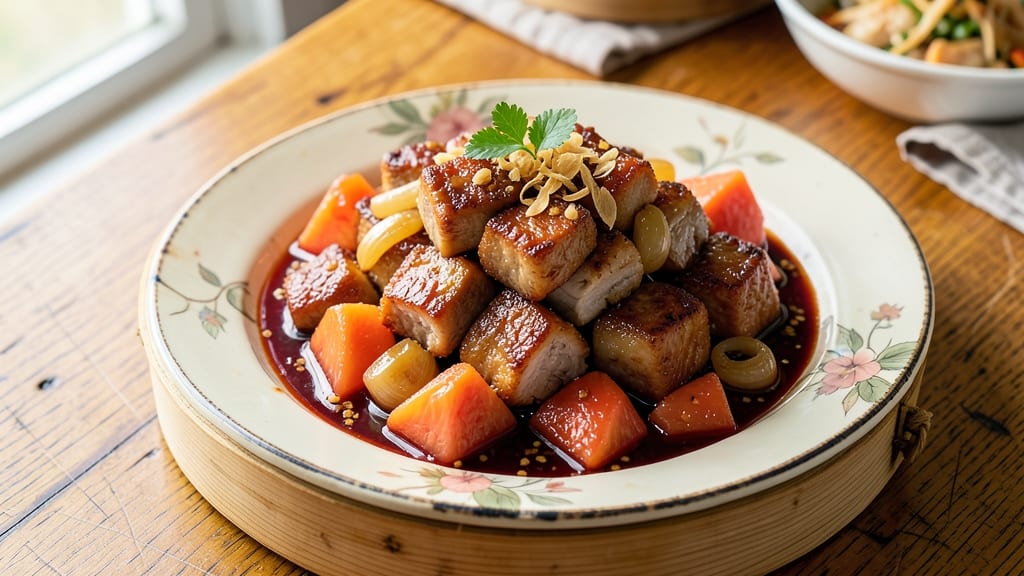
This authentic sweet and sour pork recipe brings Cantonese restaurant-quality to your kitchen with crispy pork bites and a tangy-sweet glaze that balances perfectly. ✨ I've perfected this technique after years of testing, ensuring the pork stays tender while developing that signature caramelized crust—just like my grandmother used to make in Georgia's kitchens.
The secret lies in the marinade and cooking method: tender pork pieces are first seared to lock in juices, then finished in a way that keeps them crispy. The sauce combines traditional elements—pineapple, vinegar, and a touch of sugar—with modern efficiency, so you won't spend hours stirring over low heat.
This version delivers that classic contrast of textures and flavors without shortcuts.
What you'll end up with is restaurant-worthy pork that's golden-brown and crispy on the outside, tender on the inside, all coated in a glossy glaze that's perfectly balanced between sweet and tangy.
The aroma alone will have everyone gathering at your table, and each bite delivers that perfect harmony of textures and flavors that makes this dish legendary.
Serve with steamed jasmine rice and stir-fried vegetables for an authentic meal, or pair it with crusty bread to soak up every last drop of that delicious sauce. The technique is straightforward, but the results are anything but ordinary—this is comfort food at its finest. Let's get started!
Ingredients for authentic sweet and sour pork
Your pantry and fridge hold the keys to restaurant-style crispy pork bites and tangy glaze perfection.
| Ingredient | Amount | Notes |
|---|---|---|
| Pork Shoulder 🐖 | 1 ½ lb | Cut into 1.5-inch cubes, boneless |
| Cornstarch 🌾 | ½ cup | For crispy coating |
| All-Purpose Flour 🌾 | ¼ cup | For coating |
| Fresh Pineapple 🍍 | 1 cup | Chopped, fresh or canned |
| White Vinegar 🍶 | ½ cup | Distilled preferred |
| Brown Sugar 🍚 | ½ cup | Packed tightly |
| Soy Sauce 🥢 | ¼ cup | Light or regular |
| Garlic Cloves 🧄 | 4 cloves | Minced, fresh preferred |
| Green Onions 🧅 | 3 whole | Sliced, white and green parts |
| Vegetable Oil 🫒 | ½ cup | For frying |
| Salt 🧂 | 1 tsp | Kosher or sea salt |
| Black Pepper 🌶️ | ½ tsp | Freshly ground |
| Red Bell Pepper 🌶️ | 1 whole | Sliced, optional garnish |
| Sesame Oil 🫒 | 1 tbsp | For finishing |
The pork shoulder is non-negotiable here—look for well-marbled cuts at your local butcher or the meat department. Costco or Whole Foods often have excellent options, but even the standard grocery store cuts work if you trim excess fat. Cutting the pork into uniform 1.5-inch cubes ensures even cooking and that perfect crispy exterior. For the cornstarch, Bob's Red Mill is my go-to brand—it's fine and works beautifully for that signature crunch. Fresh pineapple makes all the difference in the sauce, but if you're using canned, drain it well and pat dry to avoid a watery glaze.
No fresh pineapple? Canned crushed pineapple works in a pinch, just drain it thoroughly. Substitute white vinegar with apple cider vinegar for a slightly sweeter tang. The brown sugar can be swapped for granulated, but it won't caramelize as beautifully. For an extra umami kick, add 1 tbsp of fish sauce to the sauce—trust me, it elevates everything. If you're avoiding fish sauce, an extra teaspoon of soy sauce will do the trick. The green onions can be swapped for regular onions if you're out, but the white and green parts add a nice freshness that's hard to replicate.
Store the raw pork cubes in an airtight container in the fridge for up to 2 days before cooking. The sauce keeps well in the fridge for 5 days, but it's best used within 3 days for maximum freshness. For leftovers, reheat gently in a skillet over medium heat, adding a splash of water to keep the sauce from sticking. This dish reheats beautifully and tastes even better the next day as the flavors meld together. Double the sauce recipe if you're feeding a crowd—it's that good.
Why You'll Love This Recipe
- One-Pan Magic: That pork shoulder? It’s the star, but here’s the secret: toss it in flour and cornstarch, then pan-fry until golden. No deep-frying, no fuss—just crispy, caramelized edges that make you forget how little effort it took.
- Tangy-Sweet Fix: Fresh pineapple and white vinegar cut through the richness like a knife. The balance is chef’s kiss—not too cloying, not too sharp—just the right bite that makes every forkful feel like a little celebration.
- Leftover Hero: This dish actually improves the next day. The sauce thickens just enough to cling to the pork, and reheating it turns it into a quick stir-fry or taco filling. (Yes, even on a Tuesday night.)
- Budget Crowd-Pleaser: Pork shoulder stretches for miles, and the rest of the ingredients? Basic pantry staples. Feed four for the price of two takeout orders, and everyone walks away happy—no one picks out the pineapple, I promise.
Step-by-step instructions for sweet and sour pork
Here's how to create that perfect balance of crispy pork and tangy-sweet glaze.
🍳 Step 1: Prepare the Pork for Crispy Perfection
Cut the 1.5 lb pork shoulder into 1.5-inch cubes—keep them uniform for even cooking. In a large bowl, combine the 0.5 cup cornstarch and 0.25 cup all-purpose flour with 1 tsp salt and 0.5 tsp black pepper. Toss the pork cubes in this mixture until fully coated, shaking off any excess.
Real talk: This double-coating is what gives you that coveted crispy exterior. The cornstarch creates a light, airy crust while the flour adds structure. Let the coated pork sit for 10 minutes at room temperature—this prevents cold spots when frying.
🔥 Step 2: Fry Until Golden and Tender
Heat 0.5 cup vegetable oil in a large skillet over medium-high heat until it shimmers but doesn't smoke. Add the pork in a single layer—don't crowd the pan! Fry for 4-5 minutes per side until golden brown and cooked through to 165°F internally. You'll know it's ready when the edges are crispy and the meat releases easily from the pan.
Here's the thing—if you see the oil smoking excessively, reduce the heat slightly. You want a sizzle, not a fire. Transfer the cooked pork to a paper towel-lined plate to drain excess oil. Keep it warm while you prepare the sauce—don't let it sit too long or it'll lose its crispiness.
🥘 Step 3: Build the Tangy-Sweet Glaze
In the same skillet (no need to clean it—the browned bits add flavor), add the 4 cloves minced garlic and cook for 30 seconds until fragrant. Add 1 cup chopped fresh pineapple, 0.5 cup white vinegar, 0.5 cup brown sugar, and 0.25 cup soy sauce. Stir and bring to a simmer over medium heat. Let it cook for 5-6 minutes until the sauce thickens slightly and the pineapple softens.
This is where the magic happens—the vinegar cuts through the sweetness while the brown sugar caramelizes, creating that perfect balance. If the sauce looks too thick, add 1-2 tablespoons water to loosen it. The goal is a glossy, syrupy consistency that clings beautifully to the pork.
🍽️ Step 4: Combine and Finish with Flavor
Return the crispy pork to the skillet with the sauce. Toss everything together gently for 1-2 minutes until the pork is evenly coated. Stir in the 3 sliced green onions and 1 sliced red bell pepper (if using). Remove from heat and drizzle with 1 tbsp sesame oil—this adds that final aromatic punch that makes it taste authentic.
The sesame oil should infuse instantly, giving the dish that signature restaurant-quality depth. Serve immediately over steamed rice or noodles while the pork is still crispy. The contrast of warm rice with the tangy-sweet pork is what makes this dish irresistible.
Pro Tips For Making Authentic Sweet And Sour Pork
- VELVET THE PINEAPPLE: Toss the chunks in 1 tablespoon cornstarch before adding them to the sauce—this keeps the fruit from turning to mush while caramelizing. I learned this the hard way after serving a batch where the pineapple dissolved into syrup. (Yes, even if you’re impatient like me, let it sit for 5 minutes.)
- DOUBLE-DIP THE PORK: Coat the pork shoulder in flour first, then cornstarch—flour for structure, cornstarch for that signature gloss. My grandmother swore by this, and she was right: skipping the flour step leaves the crust too fragile. Use about 2 tablespoons flour per pound, then 1 tablespoon cornstarch.
- LOW AND SLOW FOR SAUCE: Simmer the sweet-and-sour sauce on medium-low heat—high heat turns it grainy and separates. After burning three batches, I finally figured out that 30 minutes of gentle bubbling builds depth without burning the vinegar. Stir occasionally, but don’t stress if it looks thin at first.
- SAVE THE VINEGAR WATER: After draining the pork, don’t pour out the vinegar-water from the pan—add it back to the sauce. It’s got flavor, and skipping it makes the sauce taste flat. (Your future self will thank you, I promise.)
Serving suggestions for this recipe
Classic Rice Pairing
Steamed jasmine rice is my go-to choice—its delicate floral aroma complements the dish beautifully. Cook up 1.5 cups of rice for every 1.5 lbs of pork, using a 1:1.5 rice-to-water ratio. For extra fluffiness, spread the rice on a tray after cooking to cool slightly before serving.
The warm, slightly sticky texture soaks up the sauce perfectly while keeping the pork's crispiness intact. 💛
Vegetable Sides
Stir-fried baby bok choy or broccoli adds freshness and color to the plate. Toss 2 cups of chopped vegetables in 1 tbsp sesame oil with 1 minced garlic clove, then stir-fry for 3-4 minutes until just tender.
The slight bitterness balances the sweetness of the pork. For a crunchier option, serve steamed snap peas or edamame on the side.
Crusty Bread
Warm baguette slices or mantou (Chinese steamed buns) make incredible dippers for the sauce. Brush the bread with garlic butter and toast until golden. The crusty texture contrasts perfectly with the tender pork and glossy glaze.
I like to serve these on the side so everyone can scoop up every last bit of that delicious sauce.
Garnish Like a Pro
Fresh cilantro leaves and extra green onions add vibrant color and a bright finish. Sprinkle them over the dish right before serving to keep the flavors fresh. For a restaurant-style touch, add crushed peanuts or toasted sesame seeds on top.
These garnishes not only look beautiful but also add layers of texture that elevate the dish.
Sauce on the Side
For those who prefer less sauce, offer it on the side in a small ceramic bowl. This lets everyone customize their portion while keeping the pork's crispiness intact.
I like to drizzle a little extra sauce over the rice for added flavor. The sauce reheats beautifully, so you can always add more if needed.
Dessert Pairing
Finish the meal with something light and refreshing like mango sorbet or lychee jelly. The tropical flavors complement the sweet and sour notes of the pork, creating a perfect balance.
For a traditional Chinese touch, serve red bean soup—its earthy sweetness contrasts beautifully with the dish's tangy profile. 🌟
Nutrition facts
Frequently asked questions
Can I use chicken or shrimp instead of pork?
This technique works beautifully with chicken thighs or shrimp, though cooking times will vary. For chicken, use 1-inch cubes and cook for 3-4 minutes per side until golden. Shrimp should be cooked for just 1-2 minutes per side—they're done when opaque and curled. The sauce recipe remains the same, but adjust the protein quantity based on your preference.
How do I keep the pork extra crispy?
The secret is in the double-coating and timing. Use extra cornstarch (up to 0.75 cup) for an ultra-crispy texture. Fry in small batches to avoid crowding the pan, and keep the oil temperature at 350°F. Right after frying, place the pork on a wire rack over a baking sheet for 5 minutes to let excess oil drain away. Serve immediately—crispiness fades fast!
Can I make this recipe gluten-free?
Yes! Replace the all-purpose flour with 0.25 cup gluten-free flour blend (like Bob's Red Mill 1:1) and use 0.5 cup cornstarch for coating. For the sauce, ensure your soy sauce is tamari-based. The texture will be slightly different but still delicious. The cornstarch alone provides enough crispiness, so no need to adjust other ingredients.
What's the best way to reheat leftovers?
Reheat gently in a skillet over medium-low heat with 1 tablespoon water to prevent drying. Cover for 2-3 minutes to restore crispiness. For extra crunch, sprinkle with 1 teaspoon cornstarch and toast in the skillet for 30 seconds after reheating. Microwaving will make the pork soggy—always use dry heat methods.
Why did my sauce turn out too thick?
This usually happens when the sauce reduces too much. The fix is simple: add 1-2 tablespoons water while heating and stir continuously. For future batches, reduce heat slightly after adding all ingredients to control thickness. If the sauce is still too thick after adding water, simmer uncovered for 1 extra minute to evaporate excess moisture. The perfect sauce should coat the back of a spoon but still be pourable.