
Main Courses
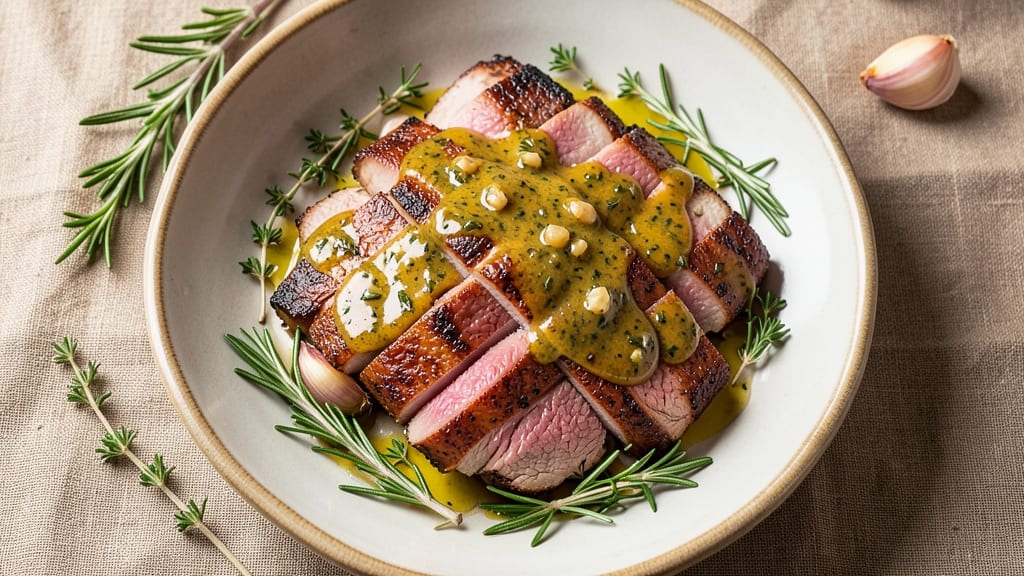
This awesome pork loin recipe delivers restaurant-quality results with a crispy herb-crusted exterior and juicy pink cores that melt in your mouth. After years of perfecting pork at The Smoky Pig, I’ve cracked the code for achieving tender, flavorful pork loin every time—no guesswork involved.
The secret lies in a precise sear followed by controlled roasting, ensuring that each bite balances crispy edges with succulent meat.
The herb crust isn’t just for flavor—it creates a protective barrier that locks in moisture while adding aromatic depth. Fresh rosemary, thyme, and garlic infuse the pork as it cooks, while Dijon mustard in the crust adds a subtle tang that cuts through the richness.
This method works for both bone-in and boneless cuts, making it versatile for weeknight dinners or special occasions.
What you’ll end up with is a juicy, perfectly cooked pork loin that’s tender enough to slice with a fork yet firm enough to hold its shape. The crust stays crispy even after resting, and the pink centers guarantee that every slice delivers that satisfying first bite.
Serve with roasted root vegetables or a bright herb salad to round out the meal.
This recipe is designed for confidence—whether you’re cooking for a crowd or treating yourself to a Sunday supper. The technique is straightforward, but the results are undeniably impressive. Let’s get started on a pork loin that’ll have everyone asking for seconds.
Ingredients for awesome pork loin
Fresh herbs, precise cuts, and restaurant secrets—this is how you get juicy pink pork loin.
| Ingredient | Amount | Notes |
|---|---|---|
| Pork Loin (Boneless) 🥩 | 1 ½ lb | Center-cut, 1.5-inch thick |
| Fresh Rosemary 🌿 | ¼ cup | Finely chopped, stems removed |
| Fresh Thyme 🌿 | ¼ cup | Leaves only, stems discarded |
| Garlic Cloves 🧄 | 6 cloves | Minced, skin-on for flavor |
| Dijon Mustard 🍯 | 2 tbsp | High-quality, smooth variety |
| Olive Oil 🫒 | ¼ cup | Extra-virgin, for crust and sear |
| Unsalted Butter 🧈 | ½ cup | Cold, cubed for sear |
| Diamond Crystal Kosher Salt 🧂 | 1 ½ tsp | For crust and seasoning |
| Ground Black Pepper 🌶️ | 1 tsp | Freshly cracked for heat |
| All-Purpose Flour 🌾 | ¼ cup | For crust adhesion |
| Fresh Parsley 🌿 | ⅛ cup | Chopped, for garnish |
The pork loin cut makes all the difference. Center-cut is key for even cooking, and 1.5-inch thickness ensures perfect pink cores. Most grocery stores carry boneless pork loin, but if you find bone-in, leave it on—it adds flavor and keeps the meat moist. Butcher sections at Whole Foods or local meat counters often have the best quality. Look for a piece with good marbling and vibrant color. If you're using a thicker cut, trim it to 1.5 inches before seasoning. The herb crust needs to stick well, so pat the pork completely dry with paper towels before applying anything.
No fresh rosemary? Dried rosemary at one-third the amount works in a pinch, but fresh is ideal for that bright aroma. Short on thyme? Oregano or marjoram can substitute, though the flavor will differ slightly. The Dijon mustard adds tang—if you don't have it, yellow mustard in equal parts is a decent swap. For the olive oil, avocado oil has a higher smoke point if you prefer, but extra-virgin olive oil adds a nice fruity note. The butter should be cold when cubed—this helps create that crispy crust. If your butter is soft, chill it for 20 minutes before using. The flour is optional but helps the crust adhere better, especially if your pork is particularly lean.
Pork loin keeps best in the fridge for 2-3 days after cooking, though it reheats beautifully. For longer storage, wrap tightly in foil and freeze for up to 3 months. The herb crust stays crispy for about 2 days at room temperature if stored properly, so it's best served fresh. If you're prepping ahead, season the pork and refrigerate uncovered for 30 minutes before cooking—this helps the crust form earlier. Leftovers reheat best in a skillet over medium heat with a splash of water to keep them moist. Serve with roasted potatoes or a simple green salad to balance the richness.
Why You'll Love This Recipe
- One-Pan Magic: I swear by this recipe when I’m too tired to deal with multiple dishes—just the pork, a drizzle of Dijon, and those fragrant herbs roasted together. The garlic cloves caramelize right on the sheet pan, so you’re left with zero cleanup. (Yes, even on a Tuesday night.)
- Herb-Packed Punch: That combo of rosemary and thyme? It’s like a warm hug for your taste buds. The fresh herbs infuse the pork so deeply, every bite has this bright, earthy aroma that makes it taste like you spent hours in the kitchen. (Spoiler: You didn’t.)
- Lunchbox Hero: Between us, this is my go-to for meal prep. Slice it thin, pack it with a side salad or crusty bread, and you’ve got a lunch that feels gourmet but costs next to nothing. My coworkers still ask where I get my “fancy” sandwiches.
- Budget-Friendly Feast: Pork loin stretches further than you’d think, especially when you’re feeding a crowd or just tired of takeout. A single roast feeds four easily, and the leftovers? Perfect for quick stir-fries or wraps the next day. (No sad, dry meat here—it stays juicy.)
Step-by-step instructions for herb-crusted pan-seared pork loin
Here's how to achieve a perfectly juicy pork loin with a golden herb crust every time.
Prepare the Herb Crust Mixture
In a small bowl, combine the 0.25 cup fresh rosemary, 0.25 cup fresh thyme, 6 minced garlic cloves, 2 tablespoons Dijon mustard, 1.5 teaspoons Diamond Crystal kosher salt, and 1 teaspoon ground black pepper. Mix thoroughly until the herbs are evenly distributed and the mustard is fully incorporated.
This herb blend forms the flavor foundation for your crust. I like to press the mixture between my fingers to release the essential oils, which intensifies the aroma. Set this mixture aside while you prepare the pork loin for searing.
Create the Flour and Butter Coating
In a separate shallow dish, combine the 0.25 cup all-purpose flour with 0.5 cup unsalted butter that has been cut into small cubes. The butter should be cold but not frozen—it should hold its shape when pressed between your fingers. Mix just until the butter is evenly distributed in the flour.
This flour-butter combination creates a dual-texture crust: the flour provides structure for browning, while the cold butter melts into a rich, flavorful coating during searing. Keep this mixture at room temperature until ready to use.
Sear the Pork Loin for Maximum Flavor
Pat the 1.5 lb boneless pork loin dry with paper towels—this step is critical for achieving a good sear. Season both sides generously with any remaining herb mixture from Step 1, pressing it into the meat to ensure good adhesion.
Heat 0.25 cup olive oil in a large skillet over medium-high heat until it shimmers. Add the pork loin and sear for 3-4 minutes per side until the exterior develops a deep golden-brown crust. Press down gently on the fillet during the first minute to prevent curling and ensure even contact with the pan.
Build the Herb Crust and Finish Cooking
Remove the pork loin from the skillet and transfer it to a plate. Immediately add the flour-butter mixture to the hot skillet, spreading it evenly to coat the bottom. Cook for 1-2 minutes until the mixture turns golden brown and releases easily from the pan.
Return the pork loin to the skillet, spooning the golden herb-butter mixture over the top. Cover the skillet and reduce heat to medium-low. Cook for an additional 8-10 minutes until the internal temperature reaches 145°F when measured with a meat thermometer.
Rest and Garnish for Perfect Texture
Transfer the pork loin to a cutting board and tent loosely with aluminum foil. Let it rest for 10-15 minutes—this crucial step allows the juices to redistribute throughout the meat, ensuring each slice remains moist and tender.
While the pork rests, chop the 0.125 cup fresh parsley and sprinkle it over the top just before serving. The parsley adds a fresh contrast to the rich herb crust. Slice the pork loin against the grain into ½-inch thick portions and serve immediately with your favorite sides.
Pro Tips For Making Awesome Pork Loin
- BRINE THE LOIN: Toss the pork loin in a shallow tray with 1/4 cup kosher salt and 1/4 cup sugar per gallon of water for 30 minutes—yes, even if you’re in a hurry. I used to skip this and wondered why my pork always tasted dry; salt draws out moisture, then reabsorbs it for juicier meat. (No time? At least salt it 20 minutes ahead.)
- MINCE THAT GARLIC: Smash those garlic cloves flat with the side of your knife before mincing—this releases more flavor without burning. I learned this the hard way when my pork tasted bland because I just chopped through the cloves. A quick press with the flat blade of your knife does the trick.
- LOW AND SLOW FINISH: After searing the pork, drop the heat to 275°F (135°C) and cook until it hits 140°F internal—this keeps it tender without drying out. My first few attempts ended up tough because I rushed the last 10 minutes; patience here makes all the difference.
- UPGRADE WITH MUSTARD: Whisk the Dijon mustard with a splash of olive oil and a pinch of salt before brushing it on—this adds depth and helps the crust stick. I was skeptical until I tried it; now I never skip it, especially if I’m serving it with a light sauce. (Pro tip: Warm the mustard slightly first.)
Perfect pairings for awesome pork loin
Herb-Infused Sides
Roasted root vegetables with rosemary and garlic complement the pork loin beautifully. Toss 2 lbs baby carrots, parsnips, and sweet potatoes with 2 tbsp olive oil, 1 tbsp fresh rosemary, and 2 minced garlic cloves.
Roast at 400°F for 30 minutes until caramelized. The earthy flavors mirror the pork's herb crust while adding natural sweetness. 🥕
Crispy Potato Pairings
For a Southern-style twist, serve with crispy hash browns or smashed potatoes. I love using Yukon Gold potatoes boiled until tender, then smashed and pan-fried in butter and garlic until golden.
A sprinkle of fresh parsley ties back to the pork's garnish. These sides soak up the pork's juices beautifully.
Bright Green Salads
A shaved fennel and citrus salad cuts through the richness. Thinly slice 1 fennel bulb and 1 blood orange, then toss with 2 tbsp olive oil, 1 tbsp honey, and 1 tbsp fresh thyme.
The anise notes in fennel echo the pork's herb crust while the citrus adds zing. 🍊
Wine Pairings
For red wine lovers, a Pinot Noir from Oregon—like Domaine Serene—balances the pork's richness with its bright acidity and red fruit notes.
White wine fans should try a dry Riesling from Germany, such as Dr. Loosen Blue Slate, which stands up to the herb crust while cleansing the palate. 🍷
Beer Complements
A crisp Belgian witbier like Hoegaarden adds effervescence and coriander notes that refresh after each bite. For a local Southern option, try a North Carolina pale ale—the hoppy bitterness contrasts nicely with the pork's buttery crust.
I often serve this with a local craft beer from Atlanta's Craft Beer Cellar. 🍺
Dipping Sauces
Serve with herb-infused honey butter or a spicy mustard sauce. For the honey butter, mix ½ cup softened butter with 2 tbsp honey and 1 tbsp chopped fresh parsley.
The mustard sauce? Whisk ½ cup Dijon mustard with ¼ cup apple cider vinegar and 1 tsp smoked paprika. Both add layers of flavor without overpowering the pork. 🍯
Nutrition facts
Frequently asked questions
Why does pork loin need to rest after cooking?
Resting allows the juices to redistribute evenly throughout the meat, preventing them from running out when you slice. For pork loin, a 10-15 minute rest at room temperature keeps every bite moist and tender. Skipping this step often results in dry slices—especially important for thicker cuts. Think of it as letting the flavors settle and the texture perfect.
Can I cook pork loin to medium-well or well-done?
While possible, I recommend stopping at 145°F internal temperature for juicy pink centers. Cooking past 150°F risks drying out the meat, especially in lean cuts. For well-done, use a thinner cut (1-inch thick) and monitor closely—it's better to undercook slightly and finish in the oven than overcook.
What's the best way to store leftover pork loin?
Wrap tightly in foil or plastic wrap and refrigerate for up to 3 days or freeze for 3 months. For reheating, use a skillet with a splash of water to maintain moisture. The herb crust stays crispy for about 2 days at room temperature if stored properly. Leftovers reheat best at medium heat for 3-4 minutes per side.
Can I substitute bone-in pork loin?
Bone-in cuts add flavor but require 10-15 extra minutes of cooking time. Adjust your thermometer reading to 150°F in the thickest part of the meat (away from bone). The bone helps retain moisture, so you may need slightly less butter in the crust. Just trim excess fat before searing.
How do I adjust the recipe for a larger crowd?
Scale all ingredients proportionally—doubling the recipe works perfectly. For larger cuts (3 lbs), increase the herb mixture by 50% and cook at 325°F for 20-25 minutes after searing. Use two skillets if needed, and increase resting time to 20 minutes. The key is maintaining the same thickness (1.5 inches) for even cooking.