
Main Courses
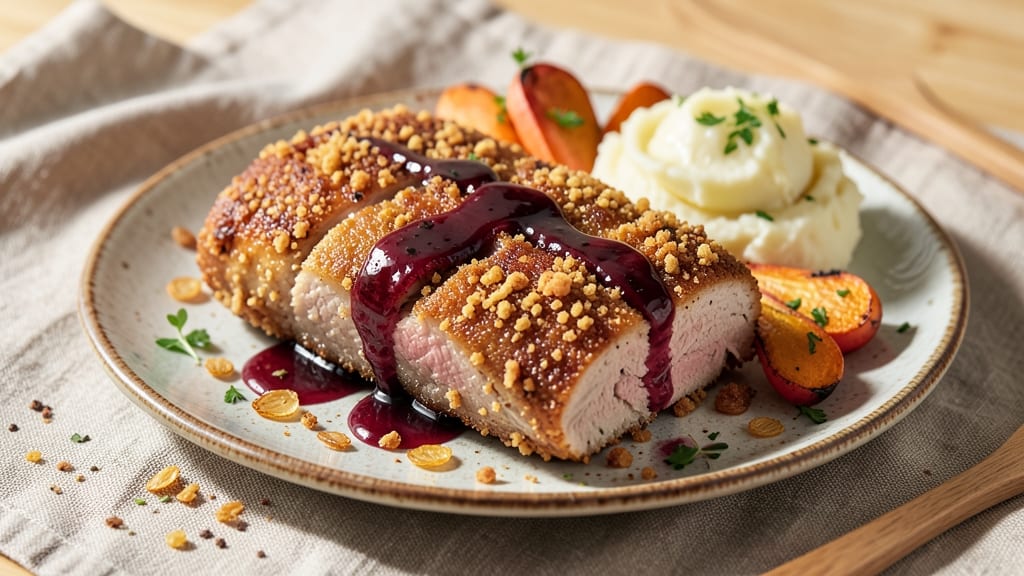
This baked breaded pork tenderloin recipe delivers the perfect balance of crispy golden crust and juicy pink centers—no deep-frying required. After years of perfecting the technique at my restaurant, I’ve simplified it for home cooks to achieve restaurant-quality results in one pan.
The secret lies in the breading process and precise oven temperature control, ensuring every bite is tender without drying out.
What sets this recipe apart is the foolproof method that transforms lean pork tenderloin into a showstopping main course. You’ll start with a simple seasoning blend, then coat the tenderloin in a light, crispy breading that locks in moisture while creating that satisfying crunch.
The 375°F oven temperature is critical—hot enough to crisp the breading but gentle enough to keep the meat juicy inside.
By the time it emerges from the oven, you’ll have a perfectly golden, crispy exterior with a tender, juicy core that practically melts in your mouth. The breading stays crunchy even after resting, making it ideal for plating with roasted vegetables or a fresh salad.
This is the kind of dish that elevates weeknight dinners into something special without requiring advanced skills.
The beauty of this recipe is its versatility—serve it sliced for sandwiches, carved for a family-style meal, or even as a centerpiece for holiday gatherings. Pair it with a tangy apple compote or creamy mashed potatoes to round out the plate.
Let’s get started on creating your best pork tenderloin yet.
Ingredients for baked breaded pork tenderloin
Pork tenderloin, flour, and herbs—just the right mix for that perfect crunch and juicy center.
| Ingredient | Amount | Notes |
|---|---|---|
| Pork Tenderloin 🥩 | 1 ½ lb | Center-cut, trimmed of fat |
| All-Purpose Flour 🌾 | 1 cup | For breading, sifted |
| Panko Breadcrumbs 🍞 | 1 cup | Light and crispy preferred |
| Granulated Garlic Powder 🧄 | 1 tbsp | Freshly ground preferred |
| Onion Powder 🧅 | 1 tbsp | Fine grind for even coating |
| Dried Parsley Flakes 🌿 | 1 tbsp | For vibrant color |
| Salt 🧂 | 1 tsp | Diamond Crystal preferred |
| Ground Black Pepper 🌶️ | ½ tsp | Freshly cracked |
| Large Eggs 🥚 | 2 whole | Room temperature for even coating |
| Unsalted Butter 🧈 | 2 tbsp | Melted, full-fat for richness |
| Olive Oil 🫒 | ½ cup | Light, for brushing |
| Vegetable Oil 🫒 | 2 tbsp | For greasing pan |
| Fresh Rosemary 🌿 | ¼ cup | Chopped, for seasoning |
| Fresh Thyme 🌿 | ¼ cup | Chopped, for seasoning |
The pork tenderloin is your star, so pick the center-cut—it's more tender and less likely to dry out. Trim any visible fat before seasoning; it's not needed for flavor but can make the breading uneven. Costco or Whole Foods usually carry the best quality, but any well-marbled tenderloin will work. For the breading, Panko is a must—it's lighter than regular breadcrumbs and gives that satisfying crunch. I always grab a bag at Trader Joe's because it's consistently good and affordable. The herbs? Fresh is best, but if you're in a pinch, dried will do—just double the amount.
No Panko? Crush regular bread into fine crumbs—it won't be as crispy, but it'll still work. Short on eggs? Use a flax egg (1 tbsp ground flaxseed + 3 tbsp water) as a binder, but it won't give the same golden color. The butter and olive oil combo is key for that crispy crust—don't skip either. For the herbs, if you've got fresh thyme or rosemary, use them; if not, dried will work in a pinch. The garlic and onion powders are non-negotiable—they're what give the breading its depth of flavor. If you're feeling fancy, add a pinch of smoked paprika to the breading mix for extra smokiness.
This dish reheats surprisingly well—just pop it in a 350°F oven for 10-15 minutes until crispy again. Store leftovers in the fridge for up to 3 days, but honestly, it's best eaten fresh. For meal prep, slice it up and serve over a bed of greens or with roasted potatoes. The breading stays crispy for about 2 days if you keep it airtight. Freezing? Wrap it tightly in foil and freeze for up to 3 months, but the texture might not be as crispy after thawing.
Why You'll Love This Recipe
- One-Pan Magic: I swear by this method—just season, coat, and bake. No flipping, no frying mess, and that crispy panko crust forms right on the sheet pan while I’m tossing a salad or setting the table.
- Crispy-Creamy Payoff: The garlic powder and onion powder in the breading? Chef’s kiss. That first bite gives you a crunchy shell with juicy, tender pork underneath—like a hug from your favorite comfort food.
- Weeknight Superstar: Between us, this is my go-to when I’m starving but don’t want to slave over dinner. Serve it with roasted potatoes or a simple green salad, and suddenly, you’ve got a full meal without the fuss.
- Budget-Friendly Leftovers: Pork tenderloin stretches far, and the breading keeps it interesting even reheated. I’ll make two, freeze half, and pull it out for sandwiches or a quick stir-fry later—zero waste, all flavor.
Step-by-step instructions for baked breaded pork tenderloin
Here's how to create that perfect balance of crispy crust and tender interior without missing a beat.
Prep the Pork and Create the Breading Station
Start by patting the 1.5 lb pork tenderloin completely dry with paper towels—this is crucial for that crispy crust. Trim any remaining fat if needed, then season generously with 1 tsp salt and 0.5 tsp ground black pepper, pressing it into the meat so it penetrates. Set aside while you prepare the breading station.
In a shallow bowl, whisk together the 1 cup all-purpose flour, 1 tbsp granulated garlic powder, 1 tbsp onion powder, and 1 tbsp dried parsley flakes. In another bowl, beat the 2 whole large eggs until frothy. In a third bowl, mix the 1 cup panko breadcrumbs with the 0.25 cup chopped fresh rosemary and 0.25 cup chopped fresh thyme. This three-step breading creates layers of flavor and texture.
Bread the Pork for Maximum Crunch
Working in batches to avoid sogginess, dredge the pork tenderloin first in the flour mixture, shaking off any excess. Dip each piece into the beaten eggs, letting any excess drip off, then press firmly into the panko-herb mixture, coating all sides completely. Place the breaded tenderloin on a wire rack set over a baking sheet to allow air circulation—this prevents a soggy crust.
Let the breaded pork rest for 10 minutes while you preheat your oven to 400°F. This resting time helps the breading adhere better and ensures a crispy exterior. Don't skip this step—it makes all the difference in texture.
Bake to Juicy Perfection
Lightly grease a large baking dish with 2 tbsp vegetable oil and place the breaded pork tenderloin in the center. Drizzle 0.5 cup olive oil and 2 tbsp melted unsalted butter over the top, then bake for 25 minutes. This high-heat start creates an initial crispy crust while keeping the interior juicy.
After 25 minutes, reduce the oven temperature to 375°F and continue baking for an additional 15-20 minutes, or until the internal temperature reaches 145°F and the breading is deep golden brown and crispy. The lower temperature ensures the pork cooks through evenly without drying out.
Rest and Serve with Confidence
Remove the pork tenderloin from the oven and let it rest on a cutting board for 10 minutes. This resting period allows the juices to redistribute, ensuring each slice remains moist and flavorful. The breading will stay crispy during this time, so don't worry about it becoming soggy.
Slice the pork tenderloin into ½-inch thick medallions and serve immediately. Each bite should deliver that perfect contrast—a crispy, herby crust giving way to tender, juicy pork. Pair with roasted vegetables or a fresh salad for a complete meal that's sure to impress.
Pro Tips For Making Baked Breaded Pork Tenderloin
- Pat the pork DRY: I learned this the hard way—wet pork won’t crisp. After baking a soggy batch, I realized the flour and panko need something to grab onto. Use paper towels to blot the tenderloin thoroughly before dredging, even if it feels excessive. Trust me, the crust will be worth it.
- Use two coats of breading: One layer of flour and panko? That’s just asking for a sad, crumbly result. Dip the pork in flour (shaking off excess), then egg wash, then another layer of panko mixed with garlic and onion powder. The double-coat locks in flavor and guarantees a shatteringly crisp exterior.
- Bake at 425°F, not 375°F: I was skeptical until I tried it—higher heat means faster browning without drying out the center. Start the pork on a middle rack in a hot oven (425°F) for 10 minutes, then drop to 375°F. This jumpstarts the crust while keeping the inside juicy. (Yes, even if you’re impatient like me.)
- Skip the crowded pan: Stuffing the pork into a single baking dish? Big mistake. The breading steams instead of crisps, and the meat won’t brown evenly. Use a wire rack over a baking sheet—air circulates, and you get that golden, restaurant-quality crust without fighting for space. (Your future self will thank you.)
Storing and reheating your leftovers
Refrigerator Storage
Store any leftovers in an airtight container with a paper towel pressed on top to absorb moisture—this keeps the breading crispy for up to 3 days. I always slice mine into medallions before storing so they reheat evenly.
The pork stays juicy if you keep it tightly sealed, but trust me, it’s best eaten fresh for that perfect crunch. 🥩
Freezer Prep
For long-term storage, wrap the cooked pork tenderloin tightly in plastic wrap followed by foil to prevent freezer burn. It’ll keep for 3 months, but the breading may lose some crispiness after thawing.
I recommend freezing it in single-serving portions for easy reheating—just pop a medallion in the oven when you’re ready. 🧊
Oven Reheating
To revive that golden crust, preheat your oven to 350°F and place the pork on a baking sheet. Heat for 10-15 minutes until the breading is crispy again.
A quick drizzle of olive oil before reheating helps restore that satisfying crunch. For extra flavor, brush with a little melted butter in the final minute. 🔥
Air Fryer Option
If you’re short on time, an air fryer works wonders—set it to 375°F and reheat for 5-7 minutes, shaking the basket halfway. This method keeps the breading crispy without drying out the meat.
I use my Ninja Foodi for this because it circulates heat so evenly. Just avoid overcrowding the basket! ⚡
Microwave Hack
For a quick fix, cover the pork with a damp paper towel and microwave on 50% power for 1-2 minutes. Stir, then continue in 30-second bursts until heated through—this prevents the breading from turning soggy. It won’t be as crispy as oven methods, but it’s a decent backup. 💡
Serving Leftovers
Reheated pork tenderloin makes a fantastic sandwich filling or taco meat—just slice it thin and pile it high. For a hearty meal, serve over mashed potatoes or with roasted Brussels sprouts.
The crispy breading adds texture that balances creamy sides perfectly. Leftovers taste just as good cold in salads too! 🥗
Nutrition facts
Frequently asked questions
Can I use a different cut of pork instead of tenderloin?
While pork tenderloin is ideal for this recipe due to its tenderness and lean nature, you can try pork loin chops or bone-in pork chops with similar thickness. For larger cuts like pork loin roast, reduce the baking time by 10-15 minutes and check the internal temperature frequently. The breading method remains the same, but thicker cuts may need an extra 5-10 minutes in the oven.
Why is my breaded pork tenderloin soggy instead of crispy?
Soggy breading usually happens when the pork isn't fully dry before breading, or the oven temperature isn't high enough initially. Always pat the meat very dry with paper towels and start at 400°F for 25 minutes to set the crust. Another common mistake is overcrowding the pan—leave space between pieces for proper air circulation. A wire rack over a baking sheet helps too!
Can I make this ahead of time for a dinner party?
Bake the pork tenderloin 1-2 days ahead and store it in an airtight container with a paper towel to absorb moisture. Reheat in a 350°F oven for 10-15 minutes with a drizzle of olive oil to restore crispiness. For a dinner party, slice it just before serving to keep the breading perfectly crunchy. This makes prep easier and lets you focus on sides!
How do I adjust the seasoning for different flavor profiles?
For a herb-forward taste, add 1 tsp dried oregano or 1 tbsp lemon zest to the breading. For a spicy kick, mix in 1 tsp cayenne pepper or smoked paprika. If you love Asian flavors, swap the rosemary and thyme for 1 tbsp sesame seeds and 1 tsp ginger powder. Adjust salt to taste based on your additions.
What's the best way to check if the pork is fully cooked?
Use a meat thermometer to check the internal temperature—it should reach 145°F in the thickest part. If you don't have one, cut into the center: the juices should run clear, not pink, and the meat should be slightly firm to the touch. The breading should be deep golden brown and crispy. Never rely on color alone!