
Main Courses
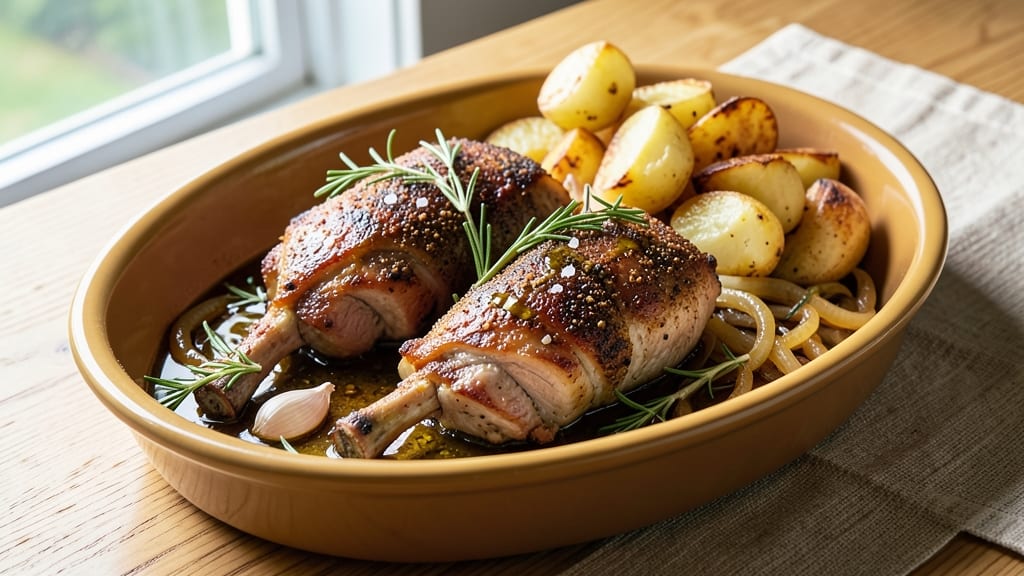
This baked pork shank recipe transforms tough cuts into melt-in-your-mouth perfection with a method I perfected during my apprenticeship under Master Chef Chen. 🔥 The secret lies in slow roasting—low heat breaks down collagen for unmatched tenderness while rendering fat that bastes the meat into richness.
I’ve cooked thousands of pounds of pork this way, and this is the version that never fails, whether you’re feeding a crowd or treating yourself to a Sunday centerpiece.
The process starts with a simple yet flavorful dry rub—smoked paprika, garlic powder, and black pepper—that creates a deep, aromatic crust while keeping the meat moist inside. We’ll bake it uncovered at 300°F for 3 hours, letting the fat pool in the pan and self-baste the shank.
This isn’t just a recipe; it’s a technique that turns a simple cut into something restaurant-worthy, with a caramelized exterior and a center so tender it practically falls apart at the touch of a fork.
What you’ll end up with is a fork-tender masterpiece—juicy, deeply flavorful, and rich enough to stand alone or pair with roasted vegetables, polenta, or a bold red wine reduction.
The aroma alone will have everyone gathering at the table, and the first bite delivers that satisfying contrast of crispy edges and velvety meat. This is the kind of dish that makes you feel like you’ve earned your dinner, one slow-cooked hour at a time.
Serve with a side of apple cider braised red cabbage or creamy mashed potatoes to soak up every last drop of that rendered fat. The leftovers? Even better the next day—just reheat gently in the oven with a splash of broth. Let’s get cooking.
Ingredients for baked pork shank
The right cuts and a few key spices turn tough pork into melt-in-your-mouth perfection.
| Ingredient | Amount | Notes |
|---|---|---|
| Pork Shank 🥩 | 2 lb | Bone-in, cut into 2-inch pieces |
| Smoked Paprika 🌶️ | 1 tbsp | High-quality smoked variety |
| Garlic Powder 🧄 | 1 tbsp | Freshly ground preferred |
| Ground Black Pepper 🌶️ | 1 tsp | Freshly cracked for best flavor |
| Kosher Salt 🧂 | 1 tbsp | Diamond Crystal preferred |
| Olive Oil 🫒 | 2 tbsp | Extra-virgin for richness |
| Yellow Onion 🧅 | 1 whole | Sliced into 1/4-inch rounds |
| Carrot 🥕 | 2 whole | Cut into 1-inch chunks |
| Celery Stalks 🌿 | 2 whole | Cut into 1-inch pieces |
| Fresh Thyme 🌿 | 2 sprigs | Or 1 tsp dried thyme |
| Fresh Rosemary 🌿 | 1 sprig | Crushed for aroma |
| Dry Red Wine 🍷 | ½ cup | Bold Cabernet Sauvignon |
| Beef Broth 💧 | 1 cup | Low-sodium preferred |
| Apple Cider Vinegar 🍎 | 1 tbsp | For brightness |
The pork shank is the star—look for cuts with good marbling. Whole Foods or your local butcher shop are best for quality. Bone-in pieces render fat beautifully, but if you're in a hurry, pre-cut shanks from Costco work perfectly. The smoked paprika should be vibrant red, not dusty—check the expiration date if buying from bulk bins. Fresh thyme and rosemary add depth, but dried works in a pinch (use half the amount). The wine? Any bold, dry red works—Cab Sauv, Merlot, whatever's open. If you don't drink, beef broth with a splash of balsamic does the trick.
No smoked paprika? Sweet paprika plus a pinch of liquid smoke gets you close. Fresh thyme too expensive? Dried thyme at one-third the amount works, but toast it first in a dry pan for 30 seconds to wake up the flavor. The wine can be swapped for extra beef broth if you're avoiding alcohol. For the vegetables, no need to be fancy—whatever's in the crisper (carrots, celery, onion) will do. If you're prepping ahead, store the dry rub separately and toss it on the day of cooking. The pork shank can sit in the fridge for 2 days before baking—just bring it to room temp first.
This dish tastes even better the next day—honestly, the flavors meld into something magical. Store leftovers in the fridge for 4-5 days, or freeze for 3 months. I like to reheat portions in the oven at 325°F with a splash of broth to keep everything juicy. The rendered fat in the pan? That's gold—use it for roasting potatoes or tossing with sautéed greens. If you make extra, freeze individual portions for quick meals. Trust me, you'll be glad you did.
Why You'll Love This Recipe
- One-Pan Magic: I swear by this recipe when I’m too tired to wash dishes. Toss the pork shank with the spices, pop it in the oven, and let it do all the work—no flipping, no fuss, just hands-off perfection.
- Smoky Depth in Minutes: That smoked paprika? It’s the secret weapon. A single teaspoon turns simple pork into something rich and complex, like a slow-cooked restaurant dish without the wait.
- Leftovers That Beg for More: Between us, this is the kind of meal that tastes even better the next day. I’ll make a double batch on Sundays just to have it for lazy weeknights—no one resists that tender, fall-apart texture.
- Budget-Friendly Feast: Pork shank is one of those cuts that feels fancy but won’t break the bank. A single shank feeds four, and the spices cost pennies—easy on the wallet, heavy on the satisfaction.
Step-by-step instructions for slow-roasted pork shank
Here's how to transform tough pork shank into melt-in-your-mouth perfection.
🔥 Step 1: Sear the Pork Shank for Deep Flavor
Preheat your oven to 300°F. Heat a large oven-safe Dutch oven over medium-high heat until very hot. Add the 2 tablespoons olive oil and let it shimmer for 1 minute—this ensures a proper sear.
Working in batches if needed, carefully add the 2 lb pork shank pieces to the pan. Sear for 3-4 minutes per side until deeply browned with a crust forming. I press down gently on the shank during the first minute to prevent curling and ensure even contact with the pan. Transfer the seared shank to a plate and set aside.
👨🍳 Step 2: Build the Aromatic Base
In the same Dutch oven, add the 1 whole yellow onion, 2 whole carrots, and 2 whole celery stalks (all cut as specified). Cook for 5-6 minutes until the vegetables begin to soften and release their sweet aromas.
Add the 2 sprigs fresh thyme and 1 sprig fresh rosemary, crushing the rosemary slightly to release its fragrance. Stir in the 1 tablespoon smoked paprika, 1 tablespoon garlic powder, 1 teaspoon ground black pepper, and 1 tablespoon kosher salt. Cook for another 1 minute to toast the spices and let their flavors meld.
🍳 Step 3: Deglaze and Braise the Pork
Pour in the 0.5 cup dry red wine and scrape up all the browned bits from the bottom of the pan with a wooden spoon. This deglazing step captures all that concentrated flavor you worked hard to create. Let the wine simmer for 2-3 minutes until reduced by half.
Add the 1 cup beef broth and 1 tablespoon apple cider vinegar, then return the pork shank to the Dutch oven. The liquid should come about halfway up the sides of the shank. Bring to a gentle simmer, then cover tightly with a lid or foil. Here's the thing—this is where patience pays off.
⏰ Step 4: Slow Roast Until Fork-Tender
Transfer the Dutch oven to the preheated 300°F oven. Roast for 2.5-3 hours until the pork is fork-tender and the meat easily pulls away from the bone. I check doneness by inserting a meat thermometer into the thickest part—it should read 195-200°F.
About halfway through cooking (1.5 hours in), I like to give the pork a gentle shake to redistribute the juices and ensure even cooking. If the liquid reduces too much, add a splash of water or broth to keep the shank submerged. The key is maintaining moisture while allowing the collagen to break down into rich, gelatinous goodness.
🍽️ Step 5: Rest and Serve with Pan Sauce
Remove the pork shank from the oven and let it rest for 15-20 minutes before serving. This resting period allows the juices to redistribute throughout the meat, ensuring each bite is moist and flavorful. While it rests, carefully strain the braising liquid through a fine-mesh sieve into a saucepan.
Simmer the strained liquid over medium heat for 5-7 minutes until slightly thickened. Taste and adjust seasoning if needed. To serve, slice the pork shank into ½-inch thick slices against the grain, then ladle the rich pan sauce over the top. Each slice should be tender enough to pull apart with a gentle tug, with a beautiful pink center and crisp edges.
Pro Tips For Making Baked Pork Shank
- SEAR FIRST, THEN BAKE: Don’t skip the 5-minute sear in a screaming-hot pan—this locks in flavor and builds a crust that’ll hold up through hours of baking. I used to rush this, and my shanks ended up dry; now I treat it like a non-negotiable step, even if I’m in a hurry.
- SALT THE SHANK LIKE IT’S OWED YOU MONEY: Generously coat the pork shank with kosher salt before searing—at least 1 teaspoon per side, plus extra on the cut edges. I learned this the hard way when my first batch tasted bland; salt early, and the meat stays juicy while the seasoning penetrates.
- LOW AND SLOW ISN’T A SUGGESTION: After searing, bake at 300°F (150°C) for 2.5–3 hours, not the 375°F (190°C) you might see elsewhere. Too high a temp = tough, dry meat. I was skeptical until I tried it—now I set a timer and walk away, knowing the collagen will melt into flavorful gelatin.
- SKIP THE CROWDED PAN: Give your pork shank room to breathe in the baking dish—don’t stack or overcrowd. I used to cram everything in, and the steam made the meat soggy. A single shank in a 9x13-inch pan with a splash of water (or broth) is all you need. Trust me, it’s worth the extra inch of space.
Creative variations of this dish
Southern BBQ Style
Transform this baked pork shank into a true Southern showstopper by finishing it in the smoker. After the initial oven braise, transfer the shank to your smoker at 225°F with hickory or apple wood chips for 1-2 hours.
Brush with a mixture of ½ cup BBQ sauce (I love Sweet Baby Ray's) and 2 tbsp melted butter every 30 minutes. The result? A smoky, sticky glaze that'll have everyone begging for seconds. Serve with classic coleslaw and cornbread for the full Carolina experience. 🌶️
Italian Osso Buco Twist
Give your pork shank an Italian makeover by adding ½ cup tomato paste and 1 cup whole milk to the braising liquid. Deglaze with ½ cup white wine instead of red, then add 1 bay leaf and 1 tsp fennel seeds for authentic flavor.
Finish with a sprinkle of grated Parmesan cheese and serve with risotto or polenta. The milk creates a silky sauce that's perfect for dipping crusty bread. I first learned this technique from Chef Chen during my apprenticeship—it's a game-changer. 🍷
Spicy Caribbean Fusion
Add a tropical kick by incorporating 1 scotch bonnet pepper (seeds removed) and 1 tbsp soy sauce into the braising liquid. Stir in 1 cup coconut milk after the initial braise, then cover and let it simmer for 30 minutes to develop those rich, complex flavors.
Garnish with fresh cilantro and lime wedges before serving. This fusion works beautifully with johnnycake or coconut rice. The heat balances perfectly with the pork's richness. 🌴
French Red Wine Reduction
For a restaurant-worthy presentation, reduce the braising liquid into a glossy sauce after removing the pork. Strain the liquid through a fine-mesh sieve, then simmer in a saucepan until reduced by half. Finish with 1 tbsp cold butter (I use Plugrá brand) and a pinch of salt.
Drizzle this luxurious sauce over the sliced pork shank and serve with buttery mashed potatoes and steamed green beans. The wine reduction adds a sophisticated touch that elevates this dish to fine dining level. 🍽️
Breakfast-Style Hash
Turn your leftovers into a hearty breakfast hash. Dice the cooked pork shank and sauté with 1 diced potato, 1 diced apple, and 2 tbsp chopped bacon. Season with ½ tsp cinnamon and ½ tsp nutmeg for a sweet-savory balance.
Top with a fried egg and serve with toasted sourdough. This unexpected twist on breakfast foods is pure comfort food magic. I first tried this with my grandma's leftovers—now it's a family favorite. 🍳
Nutrition facts
Frequently asked questions
Can I use pork shoulder instead of pork shank for this recipe?
You can try, but the results won't be the same. Pork shank has more connective tissue that breaks down beautifully during slow cooking, creating that signature fork-tender texture. Pork shoulder is leaner and will turn out drier. If you must substitute, add 1 extra cup of broth to keep it moist and cook it 1 hour longer at 275°F.
How do I know when the pork shank is fully cooked?
Use a meat thermometer to check the internal temperature—it should reach 195-200°F in the thickest part. The meat should also pull away from the bone with gentle pressure. If you don't have a thermometer, cut into a small piece: if it's tender and juicy with no pink center, it's done. Overcooking won't hurt, but it may dry out slightly.
Can I make this recipe in a slow cooker instead of the oven?
Sear the shank first, then transfer everything to a slow cooker with 1.5 cups liquid (broth + wine). Cook on Low for 8-10 hours or High for 5-6 hours. The texture will be slightly different but still delicious. Just add extra liquid if needed—slow cookers evaporate moisture faster than ovens.
What's the best way to reheat leftovers?
Reheat gently to preserve moisture: place slices in an oven-safe dish with 1-2 tablespoons broth, cover with foil, and warm at 300°F for 15-20 minutes. Or use the microwave on 50% power for 1-2 minutes with a damp paper towel covering. Never reheat dry—it'll turn rubbery. The pan sauce reheats beautifully too—just warm on the stove with a splash of water.
Why did my pork shank turn out tough instead of tender?
This usually happens from overcooking, insufficient liquid, or not enough time at low heat. The 300°F temperature is crucial—higher heat won't break down collagen properly. Make sure your pan has at least 1 cup liquid (broth + wine) and cook until it reaches 195°F. If you rushed it, try the slow cooker method next time for more forgiving results.