
Main Courses
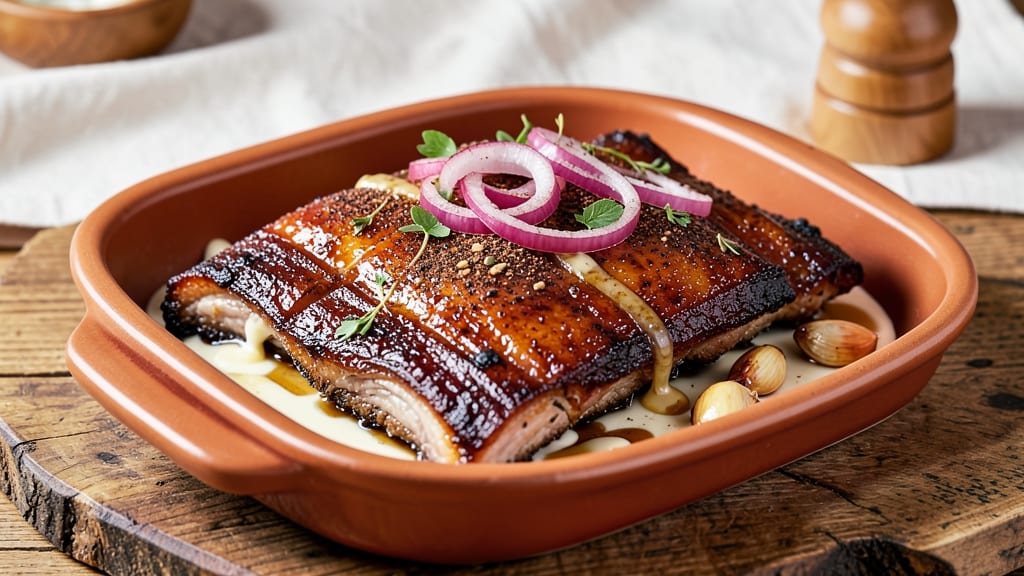
This baked pork spareribs recipe delivers restaurant-quality results with a crispy bark and juicy meat—all in one pan. After years of perfecting my technique at The Smoky Pig, I've simplified the process without sacrificing flavor.
The secret lies in a dry rub that develops deep color and caramelized edges while keeping the meat tender inside.
What sets this recipe apart is the low-and-slow baking method that transforms tough spareribs into melt-in-your-mouth perfection. Unlike traditional smoking, this oven technique requires no special equipment—just a baking sheet, high heat for initial browning, then a slow cook to render fat and develop flavor.
The result? A dish that's foolproof yet impressive enough for company.
By the time you pull those ribs from the oven, you'll have golden, crackling bark that shatters at every bite while the meat underneath stays tender enough to pull apart with a fork.
The aroma alone will have everyone gathering at your table, and the flavor—smoky, sweet, and savory—will make this your new go-to recipe for weekends and special occasions.
The beauty of this method is its versatility. Serve these ribs as-is for a rustic presentation, or glaze them with a quick barbecue sauce for extra shine. Either way, you'll achieve results that rival any pitmaster's—without the hours of smoking. Let's get started on creating your best spareribs yet.
Ingredients for baked pork spareribs
Four pounds of ribs plus a handful of pantry essentials—this is your shortcut to smoky, crispy perfection.
| Ingredient | Amount | Notes |
|---|---|---|
| Pork Spareribs 🥓 | 4 lb | Bone-in, fresh-cut preferred |
| Yellow Onion 🧅 | 1 whole | Large, sliced into rings |
| Brown Sugar 🍯 | ½ cup | Packed, light variety |
| Smoked Paprika 🌶️ | 2 tbsp | High-quality for depth |
| Garlic Powder 🧄 | 1 tbsp | Freshly ground preferred |
| Ground Black Pepper 🌶️ | 1 ½ tsp | Freshly cracked for heat |
| Kosher Salt 🧂 | 1 tbsp | Diamond Crystal preferred |
| Ground Cumin 🌿 | 1 tsp | Toasted for aromatic depth |
| Apple Cider Vinegar 🍎 | 2 tbsp | For tangy brightness |
| Olive Oil 🫒 | 2 tbsp | Extra-virgin for richness |
| Fresh Rosemary 🌿 | ¼ cup | Chopped, woody stems removed |
| Fresh Thyme 🌿 | ¼ cup | Leaves only, finely chopped |
| Black Coffee ☕ | ½ cup | Cold, for bark development |
The ribs are the star, so don't cut corners here. Look for bone-in, fresh-cut spareribs—those pre-packaged frozen ones lack the same tenderness. Costco or your local butcher are best bets; ask for the meatier cuts if they offer a choice. The brown sugar should be light and packed—dark sugar can make the bark too bitter. For the spices, Penzeys or bulk bins at natural markets give you the freshest, most aromatic options. If you're feeling fancy, toast the cumin seeds yourself for an extra layer of depth, but pre-ground works in a pinch.
No smoked paprika? Regular paprika plus half a teaspoon of liquid smoke gets you close, though it won't be identical. Short on vinegar? Lemon juice at the same amount works, but the flavor will be brighter. The coffee is non-negotiable for that classic bark—instant coffee granules dissolved in water are a great shortcut. Fresh herbs are ideal, but dried thyme at one-third the amount will do. For the olive oil, avoid light or refined oils—you want the peppery, fruity kind that adds richness. And if you're glazing these later, hold off on the full amount of sugar until you taste—some barbecue sauces are sweeter than others.
The ribs keep best in the fridge for 3-4 days if you're not cooking them immediately—wrap tightly in plastic and store on the bottom shelf. The dry rub? Make it a day ahead and store in an airtight container for up to 2 weeks. I always double the batch—one for ribs, one for chicken thighs or pork chops. If you're prepping ahead, par-cook the ribs (bake at 325°F for 2 hours) and finish them later. Just reheat gently with a splash of apple juice to keep them moist.
Why You'll Love This Recipe
- One-Pan Magic: I swear by this—just toss the ribs, onions, and spices on a sheet pan, and walk away. No messy sauces, no fussing with a grill. Honestly, the only prep is slicing the onions, and even that’s quick.
- Sweet-Smoky Bomb: That caramelized brown sugar crust? It’s dangerously good. The smoked paprika and garlic powder give it this deep, savory warmth, while the onions add a sweet, jammy finish. My husband licks the plate.
- Leftovers That Don’t Suck: These ribs stay tender for days, so I make a double batch. The flavors only get better the next day—perfect for lazy lunches or sneaking into tacos. (Yes, even on a Tuesday night.)
- Budget Crowd-Pleaser: A whole pack of spareribs feeds six for under $20. It’s my go-to for game days, potlucks, or when I’m broke but still want to impress. Everyone asks for seconds, and I get to brag about how cheap it was.
Step-by-step instructions for baked pork spareribs
Here's how to transform tough pork spareribs into fall-off-the-bone tender meat with a deep mahogany bark.
Prep the Ribs for Maximum Flavor
Start by removing the membrane from the underside of the pork spareribs. Slide your thumb or a butter knife under the membrane at the bone end and gently pry it loose. This step is crucial—it prevents the ribs from curling during cooking and allows the seasonings to penetrate fully. Rinse the ribs under cold water to remove any residual blood, then pat them completely dry with paper towels. Moisture is the enemy of crispy bark, so take your time here.
In a large bowl, combine the 0.5 cup packed brown sugar, 2 tablespoons smoked paprika, 1 tablespoon garlic powder, 1.5 teaspoons ground black pepper, 1 tablespoon kosher salt, and 1 teaspoon ground cumin. Mix until the spices are evenly distributed and the sugar is coated with the dry ingredients. This dry rub will create the signature bark while keeping the meat tender. Sprinkle the rib rack with the onion rings, then generously coat both sides of the ribs with the spice mixture, pressing it into every crevice. Let the ribs sit at room temperature for 30 minutes while you prepare the next components.
Build the Coffee-Braised Base
Preheat your oven to 325°F. Heat a large oven-safe skillet or Dutch oven over medium-high heat and add the 2 tablespoons olive oil. Once the oil shimmers, add the 1 whole yellow onion in a single layer and cook for 5-6 minutes until the onions begin to caramelize at the edges. This step develops deep sweetness that will infuse the ribs. Remove the onions with a slotted spoon and set aside, leaving the fond in the pan.
Add the 0.5 cup black coffee to the skillet and scrape up all the browned bits from the bottom with a wooden spoon. This liquid will create a rich, slightly acidic braising liquid that tenderizes the meat. Let the coffee simmer for 2 minutes until it reduces slightly and the aroma becomes intense. Pour the 2 tablespoons apple cider vinegar into the skillet and stir to combine. The vinegar adds tangy brightness that cuts through the richness of the ribs and bark.
Layer and Braise for Tender Perfection
Place the seasoned pork spareribs bone-side down in the skillet, arranging them in a single layer. The ribs should fit snugly but not be crowded. Sprinkle the 0.25 cup chopped fresh rosemary and 0.25 cup chopped fresh thyme evenly over the top, then nestle the caramelized onions on top of the ribs. This arrangement ensures the ribs cook evenly and the aromatics infuse the meat. Transfer the skillet to the preheated oven.
Braise the ribs uncovered for 2 hours. The ribs are done when they reach an internal temperature of 195-203°F at their thickest point and the meat easily pulls away from the bone. I check the temperature with an instant-read thermometer inserted into the thickest part of the meat, avoiding the bone. If the ribs aren't quite tender after 2 hours, continue cooking for another 30-minute increments until they reach the desired doneness.
Develop the Crispy Bark
Once the ribs are tender, remove them from the oven and increase the heat to 425°F. Return the skillet to the oven and broil the ribs for 5-7 minutes, watching closely to prevent burning. The high heat will caramelize the sugars in the rub, creating that coveted crispy bark. You'll know it's ready when the edges turn a deep mahogany color and the surface develops a glossy sheen. If the bark forms unevenly, rotate the skillet and continue broiling.
Remove the ribs from the oven and let them rest on a wire rack for 10 minutes. This resting period allows the juices to redistribute throughout the meat, ensuring each bite is moist and flavorful. Serve the ribs directly from the skillet, spooning the braising liquid over the top. The combination of tender meat, crispy bark, and rich coffee-braised sauce creates a harmonious balance of textures and flavors that will impress even the most discerning guests.
Pro Tips For Making Baked Pork Spareribs
- Trim the Fat First: Cut away the thick silver skin and excess fat from the spareribs before baking—it melts into a greasy mess that steams the meat instead of browning it. I learned this the hard way when my ribs came out soggy and pale; now I trim aggressively with kitchen shears.
- Brown Sugar Needs Heat: Don’t just sprinkle that brown sugar on top and call it a day. Preheat your oven to 425°F (220°C) and let the ribs sit uncovered for 15 minutes first—this caramelizes the sugar into a sticky, flavorful crust. Skimp on the heat, and you’ll end up with a sad, clumpy glaze.
- Don’t Overcrowd the Pan: If your ribs are stacked like cordwood, they’ll steam instead of sear. Arrange them in a single layer with space between each bone, even if it means baking in batches. I used to cram them in for "even cooking," but the results were always dull and uneven.
- Slice Onions Thinly: Dice those yellow onions into paper-thin slices—less than ⅛-inch thick—so they caramelize quickly without turning to mush. Thick chunks stay raw and watery, while thin slices dissolve into the pan, adding sweet depth without overpowering the ribs. (Yes, it’s tedious, but it’s worth it.)
Storing and reheating your leftovers
Fridge Storage Tips
Store your cooked pork spareribs in an airtight container with the braising liquid for up to 4 days in the refrigerator. I like using glass Pyrex containers because they don't absorb odors and allow me to see the ribs.
Place them on the bottom shelf where it's coldest—this helps maintain their texture. The coffee-braised liquid actually enhances flavor overnight as the spices meld further. 💫
Freezer Prep Guide
For longer storage, freeze the ribs for up to 3 months in quart-sized freezer bags with 1 inch of headspace for expansion. I remove as much air as possible to prevent freezer burn—this is where a vacuum sealer comes in handy if you have one.
Label each bag with the date and cooking instructions. When reheating from frozen, add an extra 15 minutes to the braising time to ensure even cooking.
Reheating Methods
My preferred method is stovetop reheating—it preserves the best texture. Place the ribs in a skillet over medium-low heat with ¼ cup of the braising liquid or apple cider vinegar to prevent drying. Cover and heat for 10-15 minutes, stirring occasionally.
For microwave reheating, cover with a damp paper towel and heat in 1-minute intervals on 70% power until reaching 165°F internal temperature. The microwave can make the bark soggy, so I only use this for quick lunches.
Reviving the Bark
If you're reheating ribs that have lost their crispy bark, don't worry—you can restore it! After warming through, transfer the ribs to a hot skillet and sear for 2-3 minutes per side until the edges crisp up again.
A quick broiler finish for 1-2 minutes also works wonders. This technique is especially useful if you're serving the ribs cold or at room temperature later.
Sauce Refresh
The braising liquid reduces significantly after initial cooking. To revive it for serving, add 2 tablespoons of water or apple cider vinegar and simmer for 3-5 minutes until slightly thickened.
For extra richness, stir in 1 tablespoon of butter or a splash of heavy cream—this adds a velvety texture that pairs perfectly with the crispy bark. I often use this refreshed sauce as a dipping sauce for the ribs. 🔥
Nutrition facts
Frequently asked questions
Why do I need to remove the membrane from pork spareribs?
The membrane is a tough connective tissue that prevents seasonings from penetrating the meat and causes the ribs to curl during cooking. Removing it ensures even cooking and maximum flavor absorption. Slide your thumb under the membrane at the bone end and gently pry it loose—it's easier than you think!
Can I use bone-in or boneless pork spareribs for this recipe?
This recipe is designed for bone-in pork spareribs—they stay more tender and develop better flavor. Boneless spareribs will cook faster and may become dry. If you must use boneless, reduce the cooking time by 20-30 minutes and monitor closely for doneness.
What's the secret to getting that perfect crispy bark?
The crispy bark comes from the combination of brown sugar, smoked paprika, and the coffee braising liquid. After the initial 2-hour braise, increase the oven to 425°F and broil for 5-7 minutes—this caramelizes the sugars and creates that coveted crackling crust. Watch closely to avoid burning!
How do I know when the ribs are fully cooked?
Use a meat thermometer to check the internal temperature at the thickest part of the meat (avoiding the bone). The ribs are done when they reach 195-203°F—the meat should pull away from the bone with gentle pressure. If they're not tender after 2 hours, continue cooking in 30-minute increments until they reach this range.
Can I make these ribs in a regular oven without a Dutch oven?
Yes! Use a large oven-safe skillet or even a baking sheet lined with foil. For best results, place the ribs on a wire rack over the pan to allow air circulation. If using foil, poke holes in the top layer to let steam escape. The coffee braising liquid will still work—just pour it into the pan with the ribs.