
Main Courses
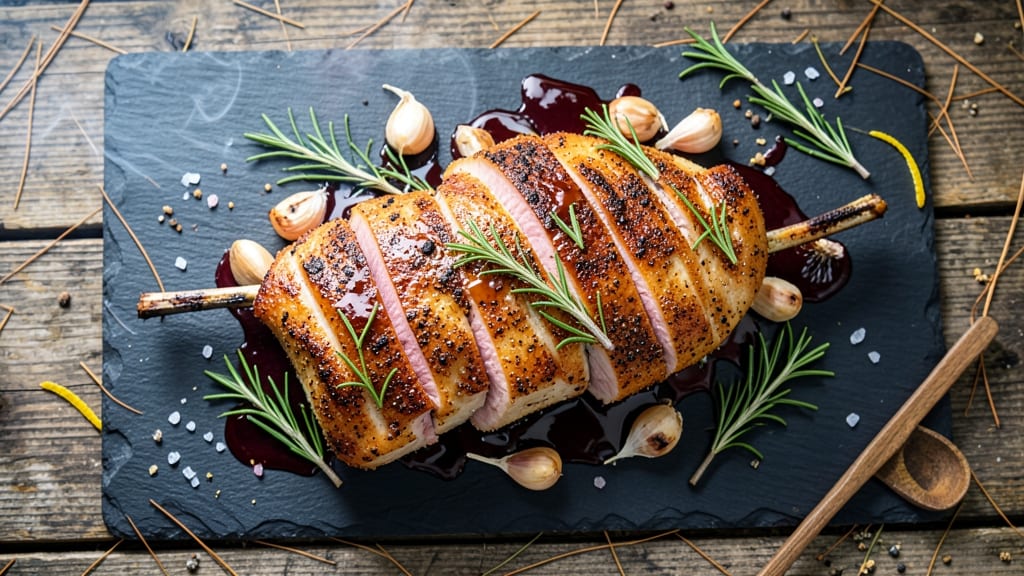
This barbecue rack of pork recipe delivers the kind of showstopping centerpiece that transforms any cookout into a memorable feast. The secret lies in that smoky-sweet glaze—it caramelizes beautifully on the bone, creating a crust so rich it'll have your guests licking their fingers. I've been perfecting this technique for years, blending my French training with the bold flavors of American BBQ.
The key to success is patience and precision: a low-and-slow smoke for tender meat, followed by a final sear to lock in those flavors. We're talking about a 3-4 pound rack that falls apart with a touch, its glaze glistening like amber under the grill lights.
The marinade works its magic overnight, while the glaze develops its signature caramelized depth during the final cooking stages.
What you'll end up with is a restaurant-quality centerpiece that's juicy, tender, and packed with flavor in every bite. The glaze doesn't just coat the meat—it seeps into the bones, creating a sauce that's almost as good as the meat itself.
This is the kind of dish that makes you look like a pitmaster pro, even if you're just getting started.
Serve it with grilled corn on the cob, a crisp coleslaw, and some warm dinner rolls to soak up every last bit of that caramelized goodness. The contrast of textures and temperatures makes each bite unforgettable. Let's get cooking—your next cookout is about to become legendary.
Ingredients for barbecue rack of pork
Sixteen ingredients transform a simple pork rack into a legendary cookout centerpiece.
| Ingredient | Amount | Notes |
|---|---|---|
| Pork Tenderloin Rack 🐷 | 4 lb | Bone-in, frenched for even cooking |
| Brown Sugar 🍯 | ¾ cup | Light or dark, packed tightly |
| Apple Cider Vinegar 🍎 | ½ cup | Unfiltered for depth of flavor |
| Smoked Paprika 🌶️ | 2 tbsp | High-quality, not the grocery store kind |
| Garlic Cloves 🧄 | 8 cloves | Freshly minced, skin-on for extra flavor |
| Fresh Rosemary 🌿 | ¼ cup | Finely chopped, stems removed |
| Fresh Thyme 🌿 | ¼ cup | Leaves only, no woody stems |
| Olive Oil 🫒 | ½ cup | Extra-virgin, for high smoke point |
| Honey 🍯 | ¼ cup | Wildflower preferred for complexity |
| Worcestershire Sauce 🍶 | 2 tbsp | High-quality, anchovy-free if needed |
| Black Peppercorns 🌶️ | 1 tbsp | Freshly cracked, not pre-ground |
| Kosher Salt 🧂 | 1 ½ tbsp | Diamond Crystal preferred |
| Wood Chips 🌳 | 2 cups | Hickory or applewood, soaked 30 minutes |
| Charcoal Briquettes 🔥 | 20 pieces | Lump charcoal for best heat control |
The pork rack is your canvas—bone-in, frenched cuts from a butcher's counter (not the pre-cut grocery display) make all the difference. Look for racks with good marbling and even bone spacing—this ensures even cooking and maximum glaze adhesion. Costco or your local butcher will have the best quality, but if you're in a pinch, the pre-fenched racks at Whole Foods work fine. For the wood chips, hickory gives that classic BBQ punch, while applewood adds a subtle sweetness. Soak them in water for at least 30 minutes before using—this prevents flare-ups and keeps the smoke steady. The charcoal briquettes should be lump charcoal if possible; they burn hotter and more evenly than briquettes.
No smoked paprika? Substitute with a mix of regular paprika and a pinch of liquid smoke—just don't overdo it, or you'll taste the artificiality. Fresh herbs wilt fast, so dried thyme and rosemary work in a pinch (use half the amount). The Worcestershire sauce is non-negotiable for that umami depth, but if you're avoiding anchovies, coconut aminos can mimic some of the savory notes. For the glaze, maple syrup swaps out honey beautifully, though it has a slightly different caramelization profile. The olive oil matters here—use something with a high smoke point (like Avocado oil) if you're searing over direct heat. And if you're short on time, pre-marinate the rack for at least 4 hours instead of overnight—it'll still be delicious.
Marinate the pork in the fridge for up to 24 hours—the longer it sits, the more tender it becomes. Store any leftover marinade in a sealed container for up to 3 days, but don't reuse it for cooking (raw meat juices contaminate it). The cooked rack reheats beautifully—wrap in foil and warm in a 300°F oven for 10-15 minutes, or toss it on the grill for a quick sear. Leftovers keep for 3-4 days in the fridge, but honestly, this dish disappears faster than that. For a crowd-friendly version, double the recipe and use two racks—just be ready to fire up the grill twice. The glaze thickens as it cools, so reheat it gently if it's too stiff to drizzle.
Why You'll Love This Recipe
- Foolproof Prep: The pork rack comes pre-portioned—no butchering, no guesswork. Just tie the frickin’ thing up, slather on the brown sugar and smoked paprika mix, and toss it in the oven. I’ve made this while scrolling through my phone; it’s that simple.
- Sweet-Smoky Magic: That caramelized brown sugar crust? It’s everything—sticky, smoky, with just enough tang from the apple cider vinegar to cut through the richness. The garlic cloves roasted right into the meat? Pure flavor payoff with zero effort.
- Weeknight to Weekend: Same recipe feeds four for dinner or becomes six lunches if you slice it thin. Pack it for picnics, serve it at BBQs, or reheat it for lazy Sundays. Honestly, I’ve even used leftover slices in tacos—no judgment.
- Budget-Friendly Feast: A single pork rack stretches further than you’d think, and the ingredients cost less than takeout. Smoked paprika and vinegar last forever, so you’re not breaking the bank for flavor. My wallet and taste buds thank me every time.
Step-by-step instructions for smoky-sweet pork tenderloin
Here's how to transform a simple pork rack into a showstopping centerpiece with deep smoky flavors and caramelized glaze.
Prepare the Dry Rub and Glaze
In a medium bowl, combine the 0.75 cup brown sugar, 2 tbsp smoked paprika, 1.5 tbsp kosher salt, and 1 tbsp freshly cracked black peppercorns. Mix thoroughly until the sugar is evenly coated and the spices are fully distributed. This dry rub will create that signature bark while balancing sweetness with smoky depth.
In a separate small saucepan, whisk together the 0.5 cup apple cider vinegar, 0.25 cup honey, 2 tbsp Worcestershire sauce, 0.5 cup olive oil, and 8 cloves minced garlic. Bring to a gentle simmer over medium heat, then reduce to low and cook for 5-7 minutes until slightly thickened. This glaze needs to reduce just enough to cling beautifully to the pork without being syrupy. Taste and adjust seasoning if needed—this is your flavor foundation.
Season and Smoke the Pork
Pat the 4 lb pork tenderloin rack completely dry with paper towels—this is critical for that perfect bark. Generously coat the entire rack with the dry rub, pressing it into the meat so it adheres well. Let it sit at room temperature for 30 minutes while you prepare your smoker.
Set up your smoker using the 20 pieces charcoal briquettes and 2 cups soaked wood chips (hickory or applewood). Heat to 250°F and maintain this temperature throughout the cook. Place the seasoned pork rack directly on the smoker grates, fat-side up. Smoke for 2-2.5 hours until the internal temperature reaches 160°F and the bark is deep mahogany. Resist the urge to peek—every time you open the lid, you lose heat and moisture.
Apply the Glaze and Finish
After the initial smoke, brush the pork rack generously with half of the prepared glaze. Return it to the smoker and continue cooking for another 30-45 minutes until the glaze begins to caramelize and bubble. The pork is done when the internal temperature reaches 195-200°F—this ensures it's fork-tender with juices that practically gush when sliced.
For the final touch, brush on the remaining glaze and smoke for an additional 10 minutes to create a glossy, sticky finish. The glaze should be thick enough to hold its shape on the bone but still flow slightly when brushed. This is where the magic happens—the smoky-sweet flavors meld perfectly with the tender meat.
Rest and Serve
Remove the pork from the smoker and transfer it to a cutting board. Tent loosely with foil and let it rest for 15-20 minutes. This resting period allows the juices to redistribute throughout the meat, ensuring every slice is moist and flavorful. The glaze will continue to set slightly during this time, creating that perfect balance of sticky and firm.
Slice the pork between the bones into 1-inch thick medallions. The glaze should be caramelized on the bone, creating a beautiful contrast with the tender meat underneath. Serve immediately with the rendered juices from the smoker pan—these make an excellent dipping sauce for the glaze. Pair with roasted vegetables or crusty bread to soak up every last drop of that smoky-sweet goodness.
Pro Tips For Making Barbecue Rack Of Pork
- USE A MEAT THERMOMETER: The rack’s small size means it cooks fast—too fast to eyeball. Pull it at 145°F internal temp (155°F if serving kids or elderly). I learned this the hard way after serving dry pork because I trusted the grill’s heat instead of the thermometer.
- MINCE THAT GARLIC: Whole cloves? Nope. Crush or finely mince the garlic cloves before mixing with vinegar and brown sugar—this ensures even distribution and deeper flavor penetration. I used to just smash them, but the texture was inconsistent, and the taste wasn’t as bold.
- BRINE THE RACK OVERNIGHT: Skip the dry rub and soak the pork in a mix of apple cider vinegar, brown sugar, and salt (1:1:1 ratio) for 12–24 hours. The acid tenderizes the meat and caramelizes the sugar, giving you a sticky, flavorful crust without extra basting. Yes, it’s more work upfront, but the payoff is worth it.
- GRILL IN TWO STAGES: Start over direct heat to sear the rack until deeply browned (about 5–7 minutes per side). Then move to indirect heat and let it cook low and slow until the internal temp hits your target. Crowding the rack over direct heat steams it instead of caramelizing—don’t fall into that trap.
Troubleshooting great barbecue rack of pork
Uneven Bark Development
If one side of your pork rack develops a thick, dark bark while the other stays pale, you're dealing with inconsistent heat exposure. This often happens when the rack isn't placed properly on the smoker grates.
Always position the rack fat-side up and ensure it's centered on the heat source. I've seen this problem when using offset smokers—rotate the rack 90 degrees every 30 minutes to distribute heat evenly. If you're using a charcoal grill, arrange coals equidistant on both sides. 🔥
Glaze Not Caramelizing
A glaze that stays sticky and doesn't develop that beautiful amber crust is usually a temperature or timing issue. The glaze needs direct heat exposure to caramelize properly. If your smoker temperature drops below 275°F during the final stages, the glaze won't develop its signature texture.
I recommend increasing heat to 300°F for the last 20 minutes of cooking. Also, make sure you're brushing the glaze generously—a thin layer won't caramelize effectively. For extra insurance, add 1 tbsp apple cider vinegar to the glaze before the final application to help with browning.
Meat Too Dry
Overcooking is the #1 reason for dry pork rack. The internal temperature should never exceed 200°F—any higher and the meat will start to dry out. I've ruined more racks than I'd like to admit by letting them cook past this point.
Use a meat probe thermometer and pull the pork when it reaches 195-200°F. If you're worried about doneness, rest the meat for 20 minutes before slicing—this redistribution of juices makes a huge difference. For extra moisture, baste with the glaze every 15 minutes during the final hour of cooking.
Smoke Flavor Too Weak
If your pork tastes like it was cooked over store-bought charcoal rather than real wood, you're probably not generating enough smoke. The key is fresh, quality wood chips—I recommend hickory or applewood for this recipe.
Soak your chips for at least 30 minutes before using, and replace them halfway through cooking if the smoke starts to fade. For offset smokers, maintain a steady drip of wood chips onto the hot coals.
If you're using a pellet smoker, check that your pellet hopper is full and that the fire pot isn't clogged. A good rule of thumb: you should be able to see visible smoke coming from the vents. 🌳
Glaze Too Thin
A runny glaze that pools on the smoker pan instead of sticking to the meat means it wasn't reduced enough. The glaze should coat the back of a spoon thickly before application.
If yours is too thin, simmer it uncovered for an additional 5-10 minutes until it reaches the right consistency. For extra thickness, add 1 tsp cornstarch mixed with 1 tbsp water to the glaze and stir until it thickens.
I've also found that reducing the vinegar by 2 tbsp helps create a more stable glaze. Remember, the glaze should be syrupy but still pourable—like honey rather than syrup.
Bark Falling Off
When the dry rub bark starts peeling off in sheets, it's usually a moisture or temperature shock issue. This happens when you move the pork too quickly between heat sources or when the meat isn't properly dried before seasoning.
Always pat the pork completely dry with paper towels before applying the rub. Also, avoid sudden temperature changes—if you're moving from smoker to grill for finishing, let the pork rest at room temperature for 10 minutes before transferring.
For extra adhesion, lightly brush the pork with olive oil before applying the dry rub. This creates a better bond between the meat and seasoning. 💪
Nutrition facts
Frequently asked questions
Can I use a pork loin instead of a rack?
You can absolutely substitute a bone-in pork loin (about 3-4 pounds) for the rack, but the cooking time and technique will differ slightly. The bones in the rack help distribute heat evenly, so a loin may need 15-20 minutes less total cooking time. For best results, score the loin deeply (about 1/4-inch apart) to help the glaze penetrate and prevent curling. The internal temperature target remains the same: 195-200°F for fork-tender meat.
How do I adjust the recipe for a pellet grill?
Pellet grills make this recipe even easier! Set your pellet grill to 250°F and use hickory or applewood pellets for authentic smoke flavor. The cooking time remains similar (2.5-3 hours total), but monitor the temperature closely—pellet grills can fluctuate. For the final glaze stage, increase the temperature to 300°F for the last 20 minutes to ensure proper caramelization. The built-in thermometer makes tracking internal temps a breeze!
What's the best way to reheat leftovers?
Leftovers reheat beautifully! Wrap the sliced pork in foil and warm in a 300°F oven for 10-15 minutes, or toss it on the grill over medium heat for 5-7 minutes per side. For extra moisture, add a splash of apple cider vinegar or broth to the foil before reheating. The glaze will soften slightly but still taste amazing. Store leftovers in the fridge for up to 4 days—though they rarely last that long!
Can I make this ahead of time?
Yes! This dish actually tastes better when made ahead. After cooking, let the pork cool completely, then refrigerate for up to 3 days. The flavors deepen as they meld. For serving, reheat as directed above. You can also prepare the glaze up to 5 days ahead and store it in the fridge—just give it a quick stir before using. The marinade can be made 2 days ahead if stored properly in an airtight container.
What's the secret to perfect glaze consistency?
The glaze should be syrupy but pourable—thick enough to coat the back of a spoon but still flow when brushed. For perfect consistency, reduce the glaze until it reaches 160-165°F on a candy thermometer. If it's too thin, simmer uncovered for 5-10 more minutes. Pro tip: Add 1 tsp cornstarch mixed with 1 tbsp water to thicken if needed. The glaze should cling beautifully to the pork without dripping off during cooking.