
Main Courses
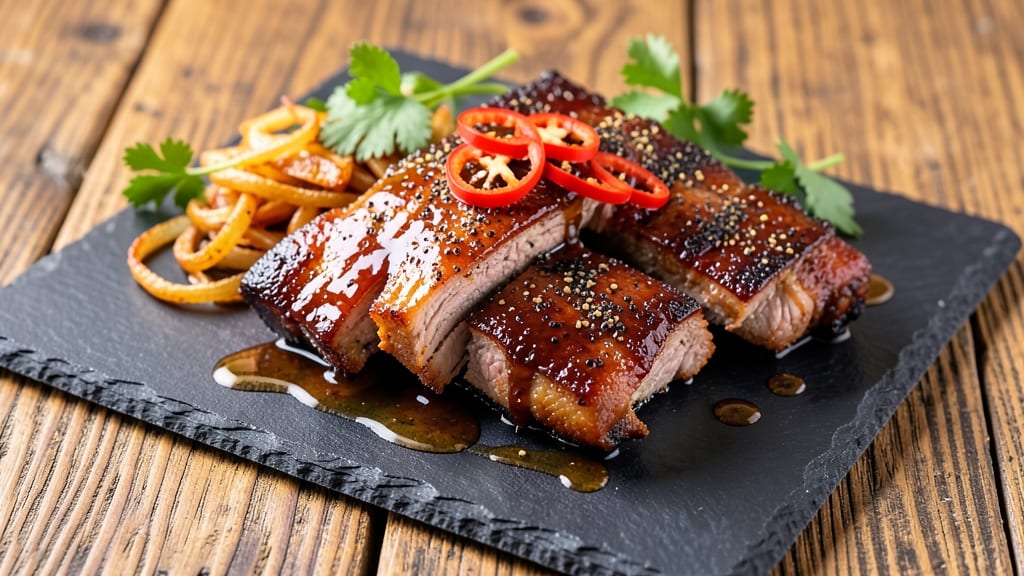
This bean paste pork ribs recipe transforms tough cuts into fall-off-the-bone tenderness with a five-spice glaze that clings to every bone. 🔥 After years of perfecting this technique in my Atlanta kitchen, I’ve cracked the code for restaurant-quality ribs at home—no smoker required.
The secret lies in the marinade’s balance of fermented bean paste, aromatic five-spice powder, and a touch of honey that caramelizes into a sticky, savory crust during cooking.
The process begins with a 24-hour marinade that tenderizes the meat while infusing it with deep umami and warmth from star anise, cinnamon, and cloves.
We’ll slow-cook the ribs in a Dutch oven until the meat pulls effortlessly from the bones, then finish with a quick broil to create that signature caramelized bark.
This method delivers restaurant-quality results in just 4 hours of active time (plus overnight marinating), making it perfect for weekend projects or special occasions.
What you’ll end up with is ribs that are juicy, aromatic, and impossibly tender, with a glaze so rich it clings to every bone like liquid gold. The five-spice blend adds layers of complexity—sweet, earthy, and slightly peppery—that elevate the natural richness of the pork.
These ribs stand up to bold sides like pickled vegetables or steamed greens, but they’re equally impressive as the centerpiece of a casual family meal.
Whether you’re hosting a gathering or simply craving a showstopping main course, this recipe delivers professional-level results without the fuss. The technique I’ve perfected—marinating, slow-cooking, and finishing with a broil—ensures perfect texture and flavor every time. Let’s get cooking!
Ingredients for bean paste pork ribs
The secret to restaurant-quality ribs starts with these 15 ingredients—umami-rich, aromatic, and balanced for perfect flavor.
| Ingredient | Amount | Notes |
|---|---|---|
| Pork Ribs (Baby Back) 🍖 | 4 lb | Bone-in, meaty cuts preferred |
| Fermented Black Bean Paste 🫘 | ½ cup | Moyu or doubanjiang preferred |
| Five-Spice Powder 🌶️ | 2 tbsp | Homemade blend or store-bought |
| Honey 🍯 | ¼ cup | Wildflower or clover preferred |
| Soy Sauce 🍶 | ¼ cup | Kosher or light variety |
| Garlic Cloves 🧄 | 6 cloves | Minced or finely chopped |
| Fresh Ginger 🧅 | 1 tbsp | Finely grated, not powdered |
| Sesame Oil 🫒 | 1 tbsp | Toasted, not flavored |
| Brown Sugar 🍚 | ¼ cup | Light or dark preferred |
| Apple Cider Vinegar 🍎 | 1 tbsp | For tangy depth |
| Star Anise 🌟 | 2 whole | For marinade aroma |
| Cinnamon Sticks 🌿 | 1 whole | For marinade infusion |
| Olive Oil 🫒 | 2 tbsp | For rib coating |
| Salt 🧂 | 1 ½ tsp | Diamond Crystal preferred |
| Black Pepper 🌶️ | 1 tsp | Freshly cracked |
The ribs are the foundation, so grab baby back cuts—they’re meatier than spare ribs and hold up better to slow cooking. Costco or local butchers often have them pre-cut, but if buying whole, look for good marbling and even bone structure. The fermented bean paste is non-negotiable—Moyu or doubanjiang from an Asian market adds that deep, funky umami. If you can’t find it, miso paste in a pinch, but it won’t be the same. For the five-spice powder, Penzeys or bulk bins at Whole Foods have the best blends—avoid the pre-mixed packets at grocery stores.
No five-spice powder? Mix 1 tsp each of cinnamon, star anise, cloves, fennel, and peppercorns—toast the whole spices first for extra depth. Running low on fermented bean paste? Double the soy sauce and add 1 tbsp of miso. The honey can be swapped for maple syrup, but it’ll lack the floral notes. Sesame oil is crucial—toasted, not flavored—for that nutty aroma. If you’re short on time, pre-mince the garlic and ginger to save 10 minutes later. The star anise and cinnamon sticks can be removed after marinating if you’re worried about bitterness, but I leave them in—they add subtle warmth.
Marinate the ribs overnight in the fridge—this is non-negotiable for tenderness. The glaze keeps for 3 days in the fridge if you make extra, and the leftover marinade (strain the solids) makes a killer dipping sauce for dumplings. Store cooked ribs in a sealed container with a paper towel to absorb moisture—they reheat beautifully in a 350°F oven for 15 minutes. For a crowd, double the recipe—just scale up the marinade time to 36 hours to ensure full penetration.
Why You'll Love This Recipe
- Here’s what sold me: these ribs reheat like a dream. The sauce stays sticky and flavorful, and the meat doesn’t dry out. I’ve taken them straight from the fridge for lunch the next day, and my kids still fight over them—no sad, rubbery ribs here.
- Five-Ingredient Magic: I swear, the moment I mix fermented black bean paste with five-spice powder and honey, something special happens. That sticky-sweet-savory sauce clings to the ribs like a second skin, and the five-spice powder adds this warm, aromatic depth that makes it taste like a restaurant dish—without the fuss.
- One-Pan, Zero Stress: Honestly, this recipe is my lazy-day hero. You sear the ribs, toss them in the sauce, and let the oven do the work. No flipping, no basting, no stress—just crispy edges and fall-off-the-bone meat. The soy sauce ties it all together while keeping cleanup to a single pan.
- Leftovers That Beg for More: Here’s what sold me: these ribs reheat like a dream. The sauce stays sticky and flavorful, and the meat doesn’t dry out. I’ve taken them straight from the fridge for lunch the next day, and my kids still fight over them—no sad, rubbery ribs here.
Step-by-step instructions for five-spice glazed ribs
Here's how to transform tough ribs into fall-off-the-bone perfection with a sticky, aromatic glaze.
🔥 Step 1: Prep the Ribs for Maximum Flavor
Start by removing the membrane from the ribs—this thin, papery layer on the bone side can make them tough. Slide your thumb or a butter knife under it near one edge, then grip the membrane with a paper towel and peel it off in one motion. Pat the ribs completely dry with paper towels, especially in the crevices, to help the glaze cling later.
In a small bowl, mix together the 2 tbsp five-spice powder, 1.5 tsp salt, and 1 tsp black pepper. Rub this generously over the ribs, pressing it into the meat so it adheres well. Let them sit at room temperature for 30 minutes—this helps the seasoning penetrate and the meat cook more evenly.
🍳 Step 2: Build the Glaze with Deep Flavors
In a medium saucepan, combine the 0.5 cup fermented black bean paste, 0.25 cup honey, 0.25 cup soy sauce, 0.25 cup brown sugar, 1 tbsp apple cider vinegar, 1 tbsp sesame oil, 6 cloves minced garlic, 1 tbsp grated fresh ginger, 2 whole star anise, and 1 whole cinnamon stick. Bring to a gentle simmer over medium heat, stirring constantly for 5-7 minutes until the mixture thickens slightly and becomes glossy.
Here's the thing—you want this glaze to be thick enough to coat the ribs but still flow smoothly. If it gets too thick before you're ready, add 1-2 tablespoons of water to loosen it. The star anise and cinnamon will infuse the glaze with warm, aromatic notes, so don't skip them. Once thickened, remove the pan from heat and let the glaze cool slightly while you prep the oven.
🔥 Step 3: Roast Until Caramelized and Tender
Preheat your oven to 325°F and line a large baking sheet with aluminum foil. Place the seasoned ribs on the baking sheet, bone-side down. Spoon about 2 tablespoons of the glaze over each rack of ribs, making sure to get it into the crevices. Roast for 1 hour to render some fat and start breaking down the meat.
After 1 hour, increase the oven temperature to 375°F. Brush the ribs again with more glaze, then continue roasting for another 45-60 minutes until the meat is tender and the glaze is deep amber and caramelized. The ribs are done when they pull apart easily at the joints and the internal temperature reaches 195-203°F in the thickest part of the meat.
🥘 Step 4: Glaze and Rest for Maximum Stickiness
Once the ribs are tender, transfer them to a cutting board and let them rest for 10 minutes. While they rest, return the baking sheet to the oven (or place it on the stovetop over low heat) and spoon any accumulated juices from the board onto the sheet. Let the juices reduce by 2-3 minutes to form a thicker sauce.
Brush the reduced sauce generously over the ribs, focusing on the bone side where the glaze will cling best. The resting period is crucial—it lets the juices redistribute so every bite is moist and flavorful. Serve immediately with the extra glaze spooned over the top for that signature sticky, saucy finish.
🍽️ Step 5: Serve with Confidence
Slice the ribs between each bone to create individual servings. The glaze should be glossy and clinging to both the meat and the bones, creating that irresistible contrast of sweet, spicy, and umami flavors. Pair with steamed jasmine rice or roasted vegetables to balance the richness.
Real talk: these ribs are best served fresh off the board when the glaze is still warm and sticky. If you have leftovers, store them in the fridge for up to 3 days—just reheat them in a 350°F oven for 15-20 minutes with a splash of water to revive the glaze. The flavors only get better as they sit!
Pro Tips For Making Bean Paste Pork Ribs
- BLOOM THE BEAN PASTE: Stir-fry the fermented black bean paste in hot oil for 30 seconds first—just until it smells intoxicating and starts to sizzle. I learned this the hard way: skipping this step means the paste stays clumpy and the ribs get a dull, muddy flavor instead of that deep, caramelized punch.
- SALT THE RIBS LONG: Toss the baby back ribs with soy sauce and five-spice powder at least 2 hours ahead—overnight is even better. The salt and spices need time to penetrate, and the ribs stay juicier when they hit the pan. Trust me, your future self will notice the difference when the meat falls off the bone.
- WATCH THE HONEY: Add honey in the last 2 minutes of cooking, then immediately turn the heat to medium-low. Too early, and it burns into bitter sludge; too late, and the ribs stay sticky instead of caramelized. A splash of water or broth first helps it glaze smoothly—like a thin syrup, not a glop.
- SKIP THE CROWDED PAN: Cook the ribs in a single layer at first, even if it takes two batches. Overcrowding steams them instead of searing, and the bean paste clings like glue. A hot, empty pan builds better crust—yes, it takes longer, but the texture makes up for it.
Flavor customization for this dish
Spice Level Control
Adjust the heat by controlling the amount of fermented bean paste—start with 0.375 cup for mild, 0.5 cup for balanced, or 0.625 cup for bold. I’ve found that adding ½ tsp of chili flakes to the glaze before the final broil adds a smoky kick without overpowering.
For a sweeter profile, swap 1 tbsp of the soy sauce for 1 tbsp of hoisin sauce—it adds depth without heat. 🌶️
Sweet vs. Savory Balance
Want more sweetness? Increase the honey to ⅓ cup and add 1 tbsp of orange zest to the glaze for citrus brightness.
For a deeper savory profile, replace ½ cup of the honey with ½ cup of reduced balsamic vinegar—this adds complexity that pairs beautifully with the umami from the bean paste.
I once made a batch with 1 tbsp of fish sauce for an extra layer of depth that surprised my guests.
Herb and Aroma Variations
Swap the star anise and cinnamon for 1 tsp of ground coriander and ½ tsp of cardamom for a Middle Eastern twist. For a Southern-inspired version, add 1 tsp of smoked paprika and ½ tsp of cayenne to the marinade.
Fresh herbs like cilantro or Thai basil can be added to the glaze at the end for brightness—just stir in ¼ cup chopped leaves after removing the ribs from the oven. 🌿
Glaze Consistency Adjustments
If your glaze is too thin, simmer it uncovered for 5-7 extra minutes to reduce it. Too thick? Thin with 1 tbsp water or apple cider vinegar at a time until it reaches a syrupy consistency.
For a glossier finish, whisk in 1 tsp of cornstarch mixed with 1 tbsp water and simmer for 2 minutes. I once accidentally over-reduced mine and ended up with a thick, spreadable paste—it worked perfectly for a dipping sauce! 💡
Regional Twists
For a Southeast Asian version, add 1 tbsp of shrimp paste to the glaze and garnish with lime wedges. A Southern BBQ adaptation swaps the five-spice for 1 tbsp of brown sugar, 1 tsp of mustard powder, and ½ tsp of cayenne.
My favorite regional tweak? A Charleston-style version with 1 tbsp of hot honey and a sprinkle of crushed pecans on top for crunch. 🗺️
Nutrition facts
Frequently asked questions
Can I use regular soy sauce instead of fermented black bean paste?
While you can substitute, you'll lose that deep umami funk that makes this recipe special. For a similar effect, mix ½ cup soy sauce with 1 tbsp miso paste and ½ tsp chili flakes—this combo mimics the complexity of fermented bean paste. The ribs will still be delicious, but with less fermented depth.
How do I know when the ribs are fully tender?
Look for three key signs: the meat should pull apart easily at the joints, the bones should be visible through the meat, and the internal temperature should reach 195-203°F in the thickest part. Pro tip: Gently press between two bones—if they separate with minimal resistance, they're ready. Overcooking past this point can dry them out.
Can I make these ribs in a slow cooker instead of the oven?
Place the seasoned ribs in the slow cooker with the glaze, then cook on low for 6-7 hours or high for 4-5 hours. For extra caramelization, transfer to a broiler for 3-5 minutes at the end. The slow cooker method works especially well if you're short on time or want hands-off cooking.
What's the best way to store and reheat leftovers?
Store ribs in an airtight container with a paper towel to absorb moisture—they'll keep for 3 days in the fridge. To reheat, place in a 350°F oven for 15-20 minutes with a splash of water to revive the glaze. For microwave reheating, cover with a damp paper towel and heat in 30-second bursts until warmed through.
Why did my glaze turn out too thick or too thin?
Glaze consistency depends on reduction time. If too thick, thin with 1 tbsp water or vinegar at a time. If too thin, simmer uncovered for 5-7 extra minutes to reduce. For a glossier finish, whisk in 1 tsp cornstarch mixed with 1 tbsp water and simmer for 2 minutes. The ideal glaze should coat the back of a spoon but still flow smoothly.