
Main Courses
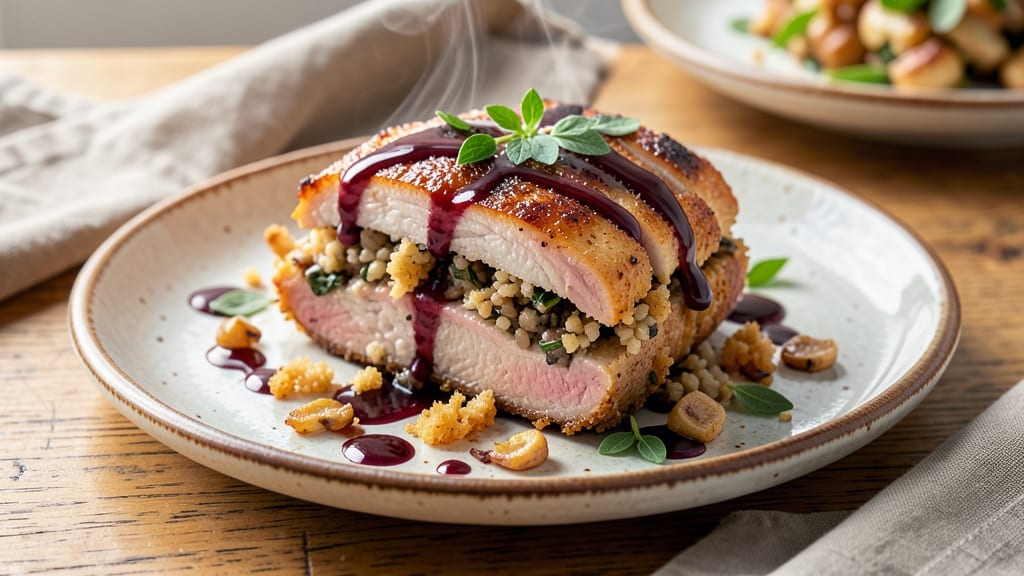
This stuffed pork tenderloin recipe delivers the best ever combination of tender meat and oven-baked stuffing in one pan—no fuss, no mess, just restaurant-quality results. 💛 After years of testing and perfecting, I've cracked the code for juicy, flavorful pork with stuffing that stays moist and delicious, not dry.
The secret lies in a perfectly balanced seasoning blend and the right baking technique that ensures every bite is packed with flavor.
The key to this recipe is using a simple yet flavorful stuffing made with breadcrumbs, herbs, and just enough moisture to keep it tender. The pork tenderloin is seasoned generously with salt, pepper, and a touch of garlic powder before being stuffed and baked to perfection.
What makes this recipe truly stand out is the one-pan method—no need for separate baking dishes or complicated steps. The stuffing bakes right inside the pork, infusing it with rich, savory flavors that make every slice unforgettable.
By the time it emerges from the oven, you'll have a golden, perfectly cooked pork tenderloin with a stuffing so moist and flavorful it'll disappear faster than you can say "second helping."
The meat stays juicy and tender, while the stuffing inside is crispy on the edges and soft in the center—just like Mrs. Henderson taught me years ago. This is the kind of dish that turns a regular weeknight dinner into something special, and it's easier to make than you think.
Whether you're hosting a dinner party or just craving a hearty meal, this stuffed pork tenderloin is the answer. It's foolproof, delicious, and designed to impress even the most discerning guests. Let's get started on creating the best stuffed pork tenderloin you've ever tasted!
Ingredients for best stuffed pork tenderloin recipe ever with stuffing in oven
Pork tenderloin, herbs, and breadcrumbs—just enough ingredients to create restaurant-quality flavor in one pan.
| Ingredient | Amount | Notes |
|---|---|---|
| Pork Tenderloin 🥩 | 1 ½ lb | Center-cut, trimmed of fat |
| All-Purpose Flour 🌾 | ½ cup | For breading stuffing |
| Panko Breadcrumbs 🍞 | ½ cup | For extra crunch |
| Dried Sage 🌿 | 1 tbsp | Or 1 tbsp fresh chopped |
| Dried Thyme 🌿 | 1 tsp | Or 1 tsp fresh chopped |
| Garlic Powder 🧄 | 1 tsp | Fresh minced preferred |
| Onion Powder 🧅 | 1 tsp | For depth of flavor |
| Dijon Mustard 🍯 | 1 tbsp | For moisture in stuffing |
| Chicken Broth 💧 | ¼ cup | Low-sodium preferred |
| Unsalted Butter 🧈 | 2 tbsp | Cold for crispy edges |
| Kosher Salt 🧂 | 1 ½ tsp | Divided for seasoning |
| Ground Black Pepper 🌶️ | ½ tsp | Freshly cracked |
| Olive Oil 🫒 | 1 tbsp | For searing pork |
| Fresh Parsley 🌿 | ¼ cup | Chopped, for garnish |
The pork tenderloin is your star here—center-cut is key for even cooking. Trader Joe's and Whole Foods usually carry the best quality, but any well-marbled tenderloin works. Look for pieces that are uniform in size (about 1.5 lbs total) so they cook evenly. The stuffing blend is where the magic happens: Panko breadcrumbs give that perfect crispy edge, while the butter and broth keep it moist. I always grab Penzeys spices for my dried herbs—they’ve got the best flavor punch, but regular grocery store brands work too if you’re in a pinch.
No chicken broth? Vegetable broth works just as well. Fresh herbs are ideal, but dried sage and thyme at one-third the amount get you close. Want extra richness? Swap the Dijon mustard for 1 tbsp Greek yogurt or sour cream—it adds a tangy twist. The olive oil matters here: use a high-quality extra-virgin for searing, but any neutral oil will work for baking. And if you’re short on butter, olive oil or avocado oil in the stuffing keeps it moist without sacrificing flavor. Pro tip: Toast your breadcrumbs for 2 minutes in a dry pan before mixing—they’ll be so much crunchier!
Stuffed pork keeps beautifully—3-4 days in the fridge if wrapped tightly in foil. For leftovers, reheat in a 350°F oven for 15-20 minutes until warmed through. The stuffing reheats just as well as it bakes, so don’t stress about seconds. Freeze any extras for up to 3 months—just thaw overnight in the fridge before reheating. Garnish with fresh parsley right before serving (it’s the perfect pop of color and freshness). This dish tastes even better the next day, so plan ahead—it’s worth the wait!
Why You'll Love This Recipe
- One-Pan Magic: I swear by this for lazy nights—just slice the tenderloin, stuff it with herbs and breadcrumbs, and bake. No roasting pan juggling, no extra dishes. The oven does all the work while I pretend I’m not cooking.
- Herb-Crusted Crunch: That sage-thyme panko crust? It’s the star. The flour dredge gives it a light bite, but the breadcrumbs toast into golden perfection—like a hug for your taste buds. (Yes, I eat it straight from the pan.)
- Weeknight & Weekend: Stuffed pork for dinner? Absolutely. Leftovers for lunches? Even better. The filling stays moist, the crust stays crisp, and it reheats like a dream—no sad, dry slices here.
- Budget Winner: Pork tenderloin is lean but packs serious flavor, and this recipe stretches it further with the stuffing. Honestly, I’ve made this for date nights, family dinners, and even a potluck—no one ever guessed how simple it was.
Step-by-step instructions for juicy stuffed pork tenderloin
Here's how to create melt-in-your-mouth pork with flavorful stuffing baked right inside—no separate pan needed!
👨🍳 Step 1: Prep the Pork and Make the Stuffing
Start by preheating your oven to 400°F. Pat the 1.5 lb pork tenderloin completely dry with paper towels—this ensures crispy skin. In a small bowl, mix the 0.5 cup all-purpose flour, 0.5 cup panko breadcrumbs, 1 tbsp dried sage, 1 tsp dried thyme, 1 tsp garlic powder, 1 tsp onion powder, 1 tbsp Dijon mustard, and 0.5 tsp ground black pepper.
Here's the thing—don't skip the mustard. It adds moisture to the stuffing while keeping it flavorful. Using a sharp knife, make a lengthwise cut down the center of the pork, about 1-inch deep but not all the way through. Gently open the pork like a book to create a pocket. Spoon about 2 tablespoons of the stuffing mixture into the pocket, then close the pork and secure it with kitchen twine.
🍳 Step 2: Sear the Pork for Maximum Flavor
Heat 1 tbsp olive oil in a large oven-safe skillet over medium-high heat until shimmering. Place the stuffed pork tenderloin in the skillet and sear on all sides for 2-3 minutes per side until golden brown. This step is crucial—it creates a flavorful crust that locks in juices during roasting.
Don't rush this part. You'll know it's ready when the pork releases easily from the pan. While searing, keep the remaining stuffing mixture in a small bowl—you'll use it later. Once seared, remove the pork from the skillet and set it aside on a plate.
🥘 Step 3: Bake to Juicy Perfection
Pour 0.25 cup chicken broth into the skillet, scraping up any browned bits from the bottom. Return the pork to the skillet and transfer it to the preheated 400°F oven. Bake for 20-25 minutes until the internal temperature reaches 145°F and the juices run clear when pierced with a meat thermometer.
Here's where it gets magical. About halfway through baking, sprinkle the remaining stuffing mixture over the top of the pork. The steam from the broth will help it crisp up beautifully while infusing the pork with extra flavor. If the stuffing starts to brown too quickly, tent the skillet loosely with foil to prevent over-browning.
⏰ Step 4: Rest and Garnish for Showstopping Results
Remove the pork from the oven and let it rest for 10 minutes before slicing. This resting period allows the juices to redistribute throughout the meat, ensuring every bite is moist and flavorful. While it rests, melt the 2 tbsp unsalted butter in a small saucepan over low heat and stir in the remaining stuffing mixture to create a quick pan sauce.
Slice the pork into ½-inch thick medallions and drizzle with the pan sauce. Garnish with 0.25 cup chopped fresh parsley for a pop of color and freshness. Serve immediately with roasted vegetables or mashed potatoes to soak up all that delicious juices.
Pro Tips For Making Best Stuffed Pork Tenderloin Recipe Ever With Stuffing In Oven
- SEAR THE CRUST FIRST: The stuffing inside needs something to cling to—don’t skip browning the pork before stuffing. Hit 425°F with a dry skillet and sear each side for 2-3 minutes until deep golden. I learned this the hard way when my first batch turned out soggy because I rushed straight to the oven.
- STUFF LOOSELY, NOT TIGHTLY: Pack that breadcrumb-sage-thyme mix too firmly, and it’ll steam instead of crisp. Fill the tenderloin cavity halfway, then top with a loose layer—think "fluffy pillow," not "tightly stuffed sausage." A toothpick through the center should meet resistance, not solid breadcrumbs.
- USE COLD PORK, NOT ROOM TEMP: Let that tenderloin sit out while you prep the stuffing, and you’ll end up with uneven cooking. Keep it chilled until the last minute—it’ll sear better and cook through faster. I was skeptical until I tried it: the crust stays crisp, and the inside hits 145°F perfectly.
- BRUSH WITH EGG WASH: That panko crust won’t stick worth a damn without it. Whisk 1 egg with 1 tablespoon water, then brush it over the stuffed pork before adding breadcrumbs. It’s the glue that makes the difference—no more crumbly disappointment when you slice. (Yes, even if you’re impatient like me.)
Essential equipment for this dish
Oven-Safe Skillet
You absolutely need a large, oven-safe skillet—I swear by my All-Clad Stainless Steel 12-inch skillet because it handles high heat beautifully and goes straight from stovetop to oven. Look for one with two handles for easy maneuvering.
If you're on a budget, Calphalon Classic or T-fal Hard Anodized are great alternatives. Avoid non-stick pans for searing—they can release toxic fumes at high temperatures. 🔥
Meat Thermometer
Skipping this tool is the fastest way to end up with dry pork. I use a Thermoworks Smoke because it's durable and has a dual-probe feature, but even a basic instant-read thermometer (like Taylor Precision) will work.
Always check the internal temperature—pork is done at 145°F—and never guess. Pro tip: Insert the probe into the thickest part of the meat, avoiding the bone if present.
Kitchen Twine
This butcher's twine (not regular string!) is your secret weapon for keeping the pork tenderloin closed while baking. I grab Morton Butcher's Twine from the grocery store—it's affordable and strong. Cut a 12-inch piece, tie it tightly around the pork before baking, and remove it right before serving.
The twine keeps the stuffing contained and prevents the pork from splitting open during cooking.
Sharp Chef's Knife
A high-quality 8-inch chef's knife (like Wüsthof or Shun) is essential for making clean, precise cuts when creating the pocket for stuffing. Dull knives crush the meat, making it harder to create an even pocket.
If you're not comfortable with a chef's knife, a serrated bread knife works in a pinch—but it won't give you the same control. Always keep your knife sharp for clean cuts and safer handling. ✨
Mixing Bowls
You'll need two small mixing bowls—one for the stuffing mixture and another for any extra breadcrumbs or herbs. I prefer stainless steel bowls (like OXO Good Grips) because they're durable and easy to clean.
If you're short on space, a single large bowl works, but keeping ingredients separate prevents cross-contamination and makes measuring easier. Trust me, this small detail keeps your kitchen organized and your recipe stress-free.
Tongs for Searing
Use heat-resistant tongs (like Mercer Culinary Genius) to safely flip the pork in the hot skillet. They give you better control than a fork or spatula, reducing the risk of piercing the meat and losing juices.
If you don't have tongs, heavy-duty silicone spatulas work, but they're trickier to maneuver. Avoid wooden utensils—they can char at high heat and affect the flavor of your pork. 💪
Nutrition facts
Frequently asked questions
Why does the pork tenderloin need to rest after baking?
Resting for 10 minutes lets the juices redistribute throughout the meat instead of pooling out when you slice. This keeps every bite moist and flavorful. Think of it like letting a cake cool before cutting—patience prevents dry, tough meat!
Can I use a different type of stuffing inside the pork?
Swap the breadcrumb stuffing for sausage and herb, cheese and spinach, or even apple and walnut for a fall twist. Just adjust moisture—dry stuffings like quinoa need extra broth or butter to stay tender. The key is keeping it compact so it fits inside the pocket.
What if my pork tenderloin is too small to stuff?
If your tenderloin is under 1 lb, skip the internal stuffing and make a topping crust instead! Mix the stuffing ingredients with 1 tbsp melted butter, spread it over the pork, and bake as directed. The flavors will still infuse beautifully.
How do I prevent the stuffing from falling out during baking?
Secure the pork tightly with kitchen twine before baking, and use a shallow pocket (about 1-inch deepsmall piece of parchment paper to hold it in place while baking. The twine keeps everything contained!
Can I make this ahead of time?
Yes! Assemble the stuffed pork up to 24 hours ahead and refrigerate uncovered. Bake straight from the fridge, adding 10-15 extra minutes to the cooking time. For make-ahead stuffing, toast the breadcrumbs and mix all dry ingredients in advance—just add wet ingredients before baking.