
Soups & Stews
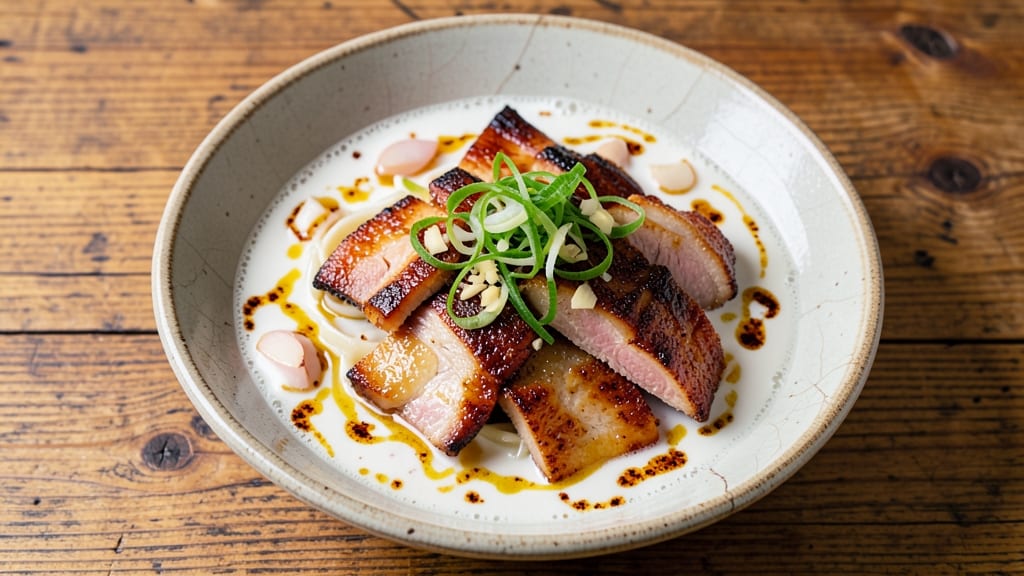
This Bida Manda Pork Belly Soup recipe brings Filipino comfort food to your kitchen with its signature five-spice crust and velvety coconut cream. 🌟 After years of perfecting braising techniques, I’ve developed a method that transforms tough pork belly into melt-in-your-mouth tenderness while balancing sweet, savory, and aromatic layers.
The magic lies in slow-cooking the pork belly until it’s fork-tender, then finishing it with a crispy five-spice crust that crackles with every bite. The coconut milk base infuses the broth with creamy richness, while ginger and garlic add depth.
This dish is a celebration of Filipino flavors—warm, comforting, and deeply satisfying. What makes this recipe special is the harmony of textures: the crispy pork belly contrasts beautifully with the silky soup, while the fragrant spices linger on your palate.
It’s the kind of meal that feels like a hug in a bowl, perfect for family gatherings or cozy weeknight dinners. Serve with steamed rice and fresh green onions for garnish. Let’s create this soul-warming dish step by step!
Ingredients for bida manda pork belly soup
Six ingredients for the soup base, plus five-spice magic and crispy pork belly perfection.
| Ingredient | Amount | Notes |
|---|---|---|
| Pork Belly 🥓 | 3 lb | Skin-on, cut into 2-inch pieces |
| Coconut Milk 🥥 | 2 cans | Full-fat, 13.5 oz each |
| Five-Spice Powder 🌶️ | 1 tbsp | Filipino blend preferred |
| Fresh Ginger 🧄 | ½ cup | Grated, peeled |
| Garlic Cloves 🧄 | 10 cloves | Minced, peeled |
| Green Onions 🧅 | ½ cup | Sliced, white and green parts |
| White Onions 🧅 | 1 whole | Chopped, medium size |
| Bay Leaves 🌿 | 2 whole | Dried, crumbled |
| Salt 🧂 | 2 tsp | Diamond Crystal preferred |
| Black Peppercorns 🌶️ | ½ tsp | Cracked, not ground |
| Brown Sugar 🍯 | ¼ cup | Lightly packed |
| Olive Oil 🫒 | ½ cup | For crust, high smoke point |
| Steamed White Rice 🍚 | 3 cups | Cooked, for serving |
The pork belly is the star—look for thick, marbled cuts with a good layer of fat. Filipino markets often carry the best quality, but any well-stocked Asian grocery store will have it. If you can't find fresh, frozen pork belly works too, just thaw it overnight in the fridge. The five-spice powder is non-negotiable here; Filipino brands like San Miguel are ideal, but any good-quality blend will do. For the ginger, freshly grated is a must—it adds a brightness that dried just can't match. I always double-check the coconut milk cans for full-fat; anything less and the soup won't have that luxurious creaminess.
No five-spice powder? Mix 1 tsp each of cinnamon, cloves, and fennel seeds with ½ tsp black pepper—it's not identical, but it'll get you close. Running low on fresh ginger? Dried ginger at half the amount works in a pinch, though it's less vibrant. The garlic can be pre-minced if you're in a hurry, but freshly minced has way more punch. For the brown sugar, white sugar in a 1:1 ratio works, but the molasses notes in brown sugar really elevate the dish. The olive oil for the crust? Light or extra-light is best—it fries up crispier than heavy oils.
This soup tastes even better the next day—plan ahead. Store the pork belly separately in the fridge if you're making it ahead, then reheat gently in the broth. The coconut milk can separate when refrigerated, so give it a quick stir before serving. Keeps for 4-5 days in the fridge, but the crust loses its crunch after day two, so I usually make it fresh for best results. For leftovers, freeze the soup without the crust—just reheat and crisp it up again in the pan when serving.
Why You'll Love This Recipe
- One-Pot Magic: I swear by this recipe when I’m too tired to scrub pots. Toss everything into a single pot—pork belly, coconut milk, ginger, garlic—and let it simmer. The five-spice powder does the heavy lifting, so you’re basically hands-off after the initial chop.
- Crispy-Creamy Obsession: That first bite of perfectly rendered pork belly—crispy edges, tender inside—drowning in velvety coconut milk? It’s the kind of contrast that makes you close your eyes. The five-spice powder adds this warm, aromatic depth that just sticks with you.
- Leftovers That Beg: Between us, this soup only gets better the next day. The flavors meld overnight, and reheating it? Just a splash of water, a quick stir. My kids actually ask for the leftovers—yes, even on a Tuesday night.
- Budget Stretch: Pork belly might sound fancy, but it’s a steal compared to other cuts. A single slab feeds four, and the coconut milk and spices are pantry staples. Honestly, it’s my go-to when I need a hearty, satisfying meal without breaking the bank.
Step-by-step instructions for bida manda pork belly soup
Here's how to transform simple ingredients into a rich, aromatic soup with crispy pork belly and velvety coconut cream.
🔥 Step 1: Create the Five-Spice Crust on Pork Belly
Pat the 3 lb pork belly dry with paper towels—this is crucial for that perfect crispy crust. In a small bowl, mix together 1 tbsp five-spice powder, 2 tsp salt, and 0.5 tsp cracked black peppercorns. Rub this generously over every inch of the pork belly, pressing it into the meat so it sticks.
Heat 0.5 cup olive oil in a large Dutch oven over medium-high heat until shimmering. Carefully add the pork belly pieces in a single layer, skin-side down. Cook undisturbed for 5-6 minutes until the skin turns deep golden brown and crispy. Flip the pieces and cook another 3-4 minutes until lightly browned on the other side. Here's the thing—don't rush this step. The longer you crisp the skin, the better the texture contrast you'll get in your final dish.
🍳 Step 2: Build the Aromatic Base
Remove the pork belly from the pot and set aside. In the same Dutch oven, add 1 whole chopped white onion and 0.5 cup grated fresh ginger. Cook over medium heat for 5-6 minutes until the onions soften and become translucent. Add 10 minced garlic cloves and 2 crumbled bay leaves, cooking for another 1 minute until fragrant.
Here's where the magic happens: sprinkle in 0.25 cup brown sugar and stir for 30 seconds until it caramelizes slightly. This step develops deep, complex flavors that will carry through your entire soup. Pour in 1 cup of the coconut milk (save the second can for later) and scrape up any browned bits from the bottom of the pot—those flavor packets are pure gold.
🥘 Step 3: Simmer the Pork Belly in Coconut Cream
Return the crispy pork belly pieces to the pot. Pour in the remaining 1 can coconut milk and add 0.5 cup sliced green onions. Bring to a gentle simmer over medium-low heat, then reduce to low heat and cover partially. Let it cook for 1.5 hours, turning the pork belly pieces occasionally, until they're fork-tender and the broth has thickened slightly.
Real talk: this is where patience pays off. The pork belly should pull apart easily with a fork, and the skin should remain crispy despite the long cooking time. If the broth reduces too much, add ½ cup water to maintain the right consistency. The soup should be rich but not overly thick—you want that luxurious, velvety texture that defines bida manda.
⏰ Step 4: Finish with Fresh Herbs and Perfect Rice
Once the pork belly is tender, remove it from the pot and let it rest for 5 minutes. Skim off any excess fat that has risen to the surface—this helps create a cleaner, more elegant presentation. Return the pork belly to the pot and stir in 0.5 cup sliced green onions, reserving 2 tbsp for garnish. Taste and adjust seasoning if needed, though with all the five-spice and coconut milk, it should be perfectly balanced.
Serve the bida manda hot over 3 cups steamed white rice, spooning the pork belly and its rich sauce over the top. Garnish with the reserved green onions and an extra sprinkle of five-spice powder. The contrast of crispy pork belly against the creamy coconut broth, paired with the fragrant rice, makes this dish unforgettable. Don't forget to serve with extra rice—this soup is hearty and satisfying!
Pro Tips For Making Bida Manda Pork Belly Soup
- CRISP THE BELLY FIRST: Skip the slow simmer until the pork belly is golden and crackling—sear it skin-side down in a dry pot over medium-high heat for 8-10 minutes. I used to rush this, and the fat never rendered properly, making the soup greasy instead of silky. Let the skin get dark brown before adding liquid, or you’ll regret it later.
- GRATE GINGER FINE: No, "chopped" isn’t fine enough—use the small holes of a box grater for ginger. The texture should dissolve completely into the soup, not leave chewy bits. I learned this the hard way when my lazy grating left chunks that made the dish taste uneven.
- CONTROL THE COCONUT MILK: Add coconut milk in stages—start with half, simmer until the pork is tender, then stir in the rest. Dumping it all at once can make the soup split or turn greasy. If it curdles, whisk in a splash of cold water to smooth it out.
- DON’T SKIP THE STAR ANISE: Toss in a whole star anise with the five-spice powder—it adds depth without overpowering. Remove it before serving (yes, even if you forget, it’s safe to eat). I was skeptical until I tried it; now it’s non-negotiable for that authentic warmth.
Essential equipment for this dish
Dutch Oven
This is my go-to pot for bida manda—its heavy base distributes heat evenly, preventing hot spots that can burn your pork belly. I swear by a Le Creuset 6-quart Dutch oven with its classic flame-red enamel, but any 5-7 quart capacity works.
The high sides help contain splatter when frying the pork belly, and the tight-fitting lid creates a steam chamber that keeps the broth tender. If you don't have one, a heavy-bottomed stainless steel pot with a lid will work in a pinch. 🥘
Meat Thermometer
Never guess when cooking pork belly—precision matters! A good instant-read thermometer like the Thermoworks ThermoPop ensures your pork reaches 203°F internal temperature without overcooking. I insert it into the thickest part of the meat, avoiding fat pockets.
For long braising, a leave-in probe thermometer like the Meater lets you monitor temperature hands-free while you prep other components. This is especially helpful during the 1.5-hour simmer when you need to focus on other tasks.
Tongs for Crispy Skin
Regular tongs will crush that precious crispy skin you worked so hard to create. Instead, use straight-sided tongs with silicon or nylon tips—I love the OXO Good Grips—to gently flip and handle the pork belly.
The silicone protects the crust while giving you the grip needed to maneuver larger pieces. These tongs also work perfectly for stirring the aromatic base without breaking up the onions and ginger. Trust me, this small upgrade makes a world of difference in texture preservation. 💪
Fine-Mesh Skimmer
A fine-mesh skimmer (like the OXO Good Grips) is essential for skimming excess fat from the finished soup. I remove the pork belly first, then skim fat while the broth is still warm—it rises to the surface and solidifies as it cools.
This creates a cleaner presentation and prevents the soup from becoming overly greasy. The skimmer also helps you remove any stray bay leaves or herb stems that might have fallen into the pot during cooking.
Microplane for Ginger
Freshly grated ginger makes all the difference in this recipe, and a Microplane is the best tool for the job. I use the OXO Good Grips Microplane because it's durable and creates ultra-fine shreds that dissolve beautifully into the broth.
Pre-peeling the ginger with a spoon makes this step even faster. For the 0.5 cup grated ginger in this recipe, I find that about 3 medium-sized ginger roots (peeled) gives me the perfect amount. The fine texture ensures even flavor distribution throughout the soup. 🧄
Nutrition facts
Frequently asked questions about bida manda pork belly soup
Can I substitute regular pork shoulder for pork belly?
While pork shoulder works in a pinch, it won't give you that signature crispy skin texture. The fat cap on pork belly creates the perfect contrast between tender meat and crackly crust. If you must use shoulder, increase the cooking time by 30 minutes and add an extra 1 tbsp five-spice powder to compensate for the leaner meat.
Why does my pork belly skin turn rubbery instead of crispy?
This usually happens from overcrowding the pan or not cooking it long enough. Always cook pork belly in a single layer over medium-high heat for 5-6 minutes per side without moving it. The skin needs time to render fat and develop that golden crust. If it starts to smoke, reduce heat slightly but keep it hot.
How can I make this soup spicier?
Add 1 tbsp gochugaru (Korean chili flakes) or 1 chopped Thai chili to the aromatic base with the onions. For heat lovers, stir in 1 tsp sriracha at the end or serve with extra chili flakes on top. The coconut milk will mellow the heat while still keeping it noticeable.
Can I make this soup in an Instant Pot?
Yes, but with adjustments! Sauté the pork belly first in a separate pan to get the crispy crust, then transfer to the Instant Pot with all ingredients. Cook on high pressure for 30 minutes, then natural release. The texture will be slightly different (less crispy skin), but the flavors will still be delicious. Finish with a quick sear in a hot pan to restore some crispiness.
What's the best way to reheat leftovers?
Reheat only the broth and pork belly separately. Warm the broth gently on the stove, then crisp the pork belly again in a hot pan with 1 tsp olive oil for 2-3 minutes per side. This restores the texture while keeping the soup creamy. Never microwave the pork belly—it'll turn soggy. Store components separately in the fridge for up to 4 days.