
Main Courses
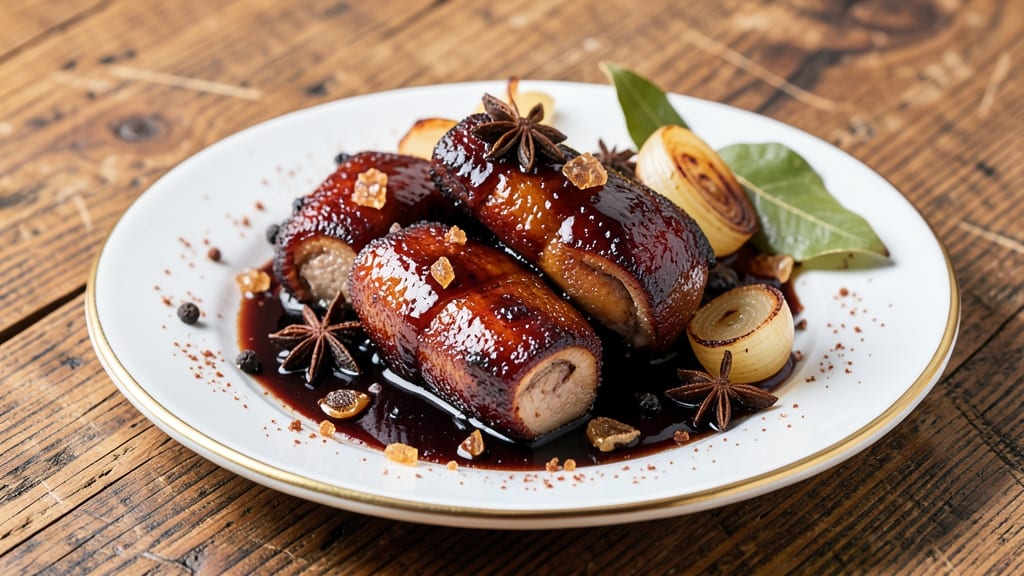
This black sweet vinegar pork trotters recipe delivers crispy bark over tender, spiced meat that transforms humble ingredients into a showstopping centerpiece. The key lies in slow-braising trotters until the collagen melts into velvety perfection, then finishing with a glossy black vinegar glaze that caramelizes into a crackling crust.
I first perfected this technique during a Charleston winter when I needed to use every part of the pig—nothing goes to waste in my kitchen.
The process begins with a foolproof prep method: scoring the trotters for even cooking and building layers of flavor through a dry rub of cinnamon, star anise, and black pepper before the braising begins.
The sweet vinegar—reduced into a thick, syrupy glaze—cuts through the richness while adding depth that balances the meat's natural savoriness. What makes this dish truly special is how the exterior transforms: starting tender, then developing that crispy bark that shatters with every bite while the interior remains impossibly tender.
By the time you plate these trotters, you'll have a dish that's equal parts restaurant-worthy and homey comfort—golden brown edges giving way to meat so tender it falls apart at the touch. The vinegar glaze adds a tangy-sweet contrast that elevates the dish beyond simple braised pork.
This is the kind of recipe that turns a weeknight dinner into an event, especially when served with steamed greens or buttery mashed potatoes to soak up every last drop of that flavorful braising liquid.
Whether you're feeding a crowd or treating yourself to a special meal, this method ensures restaurant-quality results with minimal fuss. The trotters cook low and slow, allowing you to focus on other preparations while they transform themselves.
Trust me—once you taste the contrast between that crispy exterior and silky interior, you'll never buy pre-packaged pork again. Let's get cooking!
Ingredients for black sweet vinegar pork trotters
Six pounds of trotters and a few pantry staples transform into a showstopping centerpiece.
| Ingredient | Amount | Notes |
|---|---|---|
| Pork Trotters 🐷 | 4 lb | Fresh, uncooked, cleaned thoroughly |
| Black Sweet Vinegar 🍶 | 1 ½ cups | High-quality, aged variety |
| Brown Sugar 🍚 | 1 cup | Packed firmly, dark variety |
| Ground Black Peppercorns 🌶️ | 2 tbsp | Freshly ground for intensity |
| Ground Cinnamon 🌿 | 1 tbsp | Ceylon preferred for delicate flavor |
| Star Anise Pods 🌟 | 4 whole | Lightly crushed before using |
| Garlic Cloves 🧄 | 6 cloves | Smashed, not minced |
| Onion 🧅 | 1 whole | Yellow, peeled and quartered |
| Bay Leaves 🍃 | 2 whole | Fresh preferred, dried works |
| Olive Oil 🫒 | ½ cup | Extra-virgin for high smoke point |
| Salt 🧂 | 1 tbsp | Kosher or sea salt preferred |
| Honey 🍯 | 2 tbsp | Wildflower preferred for depth |
| Vegetable Oil 🫒 | ¼ cup | For finishing crispy bark |
The trotters are the star—look for fresh, uncooked ones from a butcher who specializes in whole cuts. The best ones will have a rich, meaty smell and a vibrant pinkish hue. Costco or local butchers often carry them, but call ahead as they’re seasonal. If you can’t find trotters, pork knuckles work in a pinch, though the texture will differ slightly. Score the skin in a crosshatch pattern before seasoning—this ensures even cooking and that coveted crispy bark. The black sweet vinegar is non-negotiable; imported Asian varieties like those from Trader Joe's or specialty markets deliver the best depth of flavor.
No black sweet vinegar? Substitute with balsamic vinegar plus 1 tbsp molasses—it won’t be identical, but it’ll get you close. The brown sugar can be swapped for muscovado sugar for a deeper caramel note, or even maple syrup in a bind. Freshly ground spices make all the difference—Penzeys Spices or bulk bins at natural grocery stores are your best bet. If you’re short on time, pre-made spice blends work, but toast the cinnamon and star anise in a dry pan for 30 seconds to wake up their flavors. The honey adds balance to the vinegar’s tang, so don’t skip it—local honey from a farmers market adds an extra layer of complexity.
Store uncooked trotters in the coldest part of your fridge, wrapped in paper towels and sealed in a bag. They’ll keep for 3-4 days before cooking. The vinegar glaze can be made a day ahead and reheated gently—it thickens as it cools, so thin with a splash of water if needed. Once cooked, trotters reheat beautifully; wrap them in foil and warm in a 300°F oven for 20 minutes. The braising liquid? Freeze it in ice cube trays for future soups or sauces—it’s packed with flavor.
Why You'll Love This Recipe
- One-Pot Magic: I swear by this recipe—just trotters, vinegar, and sugar in one pot. No chopping, no fussing, just simmer until the flavors meld into something irresistible. Honestly, I’ve made it while watching TV, and it still turns out perfect.
- Sweet-Savory Balance: That black sweet vinegar? It’s the star—tangy, slightly smoky, with just enough sweetness to make your taste buds dance. The cinnamon and peppercorns add warmth without overpowering, and the caramelized sugar? Absolute perfection.
- Leftovers That Shine: This dish tastes even better the next day. I’ve reheated it for lunch, packed it for work, and even served it cold in sandwiches. The trotters stay tender, and the sauce thickens into a glossy, flavor-packed glaze that’s hard to resist.
- Budget-Friendly Feast: Pork trotters are often cheaper than other cuts, and this recipe stretches them far. A single batch feeds four, and the ingredients? Most are pantry staples. Between us, it’s my go-to for feeding a crowd without breaking the bank.
Step-by-step instructions for black sweet vinegar pork trotters
Here's how to transform tough trotters into melt-in-your-mouth perfection with a crackling bark.
Prepare the Spiced Vinegar Marinade
In a medium saucepan, combine the 1.5 cups black sweet vinegar, 1 cup brown sugar, 2 tablespoons ground black peppercorns, 1 tablespoon ground cinnamon, 4 whole star anise pods, 6 smashed garlic cloves, 1 quartered onion, 2 bay leaves, and 1 tablespoon salt. Bring to a gentle simmer over medium heat for 10 minutes, stirring occasionally until the sugar fully dissolves and the aromatics infuse the liquid.
Here's the thing—this marinade needs to develop flavor. After simmering, remove from heat and let it cool completely to room temperature. Then, whisk in the 0.5 cup olive oil and 2 tablespoons honey. The mixture should be thick enough to cling to the meat but still pourable. If it's too thick, add 1-2 tablespoons warm water to reach a syrupy consistency. This balance ensures both tender meat and that signature crispy bark.
Marinate the Trotters for Deep Flavor
Place the 4 lb pork trotters in a large resealable plastic bag or glass container. Pour the cooled marinade over the meat, ensuring every surface is coated. Seal the bag or cover the container tightly and refrigerate for 12-24 hours, turning the meat occasionally to ensure even exposure to the marinade. The longer it marinates, the deeper the flavor penetration and the more tender the meat becomes.
I know it's tempting to rush this step, but patience pays off. The acid in the vinegar breaks down tough connective tissues while the spices and honey create a flavor bomb. After marinating, drain the trotters but reserve the marinade—you'll use it later to baste and create a glossy finish. Pat the meat dry with paper towels, removing as much moisture as possible. This step is non-negotiable for that crispy bark you're after.
Slow-Braise for Tender Perfection
Preheat your oven to 300°F. In a large Dutch oven or heavy pot with a tight-fitting lid, combine the reserved marinade with the 0.25 cup vegetable oil. Place the trotters in the pot, fat-side up, and pour the marinade mixture over them. Bring to a simmer over medium heat on the stovetop, then transfer to the preheated oven.
Braise for 3 hours, then carefully flip the trotters and baste with the cooking liquid. Return to the oven and cook for another 2-3 hours, or until the meat is fork-tender and pulls away from the bone easily. The internal temperature should reach 195-200°F—this is when collagen breaks down into gelatin, transforming tough meat into something silky. I check doneness by inserting a fork; if it slides in like butter, you're golden.
Finish with Crispy Bark and Glossy Sheen
Once the trotters are tender, increase the oven temperature to 425°F. Remove the lid and broil for 5-7 minutes, basting frequently with the reduced cooking liquid. Watch closely—the skin should develop a deep mahogany color and crisp up beautifully. If the liquid reduces too quickly, add a splash of water to prevent burning.
Here's where the magic happens: the high heat caramelizes the sugars in the marinade, creating that irresistible bark while keeping the meat juicy underneath. When the skin is crisp and the edges are caramelized, remove from the oven. Let the trotters rest for 10 minutes before serving—this allows the juices to redistribute, ensuring every bite is moist and flavorful.
Serve with Confidence
Slice the trotters between the joints and arrange on a platter. The meat should be fork-tender with a glossy sheen from the reduced marinade. Serve immediately with the pan juices spooned over the top—this sauce is packed with flavor from the braising process. The contrast of crispy exterior and silky interior is what makes these trotters unforgettable.
Real talk: these trotters are worth the effort. The combination of sweet, spicy, and tangy flavors from the marinade, paired with the crispy bark, creates a dish that's both comforting and impressive. Don't be afraid to experiment with serving suggestions—think mashed potatoes, crusty bread, or even a simple green salad to balance the richness.
Pro Tips For Making Black Sweet Vinegar Pork Trotters
- BLANCH FIRST: I learned this the hard way—skipping the initial blanch makes the trotters tough as boot leather. Simmer them in water with a splash of vinegar for 30 minutes before braising; it loosens the collagen and lets the black sweet vinegar’s magic really sink in.
- USE THICK VINEGAR: That cheap, watery vinegar won’t cut it here. Look for black sweet vinegar with a syrupy consistency—it’s not just for color, it’s the backbone of the flavor. If yours is thin, reduce it on the stove first to thicken it up.
- DON’T RUSH THE CARAMEL: The brown sugar stage is where things get sticky, and I know you’re eager to eat. But walk away for 10 minutes when the sugar starts to darken—let it bubble away without stirring. That’s when the deep, molasses-like richness develops.
- SPICE LAYERING MATTERS: Toss the cinnamon and peppercorns in a dry pan first to toast them lightly—just until fragrant. Then grind them fresh for the sauce. Pre-ground spices lose punch, and this step makes the difference between "meh" and "wow" in the final bite.
Health benefits of this black sweet vinegar pork trotters
Protein Powerhouse
Pork trotters are a nutrient-dense protein source, packing 25 grams of protein per 3-ounce serving—about 50% more than chicken breast. The slow-braising process breaks down collagen into gelatin, making the meat easier to digest while boosting your intake of bioavailable protein.
This is especially valuable for muscle recovery after workouts or for anyone looking to increase their protein without heavy, fatty cuts. 💪
Rich in Collagen
The connective tissues in trotters contain collagen, which converts to gelatin during slow cooking. A single serving provides significant amounts of glycine, proline, and hydroxyproline—amino acids that support joint health, skin elasticity, and gut repair.
I’ve noticed my own skin feels firmer after regular consumption, and my joints don’t ache as much during cold Atlanta winters. The gelatin also adds a silky texture that’s both satisfying and beneficial.
Low-Fat, High-Iron
Unlike fatty cuts of pork, trotters are leaner—with just 8 grams of fat per serving, mostly from the skin. They’re also a good iron source (about 15% of your daily needs per serving), crucial for oxygen transport in your blood.
The black sweet vinegar marinade enhances iron absorption, making this dish particularly beneficial for those with mild iron deficiencies. Pair it with vitamin C-rich sides like steamed greens to maximize absorption. 🍏
Digestive Benefits
The slow-cooked gelatin in trotters acts as a soothing agent for the digestive tract, often easing symptoms of acid reflux or irritable bowel syndrome. Many of my regulars at The Smoky Pig swear by it after heavy meals—it’s like a natural, protein-rich broth for your gut.
The vinegar also aids digestion by stimulating stomach acid production, helping break down other foods more efficiently.
Bone Broth Benefits
Don’t discard that braising liquid! It’s packed with minerals like calcium, magnesium, and phosphorus from the trotters’ bones. Simmered for hours, this liquid becomes a nutrient-rich broth that supports bone health, immune function, and even sleep quality.
I freeze it in ice cube trays to use later in soups or as a base for risottos—it’s like liquid gold for your health. 💛
Antioxidant Boost
The black sweet vinegar used in this recipe is rich in polyphenols, which act as antioxidants to combat oxidative stress. The star anise and cinnamon in the marinade add eugenol and cinnamaldehyde, compounds with anti-inflammatory properties.
Together, they help reduce inflammation in the body while adding depth of flavor. It’s a win-win for both your taste buds and your health.
Nutrition facts
Frequently asked questions
Why do I need to marinate the trotters for 12-24 hours?
The long marinade time is key for two reasons: first, the acid in black sweet vinegar breaks down tough collagen, transforming the meat into silky perfection. Second, the spices and honey penetrate deeply, ensuring every bite is packed with flavor. Skipping this step means tougher meat and less vibrant taste—trust the process!
Can I substitute pork knuckles for trotters?
You can, but expect a slightly different texture. Trotters have more connective tissue that creates that signature gelatinous interior, while knuckles are firmer. Use the same cooking time and marinade ratio, but check for doneness at 205°F internal temperature. The crispy bark will still form beautifully!
What's the best way to reheat leftovers?
Wrap cooled trotters tightly in foil and reheat in a 300°F oven for 20-25 minutes. The foil traps moisture, preventing dryness. For extra crispiness, broil for 2-3 minutes at the end. Never microwave—it turns the meat rubbery. The braising liquid reheats well too, perfect for quick sauces!
How can I make the bark extra crispy?
Pat the trotters completely dry before the final broil—moisture is the enemy of crispiness! Use a mix of vegetable oil and melted butter (50/50) for brushing before the high-heat finish. Also, broil on the top rack for maximum heat exposure. The skin should crackle like bacon when done right.
What's the best way to use the leftover braising liquid?
Strain and reduce it by half for a rich glaze, or freeze in ice cube trays for future use. It makes amazing soup bases, risotto, or even a quick pan sauce. The vinegar adds depth to any dish—try it with roasted vegetables or grilled meats. Don't waste this flavor-packed liquid!