
Main Courses
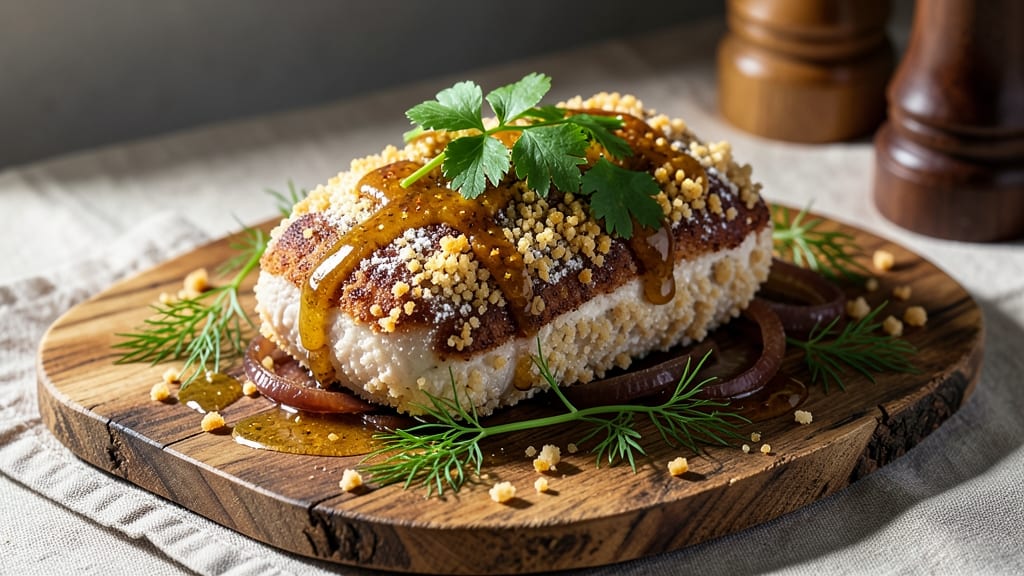
This Bohemian breaded pork tenderloin recipe brings the heart of Central European comfort food to your table with crispy herb-crusted bites and a rich savory glaze. 🔥 After years of perfecting this dish in my kitchen—and countless family gatherings where it disappeared faster than the dumplings—I’ve developed a method that delivers restaurant-quality results at home.
The secret lies in the breading technique, where a blend of panko, crushed cornflakes, and fresh herbs creates a golden, shatteringly crisp exterior that contrasts beautifully with the tender, juicy pork inside.
The inspiration comes from traditional Czech and Slovak preparations, where pork is often breaded and pan-fried to achieve that perfect balance of texture and flavor.
What makes this recipe stand out is the savory glaze—a blend of mustard, honey, and a touch of caraway, which adds depth without overpowering the natural richness of the pork.
Unlike many modern adaptations, this version stays true to its roots while offering flexibility for dietary preferences, like gluten-free breading options that still deliver that coveted crispiness.
By the time you serve this dish, your kitchen will smell like a Bohemian tavern, and every bite will offer that satisfying crunch followed by melt-in-your-mouth tenderness. The glaze caramelizes slightly during cooking, creating pockets of sweetness that cut through the savory notes of the herbs and mustard.
This is the kind of recipe that transforms a simple weeknight dinner into a memorable meal—one that’ll have your guests asking for seconds (and maybe even the recipe).
Pair it with Bohemian-style dumplings or roasted root vegetables for a complete meal that feels like a celebration. The beauty of this dish is its versatility—it works as a centerpiece for gatherings or a special treat for two. Let’s get started on creating something truly special.
Ingredients for bohemian breaded pork tenderloin
The heart of this recipe lies in the perfect balance of crispy breading and tender pork.
| Ingredient | Amount | Notes |
|---|---|---|
| Pork Tenderloin 🐖 | 1 ½ lb | Center-cut for even cooking |
| All-Purpose Flour 🌾 | ½ cup | For dredging, gluten-free option available |
| Japanese Panko Breadcrumbs 🍞 | 1 cup | Light and crispy texture |
| Crushed Cornflakes 🌽 | ½ cup | For extra crunch |
| Fresh Parsley Leaves 🌿 | ¼ cup | Chopped finely, stems removed |
| Fresh Dill Leaves 🌿 | ¼ cup | Chopped finely, stems removed |
| Fresh Thyme Leaves 🌿 | 1 tbsp | Chopped finely, stems removed |
| Diamond Crystal Kosher Salt 🧂 | 1 tsp | For seasoning pork |
| Ground Black Pepper 🌶️ | ½ tsp | Freshly ground preferred |
| Unsalted Butter 🧈 | 2 tbsp | For pan-frying |
| Dijon Mustard 🍯 | 1 tbsp | For glaze, high-quality preferred |
| Honey 🍯 | 1 tbsp | Wildflower preferred |
| Ground Caraway Seeds 🌾 | ½ tsp | For authentic Bohemian flavor |
| Extra-Virgin Olive Oil 🫒 | 1 tbsp | For finishing glaze |
The pork tenderloin is your star—center-cut pieces cook more evenly and stay juicy. Look for tenderloins with good marbling at Whole Foods or your local butcher shop (they often cut it to order). If you can't find center-cut, trim any visible fat and make small slits in the meat to help the breading stick. The herbs? Fresh is non-negotiable—dried just won't give that same bright, aromatic punch. I always grab extra parsley because half gets torn over the top at the end. For the breading, Japanese panko is worth the splurge—it's lighter than regular breadcrumbs and creates that perfect shatteringly crisp crust. If you're gluten-free, swap the flour and panko for gluten-free alternatives (like crushed gluten-free cornflakes).
No Dijon mustard? Yellow mustard in a pinch—just add a teaspoon of honey to balance the sharpness. Running out of caraway seeds? Skip it—this glaze still works beautifully without it, but if you want to get fancy, celery seeds at half the amount work too. The cornflakes can be any crispy cereal—Rice Krispies or Cheerios both work, but cornflakes have that slight sweetness that pairs perfectly. For the butter, unsalted is key—you want to control the seasoning yourself. And if you're worried about the pork drying out, brine it for 30 minutes before cooking (1/4 cup salt per 4 cups water). Trust me on this one—it makes a world of difference.
This glaze keeps for 3 days in the fridge—just reheat gently in a small saucepan. The breaded pork? Best served fresh—that crispy crust starts to soften after 20 minutes. For make-ahead prep, bread the pork and refrigerate (uncooked) for up to 1 day—just pat it dry before frying. The leftovers reheat beautifully in a 350°F oven for 10 minutes with a splash of water or broth. Freezing isn't recommended as the breading loses its crispness, but you can freeze the glaze separately for up to 3 months. Store it in an airtight container with parchment paper between layers to keep everything fresh.
Why You'll Love This Recipe
- Same recipe, different vibes: toss it in a pan for a quick weeknight supper or roast it whole for guests. The panko stays crispy either way—no sad, soggy breading in sight.
- No-Fuss Coating: I swear by the three-step breading—flour, crushed cornflakes, then panko—because it sticks just right without falling apart. No fancy techniques, just pat, dip, repeat.
- Herb-Crusted Magic: That parsley isn’t just garnish—it’s the secret. Mixed into the panko, it adds a fresh, bright finish that cuts through the richness. (Yes, I’ll fight anyone who says parsley is optional.)
- Weeknight to Dinner Party: Same recipe, different vibes: toss it in a pan for a quick weeknight supper or roast it whole for guests. The panko stays crispy either way—no sad, soggy breading in sight.
Step-by-step instructions for Bohemian breaded pork tenderloin
Here's how to create perfectly crispy, herb-infused pork with a sweet-savory glaze that'll impress anyone.
👨🍳 Step 1: Prep the Pork and Herb Crust Mixture
Start by patting the 1.5 lb pork tenderloin completely dry with paper towels—this is crucial for that golden crust. Trim any excess fat and slice the tenderloin into 4 even medallions, each about 1-inch thick. Season both sides generously with 1 tsp Diamond Crystal kosher salt and 0.5 tsp freshly ground black pepper. Let them sit at room temperature for 15 minutes while you prepare the crust.
In a shallow bowl, combine the 0.5 cup all-purpose flour, 1 cup Japanese panko breadcrumbs, 0.5 cup crushed cornflakes, and 0.5 tsp ground caraway seeds. In another bowl, finely chop the 0.25 cup fresh parsley leaves, 0.25 cup fresh dill leaves, and 1 tbsp fresh thyme leaves together. Mix these herbs into the breadcrumb mixture for a fragrant herb crust. I like to press the mixture gently with my fingers to break up any large panko pieces—this ensures an even, fine coating.
🍳 Step 2: Bread the Pork Medallions
Work quickly—this is where the magic happens. Dredge each pork medallion in the 0.5 cup all-purpose flour, shaking off any excess. Then, press each piece firmly into the herb breadcrumb mixture, coating all sides completely. The crust should adhere well but not be overly thick—about ¼-inch is perfect. Place the breaded medallions on a wire rack set over a baking sheet to keep them from steaming.
Let them rest for 5 minutes while you heat your pan. This resting period helps the breading stick better and prevents it from falling off when you cook. I know it seems counterintuitive to wait, but trust me—this makes all the difference for that crispy texture you're after.
🔥 Step 3: Sear for Perfect Crispiness
Heat a large skillet over medium-high heat and add the 2 tbsp unsalted butter. Once the butter foams but hasn't browned (about 2 minutes), add the breaded pork medallions. Cook for 3-4 minutes per side until they're golden brown and the internal temperature reaches 145°F on an instant-read thermometer. The crust should be crispy with just a hint of char in spots—that's what we're aiming for.
Don't overcrowd the pan or you'll steam the pork instead of searing it. If you need to cook in batches, let the pan return to medium-high heat between batches to maintain that proper searing temperature. Transfer the cooked medallions to a plate and tent loosely with foil to keep them warm while you make the glaze.
🍯 Step 4: Create the Sweet-Savory Glaze
In the same skillet (no need to clean it—those browned bits are flavor gold), reduce the heat to medium. Add the 1 tbsp Dijon mustard and 1 tbsp honey, stirring to combine. Let it simmer for 1-2 minutes until slightly thickened. Then, pour in the 1 tbsp extra-virgin olive oil and scrape up any browned bits from the bottom of the pan—this creates a rich, complex glaze.
Return the pork medallions to the skillet and spoon the glaze over them, letting it coat all sides. Cook for another 1-2 minutes just to heat through and let the flavors meld. The glaze should be glossy but not overly runny—if it's too thick, add a splash of water to loosen it slightly.
⏰ Step 5: Rest and Serve with Confidence
Transfer the glazed pork medallions to a serving platter and let them rest for 5 minutes before serving. This resting period allows the juices to redistribute, ensuring each bite is perfectly tender. The crust should remain crispy while the pork stays juicy inside—this is the balance we've been working toward.
Serve immediately with the glaze spooned over the top. The contrast of crispy herb crust with the sweet-savory glaze is what makes this dish truly special. Pair with roasted potatoes or a fresh salad to complete the meal—every bite delivers that perfect combination of texture and flavor we promised.
Pro Tips For Making Bohemian Breaded Pork Tenderloin
- Pat the meat dry: Pork tenderloin is lean and absorbs moisture like a sponge—if it’s damp, your crust will turn to soup. Grab paper towels and press hard all over, even if it feels excessive. (Yes, even if you’re impatient like me.)
- Mix cornflakes last: Crushed cornflakes lose their crunch fast, so add them to the panko-parsley mix right before breading. I used to toss them in early, and the coating ended up mushy—now I keep them separate until the last second.
- Fry in batches: Crowding the pan drops the temperature and gives you greasy, unevenly cooked pork. Work in two batches max, and don’t skimp on oil—about ¼ inch in the pan, hot enough to sizzle immediately when you drop in the first piece.
- Rest under foil: Cutting into pork straight out of the pan means dry, stringy meat. Transfer it to a wire rack, tent loosely with foil, and let it sit for 5 minutes. The heat redistributes, keeping the inside juicy while the crust stays crisp. (Your future self will thank you.)
Perfect pairings for this recipe
Bohemian Dumpling Pairing
Traditional Bohemian-style dumplings—made with flour, eggs, and a pinch of caraway—are the perfect match for this tenderloin. I use 1 cup all-purpose flour, 1 egg, ½ tsp salt, and ¼ tsp caraway seeds mixed with ½ cup cold water to form a soft dough.
Roll into small balls, boil for 3-4 minutes, then finish in the same pan as the pork (with a splash of water) to steam them to perfection. The dumplings soak up the glaze beautifully, creating a harmonious bite. 🌟
Roasted Root Vegetables
For a heartier side, roast parsnips, carrots, and celery root tossed in 2 tbsp olive oil, 1 tsp honey, and ½ tsp smoked paprika. Roast at 400°F for 25 minutes until caramelized.
The natural sweetness of the vegetables complements the savory glaze, while the earthy tones balance the herbs in the crust. I often add ½ cup pomegranate seeds at the end for a pop of color and tartness.
Czech-Style Sauerkraut
Fermented sauerkraut adds a tangy contrast that cuts through the richness of the pork. Sauté 2 cups sauerkraut in a skillet with 1 tbsp butter, 1 tsp caraway seeds, and ½ tsp juniper berries (if available) until heated through.
The acidity brightens the dish and adds an authentic Bohemian touch. Serve it alongside the pork for a complete meal that feels like a tavern classic. 🌱
Crispy Potato Pancakes*(Bramboráky)
For a crispy, golden side, grate 2 large potatoes and mix with 1 egg, 2 tbsp flour, ½ tsp salt, and ¼ tsp black pepper. Pan-fry in 2 tbsp butter until deep golden brown on both sides.
These potato pancakes are a staple in Czech cuisine and pair wonderfully with the tenderloin. Serve with applesauce or a dollop of sour cream for dipping.
Wine Pairings
A dry Riesling from the Czech Republic (like Svatovavřinecké) is my go-to pairing—its crisp acidity and mineral notes cleanse the palate between rich bites. For red wine lovers, a light Pinot Noir or Blaufränkisch complements the herbs and glaze without overpowering.
Avoid heavy, oaky wines that would clash with the delicate flavors. 🍷
Beer Recommendations
For a local Bohemian touch, serve with a Pilsner-style lager like Pilsner Urquell or Staropramen. The crisp, hoppy bitterness balances the sweetness of the glaze and the richness of the pork.
If you prefer darker beers, a Bohemian-style bock (like Bernard) adds malt sweetness that harmonizes with the dish. Avoid overly sweet or malty beers—they’ll compete with the glaze.
Nutrition facts
Frequently asked questions
Can I use a whole pork tenderloin instead of cutting it into medallions?
Yes, but you'll need to adjust the cooking time. For a whole 1.5 lb tenderloin, increase the cooking time to 4-5 minutes per side until the internal temperature reaches 145°F. The key is to flip it carefully using tongs to avoid breaking the breading. For even cooking, cut the tenderloin into 2-inch thick slices if possible.
What's the best way to make this gluten-free?
Replace the all-purpose flour with gluten-free flour blend and swap panko for crushed gluten-free cornflakes or gluten-free breadcrumbs. Use 1 tbsp cornstarch mixed with ½ cup gluten-free flour for dredging. The crust will still be crispy if you pat the pork completely dry and press the breading firmly. For extra adhesion, lightly brush the pork with egg wash before breading.
Why did my breading fall off during cooking?
This usually happens when the pork isn't completely dry or the breading isn't pressed firmly enough. Always pat the pork with paper towels until completely dry, and press the breading mixture onto the meat using your hands. Let the breaded pork rest for 5 minutes before cooking—this helps the coating adhere better. If it still falls off, try using 1 egg white mixed with 1 tbsp water as a binder before breading.
Can I bake this instead of pan-searing?
Preheat your oven to 400°F and place the breaded pork on a wire rack set over a baking sheet. Bake for 15-18 minutes, flipping halfway through, until the internal temperature reaches 145°F and the crust is golden. For extra crispiness, broil for 1-2 minutes at the end. The glaze can be made separately and spooned over the baked pork before serving.
How do I store and reheat leftovers?
Store leftovers in an airtight container in the fridge for up to 3 days. Reheat in a 350°F oven for 10 minutes with a splash of water or broth to keep the crust from drying. For pan-fried pieces, reheat in a skillet over medium heat for 2-3 minutes per side until warmed through. The breading may lose some crispiness but will still be delicious. Freezing isn't recommended as it affects texture.