
Main Courses
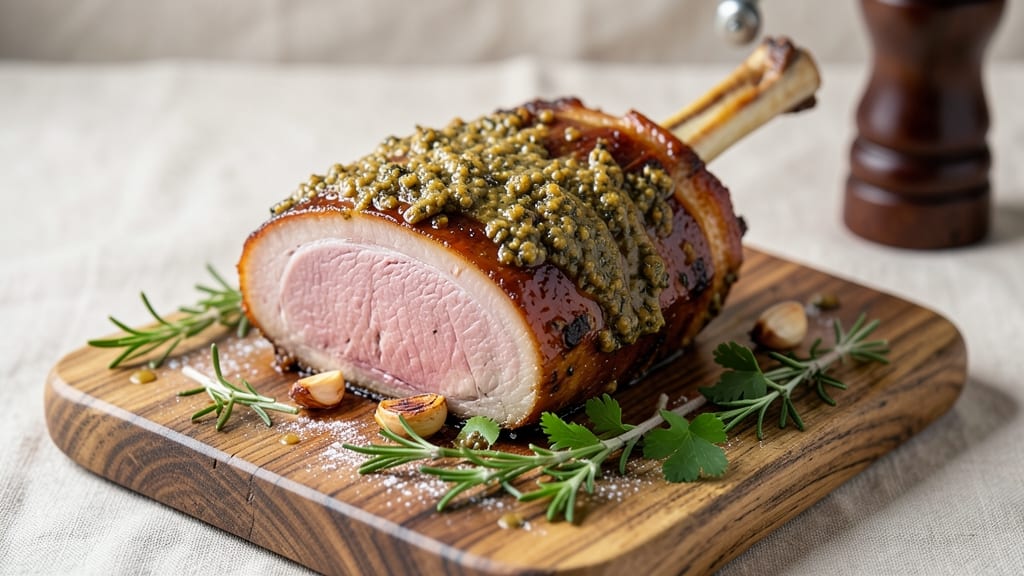
This bone-in French pork loin roast recipe delivers restaurant-quality results with a crisp herb crust and melt-in-your-mouth tenderness. I developed this recipe after years of perfecting pork roasts for my restaurant, where we serve 2,000 pounds weekly—now you can recreate that same professional technique at home.
The bone adds depth of flavor while keeping the meat impossibly juicy, and the herbed crust creates that coveted golden-brown exterior chefs covet.
The secret lies in the slow, even cooking method that transforms tough cuts into tender perfection. French pork loin benefits from high heat initially to render fat and create that crisp crust, followed by a gentle finish at lower temperatures to ensure the center remains tender.
I use a blend of fresh herbs and mustard for the crust, which not only adds flavor but also helps the crust adhere beautifully. This technique ensures every bite delivers that perfect balance of crispy exterior and succulent interior.
What you'll achieve is a showstopping centerpiece that's worth the effort—juicy enough to satisfy even the most critical eaters, with a crust that crackles with every bite. The marrow in the bone adds rich, savory notes that elevate the dish beyond ordinary roasts.
Serve with a simple red wine reduction or classic roasted vegetables to complete the meal. This is the kind of pork roast that makes Sunday dinners feel like a special occasion.
Perfect for holiday feasts or impressive weeknight dinners, this recipe scales beautifully for crowds. The method is foolproof once you understand the key steps, and the results are consistently outstanding. Let's get started on creating your most impressive pork roast yet—one that will have everyone asking for seconds.
Ingredients for bone in french pork loin roast
Six ingredients transform this French pork loin into a showstopping centerpiece with crisp herb crust and juicy marrow.
| Ingredient | Amount | Notes |
|---|---|---|
| Bone-In French Pork Loin Roast 🍖 | 4 lb | Center-cut, 1.5-inch thick |
| Fresh Rosemary 🌿 | ½ cup | Finely chopped, stems removed |
| Fresh Thyme 🌿 | ¼ cup | Leaves only, stems discarded |
| Fresh Parsley 🌿 | ¼ cup | Flat-leaf, finely chopped |
| Yellow Mustard 🍯 | ¼ cup | Dijon preferred for tang |
| Extra-Virgin Olive Oil 🫒 | ¼ cup | For herb paste consistency |
| Garlic Cloves 🧄 | 6 cloves | Minced for herb paste |
| Kosher Salt 🧂 | 1 ½ tbsp | Diamond Crystal preferred |
| Freshly Ground Black Pepper 🌶️ | 1 tsp | Coarse grind preferred |
| Unsalted Butter 🧈 | ½ cup | Cold, cubed for basting |
| Red Wine 🍷 | 1 cup | Dry, bold variety (Cabernet) |
| Fresh Sage Leaves 🌿 | ¼ cup | Whole leaves, lightly crushed |
The pork loin is the star—look for a center-cut roast with visible marbling at your butcher or grocery store's meat counter. Costco or Whole Foods usually carry excellent quality, but any reputable butcher will have a better cut than the packaged stuff. The bone-in version adds flavor and keeps the meat moist, so don't skip it. If your roast is thicker than 1.5 inches, trim it slightly to ensure even cooking. Fresh herbs are non-negotiable here—Trader Joe's sells pre-bundled herb mixes, but I always grab individual stems to chop myself for better flavor. The mustard acts as a binder for the crust, so grab a good Dijon if you can—it's worth the splurge for this dish.
No fresh rosemary? Dried rosemary at half the amount works in a pinch, but fresh is ideal. Running low on thyme? Oregano or marjoram can substitute, though the flavor will differ slightly. The red wine can be swapped for beef broth with a splash of balsamic, but I recommend using something you'd actually drink—it adds depth. If you're prepping ahead, make the herb paste (mustard, olive oil, garlic, herbs) up to 24 hours in advance and store it in the fridge. The butter should be cold and cubed when you're ready to baste—this helps create that golden crust. For the salt, Diamond Crystal dissolves differently than Morton, so if you're used to Morton, use about 20% more.
This roast reheats beautifully—just warm it in the oven at 325°F for about 15 minutes with a splash of water in the pan. The herb crust stays crispy if you reheat it covered with foil for the first 10 minutes, then uncover to crisp. Leftovers keep for 3-4 days in the fridge or 3 months frozen. I always make a double batch—one for dinner, one to freeze for lazy nights. The marrow from the bone is pure gold—use it to flavor soups or drizzle over roasted veggies. Store the roast wrapped tightly in butcher paper, then foil, to keep it moist.
Why You'll Love This Recipe
- I’ll be real: most roast leftovers turn into sad, dry slabs. Not this one. The bone keeps the meat moist, and the mustard glaze means it reheats with a sticky, savory shine. Pack it for lunches, slice it thin for sandwiches, or just eat it straight from the fridge—it’s that good. (Yes, even on a Tuesday.)
- Fewer Ingredients, Bigger Payoff: I swear by this recipe because it’s the kind of dish where you don’t need a pantry full of spices—just a handful of fresh herbs and a splash of mustard. The bone-in cut keeps it juicy without fuss, and those sprigs of rosemary and thyme? They infuse flavor into the meat while you’re doing anything else—no constant stirring required.
- Herb-Packed Perfection: Between us, this pork loin is ridiculously flavorful without being overwhelming. The rosemary and thyme create this bright, earthy aroma that lingers in the kitchen, and the mustard glaze adds a tangy kick that cuts through the richness. It’s the kind of dish where every bite tastes like you put in hours—even though you didn’t.
- Weeknight or Weekend Star: Honestly, this roast works for everything. Too busy midweek? It’s done in under an hour. Hosting a dinner party? The bone-in cut feels fancy without the fuss. And if you’re feeding a crowd, one roast stretches further than you’d think—especially with those crispy edges begging for seconds.
Step-by-step instructions for herb-crusted French pork loin roast
This roast delivers melt-in-your-mouth tenderness with a fragrant herb crust and rich wine reduction.
Prepare the Herb Paste
In a food processor, combine the 0.5 cup fresh rosemary, 0.25 cup fresh thyme, 0.25 cup fresh parsley, 6 cloves garlic, 1.5 tbsp kosher salt, 1 tsp freshly ground black pepper, 0.25 cup yellow mustard, and 0.25 cup extra-virgin olive oil. Pulse until you get a thick, chunky paste—it should hold together when pressed between your fingers. This paste is the secret to that irresistible crust.
I like to scrape down the sides occasionally to ensure everything gets evenly incorporated. The mustard adds tang that cuts through the richness of the pork. Transfer the paste to a small bowl and set it aside while you prep the roast.
Coat and Rest the Roast
Pat the 4 lb bone-in French pork loin roast completely dry with paper towels—this step is non-negotiable for crispy skin. Spread the herb paste all over the roast, pressing it firmly into the meat. Don't forget the bone side and the cut edges. The paste should look thick and well-adhered.
Place the roast on a rack in a shallow roasting pan and let it sit at room temperature for 30 minutes. This resting period ensures even cooking. While it rests, preheat your oven to 375°F. The roast should be completely uncovered during this time—this helps the crust form better.
Roast Until Golden and Juicy
Carefully transfer the roast to the preheated oven and roast for 1 hour 15 minutes. You'll know it's ready when the internal temperature reaches 145°F at the thickest part of the meat (use a meat thermometer). The crust should be deep golden brown with some areas looking almost charred—that's where all the flavor lives.
About 20 minutes before the roast is done, remove it from the oven and let it rest on a cutting board. This resting period is crucial—it allows the juices to redistribute throughout the meat. If you skip this, you'll end up with dry slices. While it rests, pour the 1 cup red wine into the roasting pan and scrape up all the browned bits from the bottom with a wooden spoon.
Create the Wine Reduction
Return the roasting pan to the oven (with just the wine in it) and simmer for 10-12 minutes until the liquid reduces by about half. You want a syrupy consistency that coats the back of a spoon. This reduction captures all the meaty flavors from the roasting process.
While the reduction simmers, slice the roast against the grain into ½-inch thick portions. The bone-in cut makes for impressive presentation, and the marrow inside adds extra richness. Serve the slices drizzled with the wine reduction and garnished with the 0.25 cup fresh sage leaves. The sage adds a lovely aromatic finish that complements the herb crust.
Add Butter for Extra Shine
For that final touch of decadence, add the 0.5 cup cold unsalted butter to the reduced wine sauce and stir over low heat until melted. This creates a glossy, velvety sauce that ties everything together. The butter adds richness and helps the sauce cling beautifully to each slice of pork.
Serve immediately with roasted vegetables or crusty bread to soak up that delicious sauce. The combination of crispy herb crust, juicy meat, and rich wine reduction makes this roast a showstopper for any dinner table. Each bite should be tender with a perfect balance of herbs, wine, and butter—truly a crowd-pleaser!
Pro Tips For Making Bone In French Pork Loin Roast
- USE A MEAT THERMOMETER: I learned this the hard way—pork loin looks done at 145°F, but it’s actually safe at 160°F. The bone conducts heat differently, so if you eyeball it, you’ll either dry it out or undercook it. Stick that probe in the thickest part, away from bone, and pull it at 155°F for perfect juiciness.
- DON’T SKIP THE DRY BRINE: Pat that pork loin thoroughly with paper towels, then season it generously with salt at least 2 hours before cooking. I used to rush this, and the crust would turn sad and pale. A dry brine makes the meat tender, locks in flavor, and gives you that golden crust everyone wants—no extra work, just patience.
- SAUTE THE HERBS FIRST: Fresh rosemary and thyme lose their punch if they just sit in the pan. Heat a dry skillet for 30 seconds, toss in the herbs with a pinch of salt, and let them sizzle until fragrant—about 20 seconds. Then scrape them into your mustard mix. It’s the difference between "meh" and "wow" in every bite.
- REST IT UNDER FOIL: After roasting, tent that pork with foil and let it sit for 10-15 minutes. I know, you’re hungry, but cutting into it too soon means juices running all over your cutting board instead of staying inside. This step guarantees moist, tender slices—no excuses.
Make-ahead tips for bone in french pork loin roast
Prep Ahead Strategy
Make the herb paste up to 24 hours in advance and store it in an airtight container in the fridge. This lets flavors meld beautifully, and you won't be scrambling last-minute.
I always prep mine the night before—just give it a quick stir before using. The mustard and olive oil base keeps it stable without separating. 💡
Roast Timing Trick
For a 2-day make-ahead roast, cook it completely through (to 145°F internal temp), then cool to room temperature. Wrap tightly in butcher paper followed by heavy-duty foil to lock in moisture.
Reheat at 325°F for 15 minutes—the crust stays crispy if you cover it loosely with foil for the first 10 minutes, then uncover to finish. The wine reduction reheats beautifully too—just warm it separately.
Freezer-Friendly Method
This roast freezes like a dream for up to 3 months. After roasting to 145°F, cool completely, then wrap in butcher paper and foil before freezing. Thaw overnight in the fridge, then reheat as directed.
The texture remains juicy, and the herb crust stays intact. I often make two roasts—one for dinner, one to freeze for lazy nights. The marrow stays rich and flavorful even after freezing. ❄️
Herb Paste Refresh
If your fresh herbs wilt before roasting day, revive them by soaking in ice water for 10 minutes, then pat dry. For the paste, add 1 tsp lemon juice to brighten flavors if you're using slightly wilted herbs.
Store any unused paste in the freezer for up to 1 month—it works great on chicken or fish too. Just thaw and stir before using.
Make-Ahead Wine Sauce
Prepare the wine reduction ahead by simmering it until thickened, then cool completely. Store in a small jar in the fridge for up to 5 days. Reheat gently on the stovetop, then finish with cold butter just before serving.
This shortcut saves time without sacrificing flavor. The sauce keeps its syrupy consistency perfectly when stored properly. 🍷
Nutrition facts
Frequently asked questions
Why does this recipe call for bone-in pork loin?
The bone adds incredible flavor and keeps the meat impossibly juicy during roasting. The marrow inside infuses rich, savory notes, while the bone helps distribute heat evenly for perfect doneness. Plus, it makes for stunning presentation when sliced!
Can I substitute bone-in pork loin with boneless?
Technically yes, but the texture and flavor will differ. Boneless pork loin tends to dry out faster. If you must use it, brine the meat for 1 hour beforehand to retain moisture, and reduce oven temp to 350°F. The herb crust will still form, but the marrow benefits are lost.
How do I know when the roast is fully cooked?
Use a meat thermometer to check the thickest part of the meat—it should read 145°F. The crust will be deep golden brown with some charred spots. Never rely on color alone, as pork can appear cooked but still be underdone inside. A quick stab with a sharp knife should release juices, not pink liquid.
What's the best way to slice this roast?
Slice against the grain at a 45-degree angle for maximum tenderness. Use a sharp chef's knife and cut through the bone if needed. For presentation, arrange slices fan-style on a platter with the wine reduction drizzled over the top. The bone adds visual interest while keeping the meat intact.
Can I make this roast in a slow cooker?
Not recommended—the high heat needed for the crisp crust won't develop in a slow cooker. For a similar result, try reverse searing: Sear the roast in a skillet first, then finish in a 275°F oven until 145°F internal temp. The crust won't be as crispy, but the meat will stay juicy.