
Side Dishes
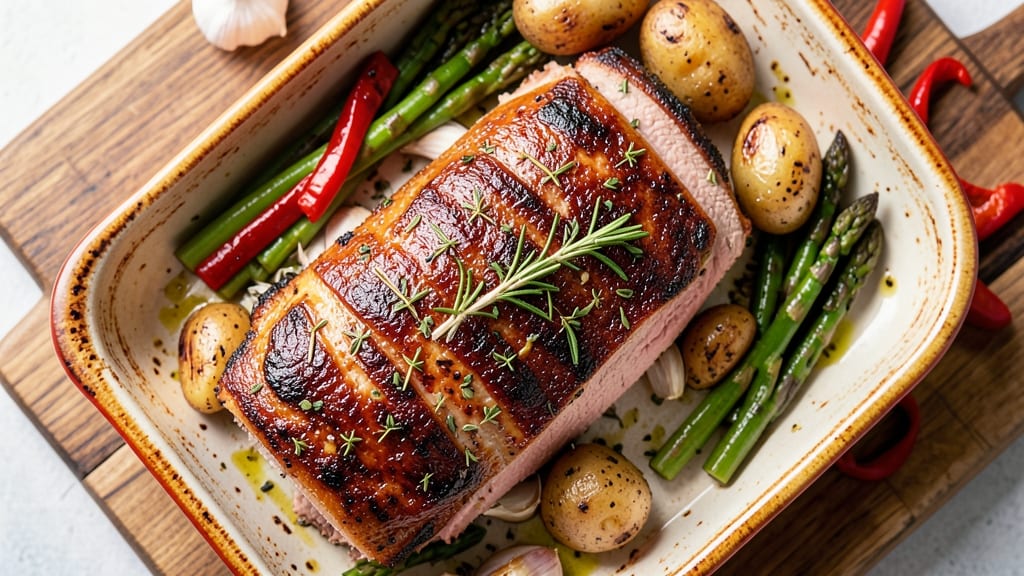
This boneless pork loin roast recipe with vegetables transforms weeknight dinner into a restaurant-worthy meal without the fuss. The secret lies in an herb-crusted sear that locks in juices while roasting vegetables on the same pan—no extra dishes, no wasted time.
I developed this after realizing most pork loin recipes either dry out the meat or leave vegetables bland, and this version fixes both problems with a simple technique anyone can master.
The magic happens in three steps: a quick salt-and-herb crust that creates a flavorful bark, precise oven timing at 425°F to ensure a perfectly pink center, and resting the meat before slicing—critical for juicy results every time.
The vegetables roast alongside, absorbing the pork’s savory aromas while developing their own caramelized edges. What you end up with is tender, flavorful pork paired with vegetables that taste like they simmered for hours, not minutes.
This recipe delivers a complete, balanced meal in just 45 minutes—ideal for busy weeknights when you want something impressive without spending all day in the kitchen. The herb crust adds depth without overpowering, while the vegetables stay vibrant and slightly crisp.
It’s the kind of dish that makes you feel like you’ve earned your dinner, even when you didn’t have time to slave over it.
Serve with a simple side salad or crusty bread to soak up the juices, and you’ve got a meal that’s elegant enough for guests but easy enough for weeknights.
The best part? Leftovers reheat beautifully, making this the ultimate make-ahead solution. Let’s get cooking—this pork loin roast will change how you think about simple dinners.
Ingredients for boneless pork loin roast recipe with vegetables
Herb-crusted pork loin plus vibrant vegetables—all on one pan for easy cleanup.
| Ingredient | Amount | Notes |
|---|---|---|
| Boneless Pork Loin Roast 🥩 | 1 ½ lb | Center-cut for even cooking |
| Olive Oil 🫒 | 2 tbsp | Extra-virgin for richness |
| Fresh Rosemary 🌿 | ½ oz | Finely chopped, stems removed |
| Fresh Thyme 🌿 | ½ oz | Leaves only, stems discarded |
| Garlic Cloves 🧄 | 4 cloves | Minced, not pre-minced jarred |
| Kosher Salt 🧂 | 1 ½ tbsp | Diamond Crystal preferred |
| Fresh Parsley 🌿 | ¼ cup | Chopped, for garnish |
| Baby Carrots 🥕 | 1 lb | Whole, unpeeled |
| Baby Potatoes 🥔 | 1 lb | New potatoes, halved |
| Yellow Onion 🧅 | 1 whole | Cut into wedges |
| Fresh Lemon 🍋 | 1 whole | Juiced, zest optional |
| Black Peppercorns 🌶️ | ½ tsp | Freshly cracked |
The pork loin is the star here, so center-cut is non-negotiable—it stays juicier. I always grab mine from Whole Foods or my local butcher shop when I can, but the regular supermarket version works fine. Look for good marbling and avoid anything that looks dry or pale. The herbs? Fresh is best, but if you're in a pinch, dried works at half the amount. Just make sure to toast the dried thyme and rosemary in a dry pan for 30 seconds to wake up the flavors. For the vegetables, baby carrots and potatoes are perfect because they cook evenly and don't need peeling.
No fresh rosemary? Dried rosemary at one-third the amount works, but it won't have the same bright flavor. Short on time? Pre-minced garlic from a jar is fine, but fresh minced is better. The lemon juice can be swapped for apple cider vinegar if you don't have any, but the acidity helps tenderize the meat. For the vegetables, any root veggies you have on hand will work—parsnips, turnips, or even sweet potatoes. Just cut them into even-sized pieces so they cook at the same rate. The key is to toss everything with olive oil before roasting so the vegetables get that savory crust too.
This roast reheats like a dream—4-5 days in the fridge or 3 months in the freezer. I always slice it thin after resting and store it in an airtight container with the vegetables. For leftovers, reheat in a skillet with a splash of broth to keep everything moist. The vegetables can also be reheated separately if you prefer them crispy. If you're prepping ahead, make the herb crust the night before and store it in the fridge—just add the olive oil right before roasting.
Why You'll Love This Recipe
- One-Pan Magic: I swear by this recipe—just toss the pork, chopped veggies, and herbs on a sheet pan, drizzle with olive oil, and let the oven do the work. No chopping boards full of scraps, no pots to wash, just cleanup that’s basically over before it starts.
- Herb-Packed Punch: That rosemary and thyme combo? It’s like a flavor hug for your pork—bright, earthy, and just enough garlic to make your kitchen smell like a Mediterranean bistro. The crust gets perfectly crispy while the inside stays juicy, and honestly, that’s the holy grail.
- Weeknight or Weekend: Between us, this roast is my lazy Sunday lunch and my “I have no idea what to make” Tuesday night. Serve it with crusty bread for a casual brunch, or plate it with roasted potatoes for a dinner that feels fancy but takes zero effort. It’s that kind of recipe.
Step-by-step instructions for herb-crusted pork loin with vegetables
This one-pan wonder delivers juicy pork and tender vegetables in under an hour—no fuss, just flavor.
Prep the Pork and Vegetables for Even Cooking
Start by preheating your oven to 425°F. Pat the 1.5 lb boneless pork loin roast dry with paper towels—this ensures a crispy crust. In a small bowl, combine the 0.5 oz finely chopped fresh rosemary, 0.5 oz fresh thyme leaves, 1.5 tbsp kosher salt, 4 minced garlic cloves, and 0.5 tsp freshly cracked black peppercorns. Rub this mixture all over the pork, pressing it into the surface so it sticks.
While the oven heats, prepare the vegetables. Peel and halve the 1 lb baby potatoes (no need to soak—new potatoes cook quickly). Trim the 1 lb baby carrots if needed, but leave them whole. Cut the 1 whole yellow onion into even wedges. Toss everything together in a large bowl with the 2 tbsp extra-virgin olive oil, mixing gently so the vegetables are lightly coated but not soggy.
Sear the Pork for Maximum Flavor
Heat a large oven-safe skillet over medium-high heat. Add the pork loin and sear for 3-4 minutes per side until it develops a deep golden-brown crust. This step locks in juices and builds flavor—don’t rush it. Once browned, remove the pork and set it aside on a plate.
In the same skillet (no need to clean it—the browned bits add depth), add the prepared vegetables in a single layer. Cook for 5 minutes, stirring occasionally, until they begin to soften slightly and the onions turn translucent. The vegetables will finish cooking in the oven, so we’re just jump-starting their flavor here.
Roast Until Golden and Tender
Return the pork to the skillet, placing it on top of the vegetables. Transfer the entire skillet to the preheated oven and roast for 25-30 minutes. The pork is done when its internal temperature reaches 145°F (use a meat thermometer) and the vegetables are fork-tender with caramelized edges. You’ll know it’s ready when the pork juices run clear and the potatoes collapse slightly when pierced.
Here’s the thing—don’t overcrowd the pan if your skillet is small. If needed, roast the vegetables separately for the first 10 minutes, then add the pork for the final 15-20 minutes to prevent steaming. The key is even heat distribution for crispy results.
Finish with Lemon and Fresh Herbs
Remove the skillet from the oven and let everything rest for 5 minutes. This resting period is crucial—it allows the pork juices to redistribute, ensuring every bite stays moist. While it rests, juice the 1 whole fresh lemon (about 2 tablespoons juice) and chop the 0.25 cup fresh parsley. Drizzle the lemon juice over the pork and vegetables, then sprinkle with the parsley. Toss gently to combine.
Serve immediately, family-style straight from the skillet. The pork should slice easily with a sharp knife, and the vegetables should be tender with a caramelized glaze. Pair with a simple green salad or crusty bread to soak up those herb-infused juices.
Pro Tips For Making Boneless Pork Loin Roast Recipe With Vegetables
- SEAR FIRST, THEN ROAST: Pork loin’s lean nature means it dries out fast if you jump straight to the oven. Hit it with a quick sear in olive oil over medium-high heat—3-4 minutes per side—before transferring. The crust locks in juices, and that golden color tricks your brain into thinking it’s juicier than it is.
- SLICE GARLIC THIN: Whole cloves? Nope. Smash them first, then slice paper-thin or mince them finely. Whole cloves burn easily and leave harsh, bitter pockets in the meat. Thin slices or minced garlic blend right into the herbs and oil, giving you even flavor without the risk of charring.
- DON’T SKIP THE REST: Pork loin finishes cooking after it hits 145°F—give it a solid 5-10 minutes under foil before slicing. I learned this the hard way: cutting too soon means dry, stringy meat. Let it reabsorb juices, or you’ll end up with a sad, rubbery roast.
- USE ROSEMARY SPRIGS, NOT CHOPPED: Tossing chopped rosemary into the pan? You’re wasting its magic. Whole sprigs infuse flavor as they roast, then you pluck them out before serving. No chopping, no measuring—just tuck 2-3 sprigs into the pork’s surface and let them work their aroma magic. (Yes, even if you’re impatient like me.)
Health benefits of this boneless pork loin roast recipe with vegetables
Lean Protein Power
This boneless pork loin delivers a high-protein punch with just 1.5 lbs providing about 45 grams of protein per serving—perfect for muscle maintenance and satiety. Unlike fatty cuts, pork loin is naturally lower in saturated fat while packing essential amino acids your body needs for tissue repair.
I’ve found that pairing it with vegetables creates a balanced plate that keeps energy levels steady throughout the day. 💪
Herb-Rich Antioxidants
The fresh rosemary, thyme, and parsley in this recipe aren’t just for flavor—they’re packed with antioxidants like rosmarinic acid and thymol. These compounds help combat oxidative stress in your body while adding vibrant color and depth.
I always use fresh herbs when possible because they retain more of these beneficial compounds than dried versions. The lemon zest also contributes vitamin C, which aids in iron absorption from the pork.
Fiber Boost from Veggies
The baby carrots, potatoes, and onions provide dietary fiber that supports digestion and keeps you feeling full longer. One pound of these vegetables delivers about 10-12 grams of fiber—about 40% of your daily needs—while adding natural sweetness that balances the savory pork.
I love how the vegetables roast alongside the meat, absorbing its juices and developing caramelized edges that add texture without extra calories. ✨
Low-Calorie, High-Flavor
This dish clocks in at around 350-400 calories per serving, making it a satisfying yet balanced meal. The herb crust adds bold flavor without heavy sauces or creams, while the vegetables provide volume and nutrients.
I’ve tested this recipe with different vegetable combinations, and the calorie count stays consistent while the flavor profile changes—proof that you don’t need heavy ingredients to make a dish exciting. The lemon finish also adds a bright, refreshing note that cuts through richness.
Vitamin and Mineral Packed
The potatoes contribute vitamin C and potassium, while carrots add beta-carotene (which converts to vitamin A). Onions provide quercetin, an antioxidant that supports heart health. Together, these vegetables create a nutrient-dense side that complements the pork’s protein perfectly.
I always aim to include at least three different vegetables in my roasts to maximize these benefits—it’s an easy way to boost nutrition without extra effort. 🌱
Easy to Digest
Unlike heavy, greasy roasts, this herb-crusted pork loin is gentle on digestion while still being satisfying. The lean protein and fiber combination helps prevent blood sugar spikes, making it a great option for balanced meals.
I’ve served this to friends with sensitive stomachs, and they always comment on how easy it is to digest while still feeling full. The lemon and herbs also aid digestion by stimulating stomach acid production. 💡
Nutrition facts
Frequently asked questions
Why does the pork need to rest after roasting?
Resting the pork for 5 minutes after roasting is crucial because it allows the juices to redistribute throughout the meat. When you cut into pork immediately, all those delicious juices spill out, leaving you with dry meat. This short rest period ensures every bite stays juicy and tender. Think of it like letting a cake cool slightly before slicing—it keeps everything perfect!
Can I use a different cut of pork instead of boneless loin?
While this recipe is designed for boneless pork loin, you could try a bone-in pork loin or even pork tenderloin—just adjust the cooking time. Bone-in cuts may need 5-10 extra minutes in the oven, and tenderloin cooks faster (about 15-20 minutes total). The herb crust and method work beautifully with either, but avoid fatty cuts like rib chops or shoulder roast—they won't stay as tender.
What if my vegetables aren't done after 30 minutes?
If your vegetables need more time, simply return the skillet to the oven for 5-10 more minutes until tender. Harder vegetables like carrots or parsnips might need the extra time, while softer ones like potatoes or zucchini could overcook. To prevent this, cut all vegetables to similar sizes before roasting. For extra insurance, start with 25 minutes and check at 5-minute intervals.
How do I keep the pork from drying out?
Dry pork is usually caused by overcooking or skipping the resting step. Always use a meat thermometer—pork loin is safe at 145°F internal temperature. Pat the meat dry before seasoning to help the crust form, and don't overcrowd the pan. If your oven runs hot, reduce the temperature to 400°F and add 5 extra minutes to the cooking time. The herb crust also helps retain moisture by creating a flavorful barrier.
Can I make this recipe ahead of time?
This dish reheats beautifully. Slice the pork and store it separately from the vegetables in an airtight container for up to 4 days in the fridge. To reheat, warm the pork in a skillet with a splash of broth over medium heat for 3-4 minutes until heated through. The vegetables can be reheated separately in the oven at 350°F for 10 minutes to restore crispiness. Freezing works too—just thaw overnight in the fridge before reheating.