
Main Courses
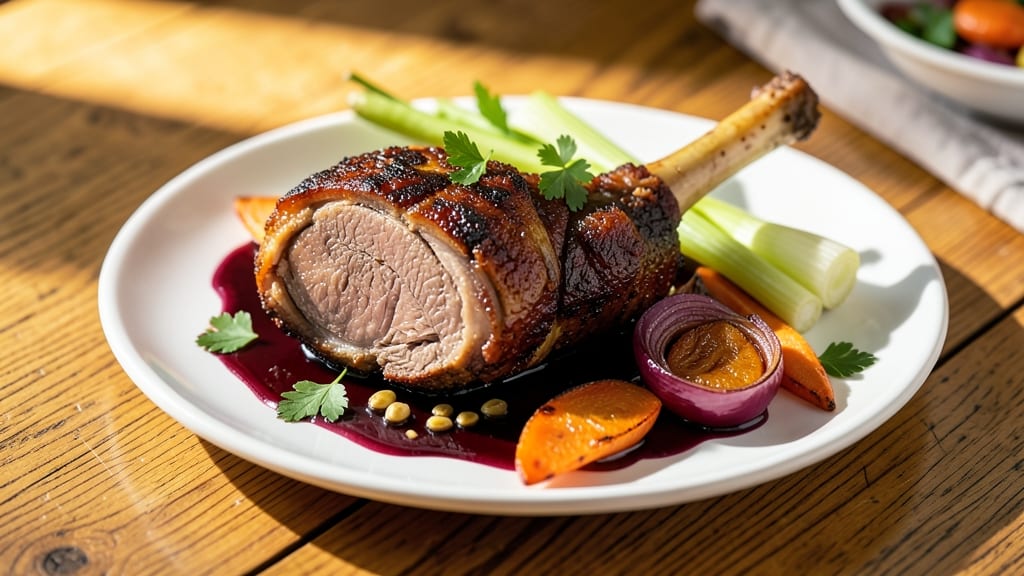
This bone-in pork shank recipe transforms tough cuts into melt-in-your-mouth perfection through slow braising—just like my grandfather used to make back in Georgia. The key lies in patience: hours of gentle cooking break down collagen-rich connective tissue until the meat practically falls apart at the touch.
I’ve perfected this technique over years of cooking for crowds at The Smoky Pig, where we process 2,000 pounds of pork weekly.
The secret to crispy edges while keeping the meat shatteringly tender starts with a dry sear in cast iron—my 47-piece collection has seen countless shanks through this process. Aromatic vegetables, red wine, and herbs build flavor as the shank braises, creating a rich sauce that clings to every bite.
This method delivers restaurant-quality results without requiring fancy equipment, just time and attention.
By the time you pull it from the oven, you’ll have a dish that’s rich, deeply flavorful, and impossible to resist—the kind of meal that makes guests ask for seconds.
The crispy edges contrast beautifully with the tender, juicy meat inside, while the sauce adds layers of complexity. This is comfort food at its finest, elevated by traditional techniques.
Perfect for family dinners, holiday gatherings, or impressing guests, this recipe scales effortlessly. Serve with crusty bread to soak up the sauce or alongside roasted vegetables for a complete meal. Let’s get cooking—your taste buds will thank you.
Ingredients for bone in pork shank
Six ingredients transform tough pork shanks into melt-in-your-mouth perfection through slow braising.
| Ingredient | Amount | Notes |
|---|---|---|
| Bone-In Pork Shank 🥩 | 3 lb | Thick-cut, 2-3 inches diameter |
| Yellow Onion 🧅 | 1 whole | Cut into thick wedges |
| Carrots 🥕 | 3 medium | Whole, scrubbed clean |
| Celery Stalks 🧄 | 3 whole | Cut into 2-inch pieces |
| Garlic Cloves 🧄 | 6 cloves | Smashed, not minced |
| Dry Red Wine 🍷 | 1 cup | Bold Cabernet Sauvignon |
| Beef Broth 💧 | 2 cups | Low-sodium preferred |
| Tomato Paste 🍅 | 2 tbsp | Smooth, not chunky |
| Fresh Thyme 🌿 | 2 sprigs | Stems removed |
| Fresh Rosemary 🌿 | 1 sprig | Woody stems trimmed |
| Olive Oil 🫒 | 2 tbsp | Extra-virgin for searing |
| Kosher Salt 🧂 | 1 ½ tbsp | Diamond Crystal preferred |
| Freshly Ground Black Pepper 🌶️ | 1 tsp | Coarse grind |
| All-Purpose Flour 🌾 | 2 tbsp | For dusting |
The pork shank is non-negotiable here—thick-cut pieces (2-3 inches diameter) deliver the best texture. Local butchers often have the ideal cuts, or look for 'shank cross-cut' at Whole Foods or Costco. The bone-in version adds depth of flavor, so don't skimp. For the aromatics, organic carrots and celery from the farmers market stay crisp longer during braising. If you can't find thick-cut shanks, ask the butcher to trim larger cuts—they'll happily help for a great meal. The thyme and rosemary should smell vibrant, not dried out, which means they're fresh enough for maximum flavor.
No red wine? Dry sherry or beef broth with a splash of balsamic works in a pinch, though the wine adds that essential acidity. Fresh herbs are ideal, but dried thyme at one-third the amount gets you close if needed. For tomato paste, San Marzano in a tube from Trader Joe's is foolproof—no waste, no lumps. The flour is just for dusting before searing, but if you're short, a light coating of cornstarch works too. Want more depth? Add a bay leaf or two—they disappear during cooking but add complexity. The beef broth should be low-sodium; if yours isn't, dilute it with water.
This dish rewards patience—plan for 3-4 hours of active cooking time. The shanks stay tender for 3-4 days in the fridge, though the sauce thickens further overnight. For leftovers, reheat gently in the sauce to keep everything moist. The crispy edges? Those are best enjoyed immediately, but if you must reheat, broil for 2-3 minutes to restore the crunch. Freeze portions for up to 3 months—the sauce actually improves with time, becoming richer and more concentrated.
Why You'll Love This Recipe
- Foolproof First Step: I swear by the "sweat the veggies" method—just toss chopped onion, carrots, and celery in a hot pan with a splash of water. The shank goes in raw, no pre-braising fuss, and the aromatics build flavor while you sip your coffee. (Yes, even on a Tuesday night.)
- Flavor Payoff Guaranteed: That crispy bone with tender meat? It’s the real star. The garlic cloves get caramelized into the fond, and the pork shank melts like butter—rich, deep, and impossible to resist. Honestly, the first bite makes you question why you ever bought pre-made sauces.
- Weeknight to Dinner Party: Same recipe, different vibes. Simmer it for 3 hours with a splash of red wine for a cozy family meal, or add fresh thyme and a bay leaf for an elegant dinner. The leftovers? Even better the next day—just reheat with a little broth.
- Budget Magic Maker: A single pork shank stretches to feed four, and the veggies (onion, carrots, celery) are the kind you always have lurking in the crisper. I’ve fed my whole book club off one shank—no one left hungry, no one broke. That’s a win.
Step-by-step instructions for slow-braised bone-in pork shank
Transform that tough cut into melt-in-your-mouth perfection with this foolproof braising method.
Sear the Pork Shank Until Deeply Browned
Pat the 3 lb bone-in pork shank completely dry with paper towels—this is non-negotiable for crispy edges. Heat 2 tablespoons olive oil in a heavy Dutch oven over medium-high heat until shimmering. Place the shank fat-side down and sear undisturbed for 8-10 minutes until the fat renders and the meat develops a deep golden-brown crust. Flip and sear the other side for another 6-8 minutes.
Here's the thing—don't rush this step. You want that crust to form before any liquid comes into play. If the oil starts smoking excessively, reduce heat slightly. The goal is caramelization, not combustion. Once browned, remove the shank and set it aside on a plate.
Build the Aromatic Base with Vegetables and Wine
In the same Dutch oven, add 2 tablespoons olive oil and increase heat to medium. Add the 1 whole yellow onion (wedges), 3 medium carrots, and 3 whole celery stalks, stirring occasionally for 8-10 minutes until the vegetables soften and begin to brown. Add the 6 smashed garlic cloves and cook for 30 seconds until fragrant.
Deglaze the pot immediately with 1 cup dry red wine, scraping up all those browned bits from the bottom—this is where all the flavor lives. Let the wine reduce by half (2-3 minutes) before adding 2 cups beef broth, 2 tablespoons tomato paste, 2 sprigs fresh thyme, 1 sprig fresh rosemary, 1.5 tablespoons kosher salt, and 1 teaspoon freshly ground black pepper. Stir well to combine.
Braise Until Fork-Tender with Crispy Edges
Return the pork shank to the Dutch oven, bone-side up. Cover tightly with a lid and transfer to a 325°F oven (don't skip preheating—this is critical for even cooking). Braise for 2.5 hours, then check for doneness by inserting a meat thermometer into the thickest part of the meat. It should read 200-205°F—this is where the magic happens.
If the liquid reduces too much before the shank is tender, add ½ cup hot water or broth. The key is maintaining enough liquid to keep the meat submerged while still allowing it to develop that perfect crispy exterior. Real talk: your kitchen will smell incredible halfway through—resist the urge to peek at the shank.
Finish with a Flour Slurry for Silky Sauce
Once the pork shank reaches 200-205°F and a knife slides in like butter, remove it from the pot and tent loosely with foil. In a small bowl, whisk together 2 tablespoons all-purpose flour with ¼ cup cold water to create a slurry. Slowly pour this into the braising liquid, stirring constantly for 2-3 minutes until thickened to a glossy consistency.
Return the pork shank to the pot, spooning the thickened sauce over the top. Let it sit uncovered for 5 minutes to allow the sauce to cling to the meat. The result should be a shank that's so tender it practically falls apart at the touch, with a sauce that coats every bite like liquid gold.
Pro Tips For Making Bone In Pork Shank
- SEAR THE SHANK LONG: Don’t rush the browning—this isn’t a race. Spend 10-15 minutes on medium-high heat until the meat releases like it’s fighting to stay attached. I learned this the hard way: pale shanks mean pale flavor, and nobody wants that.
- CHOP VEGETABLES UNIFORM: Cut carrots and celery into even ½-inch chunks, onions into ½-inch wedges—no small dice. Big pieces cook slower, preventing mush, and they’ll hold up better when you’re pulling the shanks out later. (Yes, it looks lazy, but it works.)
- SKIP THE CROWDED POT: If your Dutch oven is packed with shanks, the meat will steam instead of sear. Start with one shank at a time, or at least leave a ½-inch gap between them. Overcrowding = soggy crust, and nobody’s here for that.
- USE COLD WATER FOR BRAISING: Pour in cold liquid (broth, wine, whatever) instead of hot—it keeps the shanks from cooking too fast at the start. I was skeptical until I tried it: the meat stays tender, and the flavors meld better. (Your future self will notice the difference.)
Troubleshooting this recipe
Uneven Browning
If your pork shank emerges with pale spots instead of golden-brown crust, you likely rushed the sear or didn't use enough oil. I've seen this happen when home cooks flip too soon or use a nonstick pot—cast iron or heavy stainless steel is non-negotiable.
Pat the shank completely dry with paper towels before searing, and use 2 tablespoons olive oil for a 3 lb shank. Let it develop that crust undisturbed for 8-10 minutes per side on medium-high heat.
If your oil smokes excessively, reduce heat slightly to prevent burning while maintaining caramelization. 🔥
Tough Meat After Braising
Tough pork shank usually means the internal temperature didn't reach 200-205°F or the braising liquid wasn't acidic enough. First, verify your oven temperature with an oven thermometer—many run 25°F hot or cold of their setting.
For acidity, add 1 tablespoon red wine vinegar with the broth, or use 1 cup dry red wine instead of sherry. If the meat still feels firm, extend braising time by 30-60 minutes and add ½ cup hot water to maintain moisture.
The collagen needs time to fully break down—patience is key here.
Sauce Too Thin
A watery sauce typically means the braising liquid evaporated too quickly. I've fixed this by adding ½ cup hot water or broth during cooking, but the real solution is timing. Your pork shank should be 200-205°F before thickening the sauce.
If you rush and thicken early, the sauce will never reach its full potential. For a silky finish, whisk 2 tablespoons flour with ¼ cup cold water into the hot braising liquid off the heat—this prevents lumps and creates a glossy consistency.
Let it simmer for 2-3 minutes until thickened to a coatable sauce. 💡
Bone Not Cooked Through
The bone should be fully cooked and tender when the meat reaches 200-205°F. If it feels rubbery or undercooked, you likely didn't braise long enough. Extend cooking time by 30-60 minutes and check again.
For extra insurance, add 1 extra sprig of thyme and ½ teaspoon salt—these boost collagen breakdown. If you're short on time, try a pressure cooker (set to high pressure for 60 minutes after searing), but monitor closely to avoid overcooking.
Dry Meat After Reheating
Reheating pork shank too quickly dries out the meat. Always reheat slowly in the braising sauce over low heat—never microwave. For oven reheating, cover with foil and bake at 300°F for 20-30 minutes until reaching 165°F.
If the sauce looks thick, add 1-2 tablespoons water or broth to restore moisture. For crispy edges, broil for 2-3 minutes at the end. The secret is keeping everything submerged in sauce while warming through gently. ⚡
Nutrition facts
Frequently asked questions
Why do we braise pork shank instead of grilling it?
Braising transforms tough, fibrous pork shank into melt-in-your-mouth perfection by breaking down collagen through slow, moist heat. The bone-in version benefits even more from this method—the bone adds depth of flavor while the connective tissue dissolves into the sauce, creating a rich, gelatinous texture. Grilling would leave the meat dry and chewy, which is why braising is the traditional (and best) approach.
Can I use bone-in pork shank from the grocery store?
Look for thick-cut, 2-3 inch diameter shanks at your local butcher or specialty stores like Whole Foods or Costco. The bone-in version adds incredible flavor, but if you can't find it, ask the butcher to cut a larger shank for you. Just avoid pre-cut, thin shanks—they won't develop the same texture or flavor.
What's the best way to check if the pork shank is done?
Use a meat thermometer to check the thickest part of the meat—it should reach 200-205°F. The knife test works too: if a knife slides in like butter with no resistance, it's perfectly tender. The bone should also be soft and easy to pierce. If you're unsure, extend cooking by 15-30 minutes—pork shank only gets better with more time.
Can I make this recipe in a slow cooker?
Yes! Sear the shank first (this step is critical for flavor), then transfer everything to a slow cooker on low for 8-10 hours or high for 5-6 hours. Add ½ cup broth or water if needed to keep the meat submerged. The sauce may be thinner, so thicken it with a cornstarch slurry before serving. For best results, use a 6-quart slow cooker to prevent overcrowding.
How do I store leftovers?
Let the pork shank cool completely, then store it in an airtight container with the sauce. It keeps for 3-4 days in the fridge and freezes beautifully for up to 3 months. To reheat, warm gently in the sauce over low heat or in a 300°F oven until reaching 165°F. For crispy edges, broil for 2-3 minutes at the end.