
Main Courses
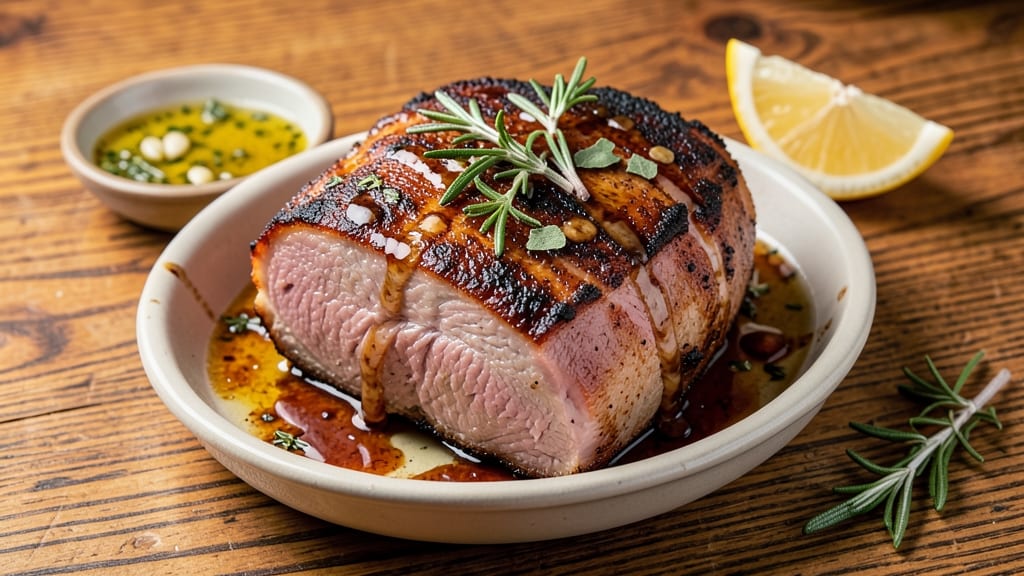
This boneless pork loin centre-cut roast recipe delivers the perfect balance of crispy edges and juicy core—exactly what transforms a weeknight dinner into a restaurant-worthy meal.
After years of perfecting this technique at The Smoky Pig, I’ve cracked the code for achieving that coveted golden crust while keeping the interior tender and moist. The secret lies in a herb-crusted approach that locks in flavor and creates a flavorful bark without drying out the meat.
What sets this recipe apart is the low-and-slow roasting method, which ensures even cooking from edge to center.
You’ll start with a simple marinade to tenderize the meat, then build a flavorful crust using fresh herbs, garlic, and a touch of Dijon mustard—this isn’t just seasoning, it’s a flavor bomb. The key?
Roasting at 325°F until the internal temperature hits 145°F, then finishing with a quick broil for that crispy edge. Trust me, this isn’t your average pork roast.
The result is a juicy, melt-in-your-mouth centre cut with a crispy exterior that’s impossible to resist. Every slice delivers layers of savory, herby goodness, and the leftovers? Even better the next day.
This is the kind of roast that pairs perfectly with roasted root vegetables, creamy mashed potatoes, or a tangy apple glaze—simple sides that let the pork shine.
Whether you’re cooking for a family gathering or treating yourself to a special meal, this recipe delivers restaurant-quality results with minimal fuss. The best part? It’s foolproof, so you can focus on the important part—enjoying the meal. Let’s get started on creating your perfect roast.
Ingredients for boneless pork loin centre cut roast
The secret to this restaurant-worthy roast lies in these carefully chosen ingredients that create crispy edges and juicy perfection every time.
| Ingredient | Amount | Notes |
|---|---|---|
| Boneless Pork Loin Centre Cut Roast 🐖 | 2 ½ lb | Even thickness, 1.5-2 inches |
| Extra-Virgin Olive Oil 🫒 | ¼ cup | For marinade and crust |
| Fresh Rosemary 🌿 | ¼ cup | Finely chopped, stems removed |
| Fresh Thyme Leaves 🌿 | 1 tbsp | Packed, stems removed |
| Garlic Cloves 🧄 | 6 cloves | Minced, not pressed |
| Dijon Mustard 🍯 | 1 tbsp | For marinade depth |
| Fresh Sage Leaves 🌿 | ¼ cup | Finely chopped, stems removed |
| Diamond Crystal Kosher Salt 🧂 | 1 ½ tsp | For seasoning and crust |
| Freshly Ground Black Pepper 🌶️ | 1 tsp | Coarse grind preferred |
| Unsalted Butter 🧈 | ¼ cup | Cold, cubed for finishing |
| Honey 🍯 | 1 tbsp | For glaze option |
| Apple Cider Vinegar 🍎 | 1 tbsp | For marinade tang |
| Fresh Parsley Leaves 🌿 | 0.1 cup | Chopped, for garnish |
The boneless pork loin centre cut is non-negotiable—look for a piece that's 1.5-2 inches thick for even cooking. Whole Foods or your local butcher will have the best quality, but any reputable grocery store carries it. Fresh herbs are essential here: rosemary and sage should smell vibrant, not dried out. If you're buying whole sprigs, strip the leaves yourself for maximum flavor. The garlic should be plump and firm—avoid those shriveled cloves. For the Dijon mustard, Maille is the gold standard, but any good-quality brand works. The kosher salt matters too—Diamond Crystal dissolves better than table salt, so you get cleaner seasoning.
No fresh rosemary? Dried rosemary at one-third the amount works in a pinch, but fresh is worth hunting down. Short on thyme? Fresh oregano makes a great substitute. The olive oil should be extra-virgin—cheap oil will taste harsh when roasted. For the butter finish, Plugrá or any European-style unsalted butter gives the best flavor. The honey can be swapped for maple syrup if you prefer, but honey adds that perfect caramelized crust. Pro tip: if you can't find apple cider vinegar, white wine vinegar works just as well—just reduce the amount to 1 tsp to avoid over-acidifying the marinade.
This roast reheats beautifully—3-4 minutes at 325°F brings it back to perfection. For leftovers, wrap tightly in foil and store for up to 4 days. The herb crust keeps best when refrigerated, so don't prep it more than 24 hours ahead. Freeze the roast (uncooked) for up to 3 months by wrapping it tightly in plastic wrap and foil. The butter glaze should be made fresh before serving—it's what creates that golden, crispy finish. Garnish with fresh parsley right before serving to keep it vibrant.
Why You'll Love This Recipe
- One-Pan Magic: I swear by this recipe because it’s literally four ingredients plus salt—no fancy prep, no chopping boards full of scraps. Just sear the pork, toss in the whole garlic cloves (yes, unpeeled), and let the rosemary and thyme work their magic while you sip wine and pretend you’re a chef.
- Herb-Crusted Perfection: That crispy, golden crust from the olive oil and herbs? It’s what turns this into something restaurant-worthy without effort. The garlic infuses the meat so deeply, every bite tastes like it’s been slow-cooked—even though it’s ready in under an hour.
- Weeknight to Dinner Party: Between us, I’ve served this to my book club and my exhausted self on a Tuesday. Slice it thin for sandwiches, cube it for salads, or serve it whole with crusty bread—it’s the kind of dish that makes you look like you planned ahead, even if you didn’t.
- Leftovers That Don’t Suck: Honestly, I always make extra because the flavor only gets better the next day. Shred it for tacos, dice it into pasta, or just reheat it with a splash of broth—it’s the ultimate lazy meal that still feels special. (And yes, it’s cheaper than takeout.)
Step-by-step instructions for herb-crusted pork loin roast
This method delivers a perfectly balanced roast with a golden, crackling crust and succulent interior every time.
Prepare the Herb Crust Mixture
In a food processor, combine the 0.25 cup extra-virgin olive oil, 0.25 cup finely chopped fresh rosemary, 1 tbsp packed fresh thyme leaves, 6 minced garlic cloves, 1 tbsp Dijon mustard, 0.25 cup finely chopped fresh sage leaves, 1.5 tsp Diamond Crystal kosher salt, and 1 tsp freshly ground black pepper. Pulse until the mixture forms a thick, paste-like consistency that clings together when pressed.
Here's the thing—this herb crust isn't just for flavor, it's for texture. The oil creates a barrier that locks in moisture while the herbs form a flavorful crust. Spread this mixture evenly over the 2.5 lb boneless pork loin centre cut roast, pressing it firmly into the surface so it adheres completely. Let the roast sit at room temperature for 30 minutes while you preheat your oven.
Sear the Roast for Maximum Flavor
Preheat your oven to 425°F. Heat a large oven-safe skillet over medium-high heat and add the roast. Sear on all sides for 2-3 minutes per side until you achieve deep golden brown color. This step is crucial—it develops the Maillard reaction that creates that irresistible crust and deepens the herb flavors.
Don't rush this process. You'll know it's ready when the crust releases easily from the pan and the internal temperature reaches 145°F when measured with an instant-read thermometer. Transfer the seared roast to the preheated oven and roast for 20-25 minutes for medium-rare doneness.
Create the Finishing Glaze
While the roast cooks, prepare the finishing glaze by melting the 0.25 cup unsalted butter in a small saucepan over low heat. Add 1 tbsp honey and 1 tbsp apple cider vinegar, stirring constantly until the mixture is smooth and begins to bubble gently. Remove from heat and set aside.
This glaze adds a beautiful sheen and subtle sweetness that complements the herb crust. The butter provides richness while the vinegar adds a bright acidity that cuts through the richness. Keep the glaze warm until ready to use—it should be thick enough to coat the back of a spoon but still pourable.
Rest and Glaze for Perfect Texture
Remove the roast from the oven when the internal temperature reaches 145°F for medium-rare (or 155°F for medium). Transfer it to a cutting board and tent loosely with foil. Let it rest for 15-20 minutes—this is where the magic happens. During this time, the juices redistribute throughout the meat, ensuring each slice remains juicy.
After resting, brush the warm glaze evenly over the roast. The residual heat will help the glaze set beautifully. Garnish with 0.1 cup chopped fresh parsley leaves just before serving. This final touch adds freshness and makes the presentation stunning. Slice against the grain for maximum tenderness and serve immediately.
Pro Tips For Making Boneless Pork Loin Centre Cut Roast
- USE A MEAT THERMOMETER: I learned this the hard way—pork loin looks done way before it actually is. Aim for 145°F (63°C) internal temp, then let it rest. That 5-minute wait under foil keeps it juicy, not rubbery.
- TRIM THE FAT, NOT THE FLAVOR: The centre cut is lean, so don’t over-trim—just wipe away any surface fat with paper towels. That extra olive oil will cling better to the meat, giving you a crispier crust without drying it out.
- SMASH THE GARLIC: Whole cloves? Skip it. Mince those garlic cloves fine—no, really, crush them with the flat of your knife first. Bursting the cells releases more flavor, and it blends into the pork instead of sitting as a chewy surprise.
- SEAR IN BATCHES: A crowded pan steams the pork instead of searing it. Work in two rounds if needed—high heat, 2-3 minutes per side—until golden. That crust is what carries the rosemary and thyme aroma straight to your plate.
Essential equipment for great boneless pork loin centre cut roast
Oven Essentials
Your oven is the heart of this recipe, so invest in a quality instant-read thermometer like the Thermoworks Smoke—it’s my go-to for precise internal temperature readings. Preheat your oven to 425°F for searing, then reduce to 325°F for even cooking.
A heavy-duty roasting pan with a rack is non-negotiable; I swear by All-Clad’s stainless steel pan for even heat distribution. 🌡️
Searing Tools
For that golden crust, you’ll need a large oven-safe skillet—I prefer Lodge’s cast iron for its heat retention and natural non-stick properties. Heat it over medium-high heat until smoking hot before searing.
A tongs with a long handle (like OXO Good Grips) makes flipping the roast easier without disturbing the crust.
Crust Prep Kit
A food processor is essential for blending the herb crust into a smooth paste. I use my Cuisinart DP-12 for its sharp blades and even pulsing. For spreading the crust, a offset spatula (like Mercer Culinary’s) ensures even coverage.
Don’t skip the parchment paper—it’s your best friend for easy transfer from pan to cutting board.
Glaze Station
Your finishing glaze requires a small saucepan with a heatproof handle—I love Made In’s stainless steel for its even heating. A whisk (like J. L. Chenier’s) keeps the butter-honey mixture smooth.
Keep a pastry brush (such as West Bend’s) handy for applying the glaze evenly. A measuring spoon set (like OXO’s) ensures precise honey and vinegar ratios.
Resting & Serving
Resting the roast requires a cutting board—I use Maplewood’s for its natural antimicrobial properties. A sharp carving knife (like Wüsthof’s 8-inch) slices through the meat cleanly.
For garnish, a small bowl holds your chopped parsley, and a tweezers helps place it artistically. A serving platter (like Le Creuset’s stoneware) elevates the presentation.
Nutrition facts
Frequently asked questions
Why does the recipe call for a boneless pork loin centre cut specifically?
The centre cut is the most tender portion of the pork loin, with minimal connective tissue and even fat distribution. This ensures a juicy interior with no tough spots. The boneless version also cooks more evenly, preventing dryness at the edges while the center remains perfectly cooked. For best results, choose a piece that's 1.5-2 inches thick—this thickness guarantees a crispy crust without overcooking the center.
Can I substitute fresh herbs with dried ones if I don't have fresh? Yes, but use one-third the amount of dried herbs compared to fresh. For example, replace 0.25 cup fresh rosemary with 1 tbsp dried rosemary. The flavor will be similar, though slightly less vibrant. If you're short on thyme, fresh oregano works well as a substitute. Just
What's the best way to check if the pork loin is fully cooked?
Use a meat thermometer to check the internal temperature—145°F for medium-rare (recommended) or 155°F for medium. Insert the probe into the thickest part of the roast, avoiding the bone if present. The thermometer should read consistently for 10-15 seconds before removing the roast. Never rely on color alone, as pork can appear cooked on the outside while remaining undercooked inside.
How do I prevent the pork loin from drying out?
Start with a room-temperature roast (let it sit for 30 minutes before cooking) and avoid overcrowding the pan. The herb crust locks in moisture, but don't skip the resting time—15-20 minutes after roasting lets the juices redistribute. For extra protection, brush the roast with a thin layer of olive oil before applying the herb mixture. And remember: low-and-slow roasting at 325°F keeps the center juicy while the crust crisps.
What are the best side dishes to serve with this herb-crusted pork loin?
This roast pairs beautifully with roasted root vegetables (carrots, parsnips, or sweet potatoes), creamy mashed potatoes, or a tangy apple glaze. For a lighter option, try a wilted spinach salad with a balsamic vinaigrette. The herb notes in the roast complement earthy sides, while the sweet glaze balances rich dishes. Avoid heavy sauces that might overpower the delicate herb crust.