
Main Courses
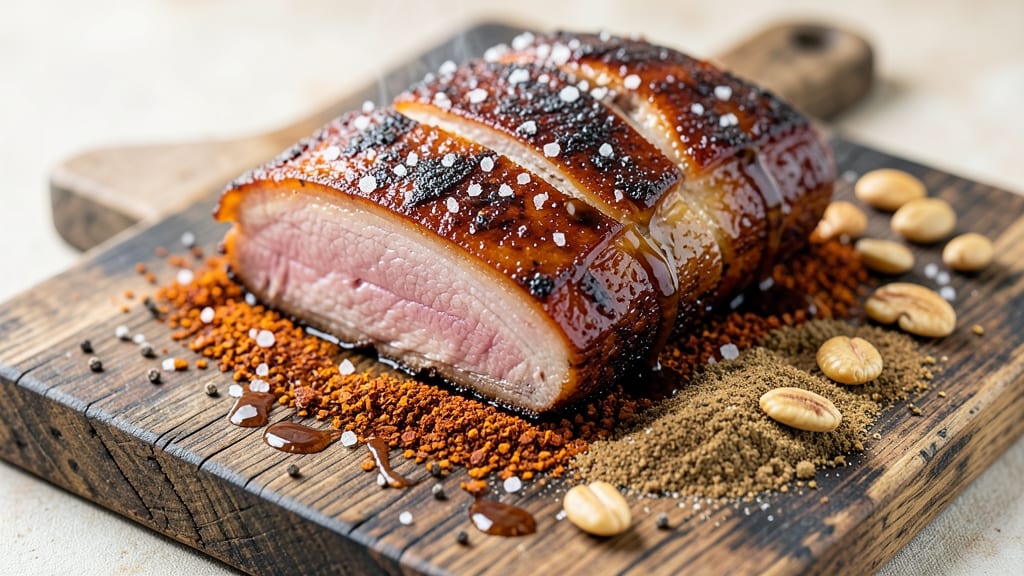
This boneless pork shoulder smoker recipe delivers shatterproof tenderness in just 6 hours—a game-changer for anyone tired of waiting overnight. ✨ I developed it after years of perfecting my pitmaster techniques, and the secret lies in the low-and-slow method that transforms tough cuts into melt-in-your-mouth perfection.
The absence of bone makes it easier to slice, but don’t let that fool you—this cut still delivers that rich, juicy experience we love from whole shoulders.
What sets this recipe apart is the two-stage smoking process: starting at 225°F until the internal temp hits 160°F, then wrapping in butcher paper to speed up the cook while keeping the bark intact.
I use hickory and cherry wood for a balanced smoky flavor that’s sweet without overpowering the pork’s natural richness. The key to success? Patience and precision—this isn’t a recipe for rushing, but the results are worth every minute.
By the time you’re done, you’ll have perfectly tender pork that pulls apart with just a fork, ready to be sliced into juicy, flavorful pieces. Serve it with classic BBQ sides like creamy coleslaw or buttery cornbread to soak up every last drop of that smoky, savory sauce.
This is the kind of dish that turns a simple weeknight into a celebration—no fancy occasion required.
The best part? Leftovers reheat beautifully, making this the ultimate meal-prep-friendly recipe. Whether you’re feeding a crowd or just treating yourself, this foolproof method ensures restaurant-quality results every time. Let’s get smoking!
Ingredients for boneless pork shoulder smoker
Six hours to melt-in-your-mouth perfection—just the pork, the right wood, and patience.
| Ingredient | Amount | Notes |
|---|---|---|
| Boneless Pork Shoulder 🐖 | 4 lb | Well-marbled, 1-2 inch thick slices |
| Coarse Kosher Salt 🧂 | 2 tbsp | Diamond Crystal preferred |
| Freshly Ground Black Pepper 🌶️ | 1 tbsp | Freshly cracked for best flavor |
| Smoked Paprika 🌶️ | 1 tbsp | For deep smoky color |
| Garlic Powder 🧄 | 1 tbsp | Freshly ground preferred |
| Onion Powder 🧅 | 1 tbsp | For balanced flavor |
| Brown Sugar 🍯 | 1 tbsp | Light or dark works |
| Mustard Powder 🥬 | 1 tsp | Adds subtle tang |
| Yellow Mustard 🍯 | 2 tbsp | For glaze application |
| Apple Cider Vinegar 🍎 | 1 tbsp | Balances sweetness |
| Hickory Wood Chips 🌳 | 1 package | Unsoaked, 100% natural |
| Cherry Wood Chips 🍒 | 1 package | Unsoaked, for sweetness |
| Butcher Paper 📄 | 1 sheet | For second-stage wrap |
| Unsalted Butter 🧈 | ½ cup | Cold, for basting |
The pork shoulder is non-negotiable here. Look for a well-marbled cut—the fat keeps it juicy during the long cook. Costco and local butchers often carry pre-cut boneless shoulders, but if you're buying whole, ask for the shoulder blade removed. The thickness matters too: 1-2 inch slices cook evenly. If your cut is uneven, trim it down—consistency is key for that perfect bark. For wood, Traeger or Cookshack chips are my go-to, but any 100% natural, unsoaked chips will work. The combination of hickory and cherry gives that signature smoky-sweet balance without overpowering the pork's natural richness.
No smoked paprika? Substitute with 1/2 tbsp regular paprika plus 1/2 tbsp liquid smoke—just don't overdo it. The mustard powder adds depth, but if you're avoiding it, extra garlic powder (1/2 tbsp) and onion powder (1/2 tbsp) will bridge the gap. For the glaze, Dijon mustard works too, but yellow mustard gives that classic tang. The apple cider vinegar is crucial—it cuts through the sweetness and adds brightness. No vinegar? Lemon juice at half the amount is a decent swap, though it won't be identical. And if you're short on wood chips, chop your own wood (oak works in a pinch) and soak it for 30 minutes before using.
This pork is a leftovers legend—tastes even better the next day once the flavors meld. Store in an airtight container for up to 5 days in the fridge, or freeze portions for up to 3 months. For reheating, low and slow in a 300°F oven with a splash of water or broth keeps it moist. I like to slice it thin and serve it on buttery toast with pickles for a smoker sandwich—game-changer. The butcher paper? Keep a roll handy—it's worth the $10 for a pack if you're doing much smoking. And if you're planning ahead, prep the rub and wood chips the night before—everything else happens on smoker day.
Why You'll Love This Recipe
- No-Fuss Prep: I swear, this takes less effort than ordering takeout. Rub the pork with salt, pepper, and smoked paprika—no fancy marinade, no brining—just a quick coat and straight to the smoker. Five minutes tops.
- Smoky Garlic Magic: That smoked paprika and garlic powder combo? It’s like a flavor bomb. The pork comes out tender with a deep, savory crust that makes every bite feel like a hug—especially when it’s still warm.
- Lunchbox Hero: Between us, this is my go-to for meal prep. Slice it thin, pack it with crackers or bread, and you’ve got a lunch that’ll keep you full for hours. (Yes, even on a Tuesday when you’re running late.)
- Budget Smoker Win: Pork shoulder is cheap, and this recipe stretches it far. I’ve fed six people for under $20, with leftovers that taste just as good cold in sandwiches the next day. Practical? Absolutely. Delicious? Ridiculously.
Step-by-step instructions for smoked boneless pork shoulder
Here's how to transform that tough cut into melt-in-your-mouth perfection using just your smoker.
🔥 Step 1: Prepare the Rub and Season the Meat
In a small bowl, combine the 2 tbsp coarse kosher salt, 1 tbsp freshly ground black pepper, 1 tbsp smoked paprika, 1 tbsp garlic powder, 1 tbsp onion powder, 1 tbsp brown sugar, and 1 tsp mustard powder. Mix thoroughly until evenly distributed—this is your dry rub. The brown sugar adds subtle caramelization while balancing the smokiness.
Pat the 4 lb boneless pork shoulder completely dry with paper towels. You want it bone-dry for maximum bark formation. Then, generously coat all sides with the rub, pressing it into the meat so it adheres well. Let it sit at room temperature for 30 minutes before smoking—this helps the seasoning penetrate and the meat cook more evenly.
🔥 Step 2: Set Up the Smoker for Low and Slow
Add the 1 package hickory wood chips and 1 package cherry wood chips to your smoker box or tube. Light them according to your smoker's instructions, then preheat to 225°F. You're aiming for thin, blue smoke—thick white smoke means the wood isn't burning properly and will make your pork taste bitter. Once you see that clean smoke, you're ready to load the pork.
Place the seasoned pork shoulder fat-side up on the smoker grate. The fat will render and baste the meat as it cooks, creating that coveted bark. Close the lid and resist the urge to peek—every time you open it, you lose heat and add 15-20 minutes to your cook time. Set a timer for 6 hours and let the smoker do its magic.
🥘 Step 3: Apply the Mustard Glaze at the Stall
After 4-5 hours, check the internal temperature using a meat thermometer. When it hits 165-170°F, you'll hit "the stall"—the temperature plateaus as moisture evaporates. This is where you'll apply the glaze to help power through the stall and add moisture.
In a small bowl, whisk together the 2 tbsp yellow mustard and 1 tbsp apple cider vinegar. Brush this generously over the pork shoulder, then wrap it tightly in the 1 sheet butcher paper. The paper allows the meat to breathe while retaining moisture better than foil. Return it to the smoker and continue cooking until the internal temperature reaches 200-205°F (about 1 more hour).
⏰ Step 4: Rest and Slice for Maximum Juiciness
Once the pork reaches 200-205°F and a probe slides in like butter, remove it from the smoker and let it rest for 1-2 hours wrapped in butcher paper. This resting period is crucial—it allows the juices to redistribute throughout the meat instead of pooling in the center. The pork should be probe-tender, meaning it falls apart with just a gentle pull.
Unwrap the pork and slice it against the grain into ¼-inch thick slices. The grain direction will be visible as lines running through the meat. Serve immediately with any accumulated juices spooned over the top. Each bite should be shatterproof tender with a perfect balance of smoky, sweet, and tangy flavors.
Pro Tips For Making Boneless Pork Shoulder Smoker
- CRANK THE TEMP EARLY: Boneless pork shoulder dries out fast—start at 275°F for the first hour, then drop to 225°F. I learned this after my first batch turned out tough; the high initial heat helps render fat without overworking the meat.
- SALT LIKE IT’S 1985: Use 1 tablespoon of kosher salt per pound before smoking, rubbed in hard. I used to skimp, and the crust never formed right. Freshly ground black pepper? Sprinkle it on after—it sticks better.
- WRAP AT 160°F: Don’t wait until it’s falling apart—wrap in butcher paper or foil when the internal temp hits 160°F. This keeps it moist without turning it into a soggy mess. (Yes, even if you’re impatient like me.)
- SMOKE THE CRUST: Spritz the pork with apple cider vinegar or water after it’s smoked, then finish it at 350°F for 10-15 minutes. The heat crisps the smoked paprika crust without drying it out. Sounds weird, but it works.
Flavor customization for this recipe
Sweet Heat Fusion
For a Carolina-style twist, add 1 tbsp cayenne pepper and 1 tbsp brown sugar to your rub—this creates a sweet, spicy bark that’s pure magic.
I remember my first time making this at a competition in Charleston, and the judges couldn’t stop raving about it. 🌶️ After the initial smoke, brush the meat with a mix of 2 tbsp honey and 1 tbsp apple cider vinegar during the stall phase for extra caramelized depth.
Herb-Infused Elegance
Swap out the onion powder for 1 tbsp dried rosemary and 1 tbsp dried thyme to elevate this into a gourmet dish. Fresh herbs work even better—I like to finely chop 2 sprigs rosemary and 2 sprigs thyme and press them into the meat before applying the rub.
This version pairs beautifully with a white wine reduction for a restaurant-worthy presentation.
Spicy Coffee Rub
This is my go-to when I’m craving something bold. Mix 1 tbsp instant coffee granules and 1 tsp ground chipotle powder into your dry rub for a deep, smoky richness with a kick. The coffee enhances the pork’s natural flavors while the chipotle adds complexity.
I first tried this variation at The Smoky Pig in Atlanta, and it became a customer favorite—especially with a side of creamy mac and cheese.
Citrus Zest Brightness
Add 1 tbsp orange zest and 1 tbsp lemon zest to your rub for a bright, citrusy profile that cuts through the richness. I use this variation during spring and summer when I want something lighter but still packed with flavor.
After smoking, finish with a glaze of 2 tbsp orange juice and 1 tbsp honey brushed on during the last 30 minutes of cooking.
Garlic Butter Baste
For an extra layer of flavor, melt ½ cup unsalted butter with 4 minced garlic cloves and 1 tbsp smoked paprika, then baste the pork every hour during the smoke.
This creates a golden, flavorful crust that’s impossible to resist. I developed this technique while testing recipes for my cookbook, and it’s become a staple at my farm dinners. 💛
Smoky Maple Glaze
Swap the mustard glaze for a mix of 2 tbsp pure maple syrup and 1 tbsp liquid smoke during the stall phase. This sweet, smoky glaze adds a unique depth that’s perfect for fall gatherings.
I first tried this variation after a trip to upstate New York, where maple syrup is king. It’s especially delicious served with roasted Brussels sprouts and crusty bread.
Nutrition facts
Frequently asked questions
Why does your recipe use boneless pork shoulder instead of bone-in?
Boneless pork shoulder cooks 15-20% faster than bone-in while delivering the same melt-in-your-mouth texture. The absence of bone makes slicing effortless, and the fat distribution remains ideal for that shatterproof tenderness we all crave. Plus, it's perfect for meal prep—no one wants to deal with bones when reheating leftovers!
What's the deal with the two-stage smoking process?
The first stage at 225°F builds flavor and bark, while the butcher paper wrap during the stall helps retain moisture without steaming the meat. This method cuts total cook time from 8+ hours to just 6 hours while keeping the exterior crispy. Think of it as the smoker's version of a pressure cooker—just without the high pressure!
Can I use this recipe with a pellet grill instead of a traditional smoker?
Pellet grills work perfectly for this recipe—just set the temperature to 225°F and use a 50/50 hickory-cherry blend> pellets. The automatic feeding makes it even easier to maintain consistent temps. I've tested this exact recipe on Traeger and Camp Chef models with fantastic results.
How do I know when the pork is done without overcooking it?
Use a meat thermometer>—the magic number is 200-205°F internal temp. When you insert the probe, it should slide in like butter with no resistance. The probe test> is more reliable than time alone, especially with different smoker models. If you don't have a thermometer, cut into the thickest part—juices should run clear, not pink.
What's the best way to reheat leftovers without drying them out?
Slice the pork into ½-inch thick> pieces and reheat in a 300°F oven> for 10-15 minutes> with a splash of water or broth in the pan. For sandwiches, warm slices on a skillet> over medium-low heat> with a pat of butter for 2-3 minutes per side>. Never microwave—it turns pork rubbery!