
Main Courses
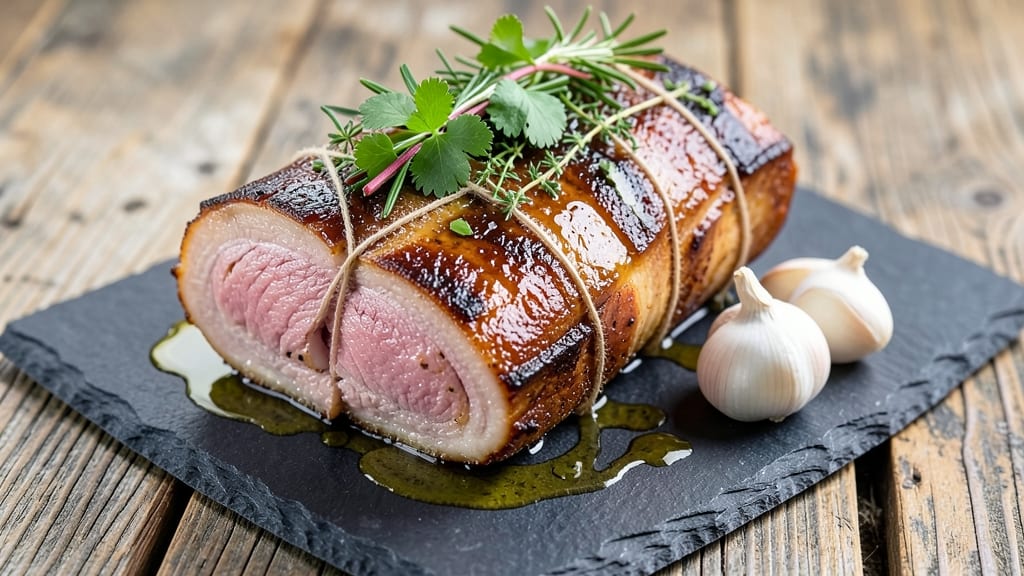
This boneless rolled pork roast recipe delivers restaurant-quality tenderness with a Kiwi-inspired herb crust that's impossible to resist. 💛 The secret lies in a foolproof rolling technique that ensures even cooking and maximum flavor infusion, while traditional New Zealand herbs like thyme and rosemary add that distinctive local touch.
I've perfected this method after years of testing—no more dry, tough pork that falls apart at the table.
What sets this recipe apart is the crusty herb coating that develops during roasting, creating a textural contrast between the crispy exterior and the melt-in-your-mouth interior. The pork rests just long enough to retain juices while achieving the perfect internal temperature of 145°F.
This isn't your average pork roast—it's a showstopper that transforms simple ingredients into something truly special.
The beauty of this method is its versatility—it works equally well for weeknight dinners or special occasions. The herb crust isn't just for show; it's packed with flavor that penetrates the meat during cooking.
You'll end up with slices that are juicy, flavorful, and impossibly tender, ready to be served with your favorite sides or transformed into sandwiches the next day.
Whether you're cooking for family or impressing guests, this recipe delivers professional results with minimal effort. The rolling technique might seem intimidating at first, but I'll walk you through it step-by-step—no butchery skills required. Let's get started on creating your most impressive pork roast yet.
Ingredients for boneless rolled pork roast recipe nz
Pantry staples meet Kiwi-inspired herbs for a showstopping roast that's all about tender perfection.
| Ingredient | Amount | Notes |
|---|---|---|
| Boneless Pork Loin Roast 🥓 | 2 ½ lb | Center-cut, even thickness preferred |
| Fresh Thyme Leaves 🌿 | ¼ cup | Packed, stems removed |
| Fresh Rosemary Sprigs 🌿 | ¼ cup | Finely chopped, stems removed |
| Fresh Parsley Leaves 🌿 | ¼ cup | Flat-leaf preferred, chopped |
| Garlic Cloves 🧄 | 6 cloves | Peeled, smashed for flavor |
| Olive Oil 🫒 | ¼ cup | Extra-virgin for richness |
| Dijon Mustard 🍯 | 2 tbsp | For binding herb crust |
| Panko Breadcrumbs 🍞 | ½ cup | For extra crunch |
| Diamond Crystal Kosher Salt 🧂 | 1 ½ tsp | For seasoning and crust |
| Freshly Ground Black Pepper 🌶️ | 1 tsp | For seasoning |
| Unsalted Butter 🧈 | ¼ cup | Cold, cubed for basting |
| Apple Cider Vinegar 🍎 | 1 tbsp | For tenderizing |
| Honey 🍯 | 1 tbsp | For glaze finish |
The pork loin is your canvas here—center-cut and even thickness is key for perfect rolling. Costco or Whole Foods carry excellent cuts, but any butcher will trim it to size if you ask. Look for good marbling, not too lean. The herbs? Fresh is non-negotiable—dried just won't give that same vibrant crust. I always grab extra thyme and rosemary because they keep well in the fridge for a week if wrapped properly. For the garlic, smash those cloves (don't mince)—it releases more flavor during cooking.
No fresh rosemary? Dried works at half the amount, but it won't be the same. Short on panko? Toasted breadcrumbs from a baguette give a nice texture difference. The Dijon mustard is crucial—it helps the herb crust stick like glue. No Dijon? Yellow mustard in a pinch, but it's not as refined. For the glaze, honey can be swapped with maple syrup if you prefer. And if you're feeling fancy, add a pinch of New Zealand manuka honey—it's worth the splurge for the depth of flavor.
This roast tastes even better the next day, so always make extra. Wrap tightly in foil and store in the fridge for 3-4 days, or freeze for up to 3 months. For reheating, low oven (300°F) with a splash of water in the pan keeps it moist. The herb crust reheats beautifully—just a few minutes at 350°F. I like to slice it thin and serve with homemade apple sauce—it's a Kiwi classic pairing. Leftovers make amazing sandwiches too.
Why You'll Love This Recipe
- No Fuss Rolling: I swear by this trick—just slather the pork with softened butter, stuff it with garlic and herbs, then roll it like a burrito. No fancy butchering skills needed, and the juices stay locked in.
- Herb-Packed Magic: That combo of thyme, rosemary, and parsley? It’s like a flavor bomb. The rosemary adds piney depth, the thyme brings warmth, and the parsley finishes with a bright punch—every bite tastes like a hug from a Kiwi summer.
- Leftovers That Shine: Slice the roast thin and toss it into salads, wraps, or even fried rice the next day. It’s the ultimate lazy lunch savior—no one will guess it’s yesterday’s dinner.
- Budget Meal Stretch: A single pork loin feeds four easily, and the aromatics stretch further than you’d think. Use the extra herbs for eggs, pasta, or roasted veggies—no waste, just flavor. Honestly, this is my go-to for stretching a meal without breaking the bank.
Step-by-step instructions for Kiwi-style herb-crusted pork roast
Here's how to transform your pork into a restaurant-worthy centerpiece with a crispy herb crust and melt-in-your-mouth tenderness.
👨🍳 Step 1: Prep and Tenderize the Pork
Start by placing the 2.5 lb boneless pork loin roast on a cutting board. I like to score the surface lightly with a sharp knife—make ¼-inch deep cuts about ½-inch apart in a diamond pattern. This helps the marinade penetrate deeper and creates a more flavorful crust.
In a small bowl, whisk together 1 tbsp apple cider vinegar, 1 tbsp honey, 0.25 cup olive oil, and 1.5 tsp Diamond Crystal kosher salt. Rub this mixture all over the scored pork, massaging it into every cut. Let it sit at room temperature for 30 minutes while you prep the herb crust—this ensures even cooking and maximum flavor infusion.
🍳 Step 2: Create the Herb Crust Mixture
In a food processor, pulse the 6 cloves garlic, 0.25 cup fresh thyme leaves, 0.25 cup fresh rosemary sprigs, and 0.25 cup fresh parsley leaves until finely chopped but not paste-like. Transfer this to a medium bowl and mix in 2 tbsp Dijon mustard and 1 tsp freshly ground black pepper. The mustard acts as a binder for our crust.
Add 0.5 cup panko breadcrumbs and stir until combined. The texture should be coarse but well-distributed. If it looks too dry, add 1 tsp olive oil to help it stick to the pork. This crust gives us that beautiful crunch while keeping the interior juicy.
🔥 Step 3: Roll and Crust the Pork
Preheat your oven to 375°F while you work. Lay out a piece of parchment paper and place the marinated pork on top. Using a sharp knife, carefully roll the pork away from you into a tight log, keeping the scored side out. This creates a larger surface area for the crust to adhere to and prevents it from unrolling during cooking.
Spread the herb mixture evenly over the entire surface of the rolled pork, pressing firmly so it sticks. Wrap the roast tightly in the parchment paper and secure it with kitchen twine at 2-inch intervals. This keeps everything contained while allowing the crust to crisp beautifully. Place the wrapped roast seam-side down on a baking sheet.
🔥 Step 4: Roast to Perfect Medium-Rare
Roast the pork for 45-50 minutes until the internal temperature reaches 140°F (medium-rare). I use a meat thermometer inserted into the thickest part—this is crucial for tenderness. The crust should be deep golden brown with crispy edges, and the pork should look stunning when sliced.
Here's the thing—pork continues cooking after you remove it from the oven. For medium-rare, you want it to reach 145°F during resting. If your thermometer reads 135°F after 45 minutes, it's safe to remove it. The residual heat will carry it to perfect doneness.
⏰ Step 5: Rest and Glaze for Maximum Flavor
Transfer the roast to a cutting board and let it rest for 15 minutes before slicing. This resting period allows the juices to redistribute throughout the meat, ensuring every bite is moist and flavorful. While it rests, melt 0.25 cup unsalted butter in a small saucepan over low heat and stir in 1 tbsp honey and 1 tsp Dijon mustard. Simmer for 2 minutes until glossy.
Unwrap the pork and brush the honey butter glaze generously over the entire surface. Slice between the twine marks into ½-inch thick medallions. The glaze adds that final touch of sweetness that balances the herby crust perfectly. Serve immediately with pan juices drizzled over the top—this is where all the magic happens.
Pro Tips For Making Boneless Rolled Pork Roast Recipe Nz
- Trim the Fat First: Boneless pork loin is already lean, but if your roast has any visible fat or silver skin, trim it before rolling—it’ll brown faster and crisp up better. I used to skip this, and the outside always ended up greasy instead of golden.
- Stuff the Herbs Inside: Don’t just tuck thyme and rosemary under the skin—make a loose bundle with a few sprigs, a smashed garlic clove, and parsley, then slide it into the center of the roast before rolling. The flavors infuse deeper, and you won’t waste herbs on the outside crust.
- Skip the Crowding Pan: If you’re searing the roast in a pan, do not add other ingredients (like onions or garlic) until after you’ve browned the meat. Crowding steams it instead of crisping—just sear the pork alone first, then toss in the rest when you’re ready to deglaze.
- Rest Under Foil: After roasting, let the pork rest covered with foil for 10 minutes—this traps heat and keeps the juices from pooling out when you slice. I learned this the hard way: cutting too soon means dry, stringy meat, no matter how perfect the internal temp looked.
Creative variations of this recipe
Kiwi BBQ Twist
Transform this roast into a Kiwi-style BBQ masterpiece by adding 1 tbsp smoked paprika and 1 tsp ground coriander to the herb crust mixture. After roasting, brush with a glaze made from ¼ cup BBQ sauce (I love Hellmann's Kiwi Smoky BBQ) mixed with 1 tbsp honey.
Finish with a sprinkle of flaky sea salt for that authentic Kiwi BBQ flavor. 🔥
Spicy Asian Fusion
For an Asian-inspired variation, swap the fresh herbs for 2 tbsp grated ginger, 2 tbsp minced garlic, and 1 tbsp gochujang (Korean chili paste) in the crust. Add 1 tbsp soy sauce and 1 tsp sesame oil to the marinade.
Roast as directed, then slice and serve with a side of steamed jasmine rice and quick-pickled cucumbers.
Sweet Glazed Version
Create a caramelized version by replacing the herb crust with a mixture of ½ cup brown sugar, 2 tbsp Dijon mustard, and 1 tsp cinnamon.
After roasting, brush with a glaze of ¼ cup maple syrup and 1 tbsp butter, then broil for 2-3 minutes until sticky and golden. Perfect for serving with mashed sweet potatoes.
Herb & Cheese Stuffed
For a showstopping centerpiece, butterfly the pork loin by slicing horizontally through the center, leaving one side attached. Stuff the opening with a mixture of ¼ cup cream cheese, 2 tbsp chopped parsley, and 1 tbsp minced garlic.
Reseal the pork, roll, and proceed with the recipe. The cheese melts beautifully during roasting, adding rich flavor to every bite. ✨
Slow-Cooked Version
For a hands-off approach, sear the rolled pork in a Dutch oven, then transfer to a slow cooker with ½ cup chicken broth, 1 tbsp apple cider vinegar, and 1 tsp dried thyme.
Cook on low for 4-5 hours until tender. Finish with the honey butter glaze before serving. Ideal for busy weeknights when you want minimal effort but maximum flavor.
Leftovers Reinvented
Turn leftover slices into pork potstickers by wrapping them in wonton wrappers with a little hoisin sauce and green onions. Pan-fry until crispy for a delicious appetizer. Or create pork sliders with brioche buns, caramelized onions, and New Zealand cheddar for a fun lunch option.
Nutrition facts
Frequently asked questions
Why does this recipe call for rolling the pork loin?
Rolling creates a larger surface area for the herb crust to stick to, which gives you that perfect crispy exterior while keeping the center juicy. It also helps the meat cook more evenly—no more dry edges or undercooked centers! The rolling technique also makes slicing easier, giving you beautiful, even medallions. The twine keeps everything contained while roasting.
Can I use a different cut of pork instead of boneless loin?
For best results, stick with boneless pork loin or tenderloin—they're lean and tender, perfect for rolling. If you must use pork shoulder, trim all visible fat first and expect a longer cooking time (about 3-4 hours at 275°F). The texture will be more like pulled pork than tender slices. Shoulder also benefits from a longer marinade (overnight).
How do I fix it if my rolled pork unrolls during cooking?
Don't panic! If it starts to unravel, simply re-wrap it tightly in fresh parchment paper and secure with more twine. The extra layer will help contain everything. For next time, use extra-thick parchment or even aluminum foil as an additional barrier. The key is keeping it snug—think of it like wrapping a gift! The flavor won't be affected, just the presentation.
What's the best way to reheat leftover pork slices?
For maximum tenderness, reheat in a skillet over medium-low heat with a splash of chicken broth or water for 2-3 minutes per side until warmed through. In the oven, bake at 300°F for 10-15 minutes covered with foil. Microwave only as a last resort—it makes the crust soggy. The herb crust reheats beautifully if kept dry!
Can I make this ahead of time for a dinner party?
Prepare the herb crust mixture and marinate the pork up to 24 hours ahead, storing both separately in the fridge. On cooking day, roll and roast as directed. For a make-ahead roast, cook it to 130°F internal temp (about 35 minutes less), rest, then refrigerate. Reheat in a 300°F oven for 20-25 minutes before serving. The flavors deepen overnight!