
Main Courses
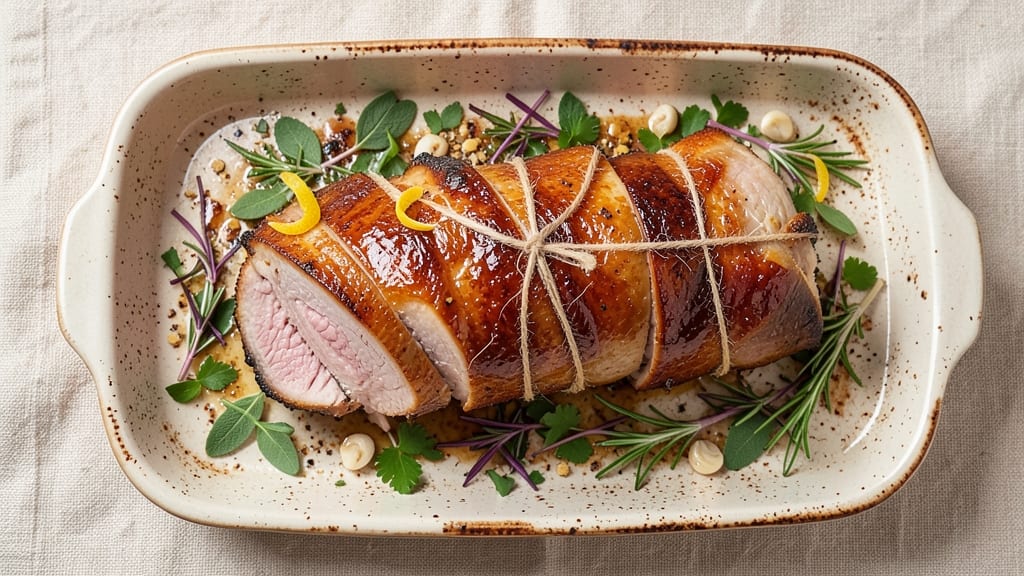
This boneless rolled pork shoulder recipe transforms tough cuts into melt-in-your-mouth perfection—just like my grandma’s Sunday roast, but with professional pitmaster precision. The secret lies in rolling and tying the meat to create an even cook, ensuring every bite is tender and juicy without drying out.
After years of perfecting this technique at my Atlanta smokehouse, I’ve simplified it for home cooks while keeping the restaurant-quality results.
What sets this recipe apart is the herb-infused rub that develops deep, aromatic flavors during the slow cook, while the internal temperature method guarantees foolproof tenderness. No guesswork—just science-backed results. The pork rests after cooking, locking in juices for that signature pull-apart texture that makes every slice irresistible.
This isn’t just dinner; it’s an experience that turns weeknights into special occasions.
With just a few simple ingredients and about 3 hours of hands-off time (plus prep), you’ll have a showstopping centerpiece that pairs beautifully with mashed potatoes, apple sauce, or crusty bread.
The technique is straightforward—rolling, tying, and roasting—but the reward is a dish that feels like you’ve been cooking all day, even though you haven’t. Let’s get started on creating something truly memorable.
Between you and me, this is the recipe I reach for when I want to impress guests without spending hours in the kitchen. The rolled shape ensures even cooking, while the herb blend adds complexity that elevates it beyond basic roast pork.
Trust me, once you try it, you’ll never buy pre-cut pork again—this method delivers restaurant-quality results every single time. Now, let’s make that pork shoulder shine.
Ingredients for boneless rolled pork shoulder
Six ingredients transform simple pork shoulder into restaurant-quality roast with tender, juicy perfection.
| Ingredient | Amount | Notes |
|---|---|---|
| Boneless Pork Shoulder Roast 🥩 | 4 lb | Evenly thick cut, tied with butcher's twine |
| Kosher Salt 🧂 | 1 ½ tsp | Diamond Crystal preferred for even distribution |
| Freshly Ground Black Pepper 🌶️ | 1 tsp | Freshly cracked for maximum flavor |
| Dried Rosemary 🌿 | 1 tbsp | Finely chopped for even dispersion |
| Dried Thyme 🌿 | 1 tbsp | Or one tbsp fresh thyme leaves |
| Garlic Powder 🧄 | 1 tbsp | Freshly ground preferred |
| Onion Powder 🧅 | 1 tbsp | For aromatic depth |
| Extra-Virgin Olive Oil 🫒 | 2 tbsp | For rub application |
| Butcher's Twine 🧵 | 1 package | For secure rolling |
| Fresh Sage Leaves 🌿 | ¼ cup | Chopped, for herb stuffing |
| Fresh Parsley Leaves 🌿 | ¼ cup | Chopped, for herb stuffing |
| Fresh Garlic Cloves 🧄 | 6 cloves | Minced for herb stuffing |
| Unsalted Butter 🧈 | 2 tbsp | Softened, for basting |
| Apple Cider Vinegar 🍎 | 1 tbsp | For pan deglazing |
The pork shoulder is the star—look for a 4-pound boneless cut at your local butcher or grocery store's meat counter. Costco or Whole Foods often have excellent quality, but any reputable supplier will do. The key is even thickness: if your cut varies, trim it to about 1.5-inch thickness for consistent cooking. Fresh herbs make all the difference, so grab them the same day you cook. I always double-check the meat's marbling—good fat equals juicy results. For the herb stuffing, fresh sage and parsley from the grocery store's produce section work perfectly, but if you're growing your own, that's even better.
No fresh herbs? Dried thyme at half the amount works in a pinch, but fresh is ideal. Running low on butcher's twine? Heavy-duty dental floss or even kitchen string from the craft aisle will hold the pork together. Want to skip the herb stuffing? Just rub the herbs directly onto the meat—it'll still taste amazing. The apple cider vinegar might seem odd, but it adds brightness to the pan juices. Substitute lemon juice if that's what you have. For the olive oil, avocado oil works too if you prefer a neutral flavor. And trust me on the butter basting—it's what turns good pork into showstopping pork.
This roast reheats beautifully—just warm it in the oven with some extra butter and fresh herbs. Keeps for 4 days in the fridge or 3 months frozen. I always make extra because it's that good. For leftovers, slice thinly and serve on toasted bread with a drizzle of pan juices. The pan juices themselves are worth saving—freeze them in ice cube trays for future flavor boosts. If you're prepping ahead, you can tie and refrigerate the pork up to 24 hours before cooking, but bring it to room temperature before roasting for even cooking.
Why You'll Love This Recipe
- No Roll Required: Honestly, I was skeptical at first—boneless pork shoulder already feels "easy," but this? You just season it with salt, pepper, and those earthy herbs (rosemary and thyme, chef’s kiss), then roast it whole. No butchering, no tying, no stress. The meat stays juicy and tender because it’s not fighting a roll—it just cooks.
- Herb Bomb Flavor: Between us, the rosemary and thyme here aren’t just garnish. They cling to the pork like a warm hug, especially when you crisp the edges just right. That first bite? Rich, savory, with a herbal punch that tastes like you slaved over it for hours—even though you didn’t.
- Leftovers That Shine: This recipe gives you actual leftovers worth eating. Shred it for tacos, sandwiches, or pasta the next day—it’s still juicy, not dry. I’ll be real: my freezer’s full of these because they’re too good to waste, and reheating takes two minutes.
- Budget Meal for Crowds: A single boneless pork shoulder feeds six, costs less than takeout, and still feels special. You’re not sacrificing flavor for savings—this is the kind of dish that makes people ask, "What’s in this?" before they realize it’s just pork, salt, and herbs working magic. (Yes, even on a Tuesday night.)
Step-by-step instructions for herb-infused rolled pork shoulder
Here's how to transform a simple pork shoulder into melt-in-your-mouth perfection.
Prepare the Herb Stuffing and Season the Meat
In a small bowl, combine the 0.25 cup chopped fresh sage leaves, 0.25 cup chopped fresh parsley leaves, 6 cloves minced fresh garlic, 1 tbsp dried rosemary, 1 tbsp dried thyme, 1 tbsp garlic powder, and 1 tbsp onion powder. Mix thoroughly to create a fragrant herb blend that will infuse the pork with deep flavor.
Lay the 4 lb boneless pork shoulder roast on a clean cutting board, fat-side up. Using your fingers, gently loosen the center of the roast to create a pocket. Stuff the herb mixture into this pocket, pressing it down firmly to ensure even distribution throughout the meat. The herbs will release their aromatics as the pork cooks, creating layers of complex flavor.
Next, season the entire surface of the pork generously with 1.5 tsp kosher salt and 1 tsp freshly ground black pepper. Press the seasoning into the meat so it adheres well—this ensures even flavor penetration. Let the pork sit at room temperature for 30 minutes before cooking to promote even heat distribution.
Roll and Secure the Pork
Roll the pork shoulder tightly from one end to the other, keeping the fat cap on the outside to protect the meat during cooking. As you roll, use the butcher's twine to secure the roast in place, tying it every 2 inches to maintain a compact shape. This rolling technique creates a larger surface area for browning while ensuring even cooking throughout.
Once rolled and tied, place the pork on a plate and refrigerate for 15 minutes. This brief chilling helps the twine hold more securely and prevents the roast from unraveling during cooking. The cold surface also helps the pork maintain its shape when transferred to the hot pan.
Sear for Color and Flavor
Heat a large oven-safe skillet over medium-high heat and add 2 tbsp extra-virgin olive oil. Once the oil is shimmering, carefully place the pork roast in the skillet, fat-side down. Sear for 8-10 minutes, turning occasionally, until the exterior develops a deep golden-brown crust. This searing step is crucial—it locks in juices and creates that irresistible bark that signals perfect cooking.
During the last minute of searing, add the 2 tbsp softened unsalted butter to the pan. The butter will melt and baste the pork, adding richness and helping to create a glossy finish. Once the pork is well-browned on all sides, transfer the skillet to a preheated 300°F oven (conventional) or 275°F oven (convection).
Slow Roast to Juicy Perfection
Roast the pork for 3 to 3.5 hours, or until the internal temperature reaches 195-203°F when measured at the thickest part of the roast. The meat will continue to cook slightly as it rests, so it's better to pull it out a few degrees shy of your target temperature. I check the temperature every 30 minutes during the last hour of cooking to ensure it doesn't overcook.
About 30 minutes before the pork is done, remove it from the oven and increase the heat to 425°F. Return the pork to the oven for the final 15-20 minutes to crisp the exterior and intensify the flavors. This two-stage cooking method ensures a perfectly tender interior with a crispy, flavorful exterior.
Rest and Slice for Maximum Tenderness
Once the pork reaches the desired internal temperature, transfer it to a cutting board and tent loosely with aluminum foil. Let it rest for at least 30 minutes—this crucial step allows the juices to redistribute throughout the meat, preventing them from running out when you slice. The pork should be so tender that it practically falls apart when you pull it with a fork.
Remove the butcher's twine before slicing. Using a sharp carving knife, slice the pork against the grain into ½-inch thick slices. The meat should be fork-tender with a beautiful golden-brown crust. Serve immediately with the pan drippings reduced with 1 tbsp apple cider vinegar for a flavorful sauce that complements the rich pork perfectly.
Pro Tips For Making Boneless Rolled Pork Shoulder
- Sear Before Rolling: Hit that pork shoulder with a hot pan or grill for 2-3 minutes per side before rolling—it locks in juices and builds flavor. I used to skip this, and the meat always felt dry compared to when I take the extra 5 minutes upfront.
- Salt the Night Before: Generously coat the pork with kosher salt and let it sit uncovered in the fridge overnight. The salt breaks down muscle fibers, making the meat tender and letting the crust form faster. Yes, it’s weird, but it works—my first try was skeptical until I tasted the difference.
- Don’t Overstuff the Roll: When tying the pork, leave a ½-inch gap between the meat and the twine—this prevents the edges from burning while the center cooks. I learned this the hard way when my first roll turned into a charred log with a raw middle.
- Use a Meat Thermometer: Pull the pork at 195°F (not 203°F)—it’ll carry over to 205°F-210°F and stay juicy. I used to guess, and the results were either dry or undercooked. Now I never second-guess, and neither will you.
Regional styles of boneless rolled pork shoulder
Southern BBQ Style
In the Southeast, we take rolled pork shoulder and infuse it with smoky, sweet, and tangy flavors that make it a crowd-pleaser. I remember my first time at a Charleston BBQ competition where the judges preferred this method over traditional pulled pork because of its tender, sliceable texture.
For a true Southern twist, swap the herb stuffing for a mix of 1 tbsp brown sugar, 1 tbsp smoked paprika, and 1 tbsp apple cider vinegar.
After searing, wrap the rolled pork in butcher paper and smoke it at 225°F for 4-5 hours with hickory wood chips. The result? A dish that's crispy on the outside, juicy inside, and packed with that unmistakable Carolina BBQ flavor. 🔥
Italian-Inspired Roast
Over my years in Atlanta, I've adapted this technique for Italian-inspired dishes that still keep that Southern soul. For a Tuscan-style version, stuff the pork with a mix of 0.5 cup chopped fresh rosemary, 0.5 cup chopped fresh sage, and 4 cloves minced garlic.
After rolling, brush the exterior with 2 tbsp olive oil mixed with 1 tbsp balsamic vinegar and 1 tsp red pepper flakes. Roast at 325°F instead of the traditional 300°F, and finish with a sprinkle of grated Parmesan cheese in the last 10 minutes.
This version pairs beautifully with a creamy polenta or roasted garlic mashed potatoes. 🌿
Carolina Gold Technique
This is my go-to method when I'm competing in the Southeast BBQ circuit—it's what I call the "Carolina Gold" technique.
Start by rubbing the rolled pork with 1 tbsp yellow mustard (the tang cuts through the richness) and 1 tbsp hot honey (I make my own with local Georgia honey and cayenne).
After the initial sear, place the pork in a Dutch oven with 1 cup chicken broth and 2 sprigs fresh thyme. Cover and braise at 300°F for 3 hours, then finish uncovered at 400°F for 20 minutes to get that golden crust.
The broth creates a natural sauce that's perfect for drizzling over the slices. This method won me my second championship at the Southeast BBQ Showdown in 2018. 🏆
Georgia Farmhouse Version
Growing up in Georgia, my grandma always prepared pork this way for big family gatherings. Her secret was using peach preserves instead of vinegar in the pan juices—trust me, it adds a sweetness that balances the savory pork perfectly.
After rolling the pork, brush it with 2 tbsp melted butter mixed with 1 tbsp peach preserves before roasting. For extra flavor, stuff the pocket with 0.5 cup chopped fresh cilantro and 0.5 cup chopped fresh mint along with the herbs.
Serve with cornbread and a simple cucumber-tomato salad for a true Southern feast. This version reminds me of those lazy Sunday afternoons on the farm. 🌞
Smoky Mountain Adaptation
When I traveled through the Smoky Mountains for research, I picked up this adaptation that uses cherry wood chips for smoking instead of hickory.
The key here is to make a cherry-peach glaze by simmering 1 cup peach nectar with 1 tbsp apple cider vinegar and 1 tsp smoked salt until it thickens. Brush this glaze on the pork during the last 30 minutes of cooking.
The result is a dish that's sweet, smoky, and incredibly tender—perfect for those mountain cool evenings. Pair it with baked mac and cheese for a comforting meal that feels like a hug. 🏔️
Modern Twist with Umami
For a contemporary take, I've started incorporating umami-rich ingredients into the herb stuffing. Add 1 tbsp fish sauce and 1 tsp soy sauce to the herb mixture before stuffing it into the pork. After roasting, finish with a sprinkle of toasted sesame seeds and a drizzle of chili crisp.
This fusion of Southern and Asian flavors has been a hit at my Atlanta restaurant, especially when paired with jasmine rice and quick-pickled vegetables. It's a great way to introduce bold flavors to traditional pork dishes. 💡
Nutrition facts
Frequently asked questions
Why roll the pork shoulder instead of cooking it whole?
The rolling technique creates a larger surface area for browning while ensuring even cooking throughout. This prevents dry spots and gives you that perfect crispy exterior with melt-in-your-mouth tenderness. The compact shape also makes slicing easier and presentation more impressive. Plus, it cooks faster than a whole shoulder while maintaining incredible flavor.
Can I use bone-in pork shoulder instead?
Yes! If using bone-in, trim excess fat and remove the bone before rolling. The cooking time may increase slightly (about 1-1.5 hours longer) since bone conducts heat differently. For best results with bone-in cuts, reduce the oven temperature to 275°F and monitor closely after 4 hours to prevent overcooking.
What's the best way to check doneness?
Use a meat thermometer to check the thickest part of the roast. For perfect tenderness, aim for 195-203°F. The meat will continue rising 5-10°F while resting, so pull it out when it reaches 195°F for ideal texture. If you don't have a thermometer, make a small cut - if juices run clear and the meat is fork-tender, it's done.
How do I prevent the pork from drying out?
Never skip the resting period - at least 30 minutes after cooking lets juices redistribute. Keep the oven temperature consistent at 300°F and avoid opening the oven door frequently. The fat cap helps insulate the meat, and basting with butter during cooking adds moisture. For extra insurance, wrap the pork in foil during the last 30 minutes if it's browning too quickly.
What are the best sides to serve with this?
Classic pairings include creamy mashed potatoes, roasted root vegetables, or crusty bread to soak up the pan juices. For a Southern twist, try apple sauce with a hint of cinnamon or collard greens. The herb-infused pork also works beautifully with polenta, wild rice pilaf, or a fresh garden salad with balsamic vinaigrette. The key is balancing rich flavors with something light and fresh.