
Main Courses
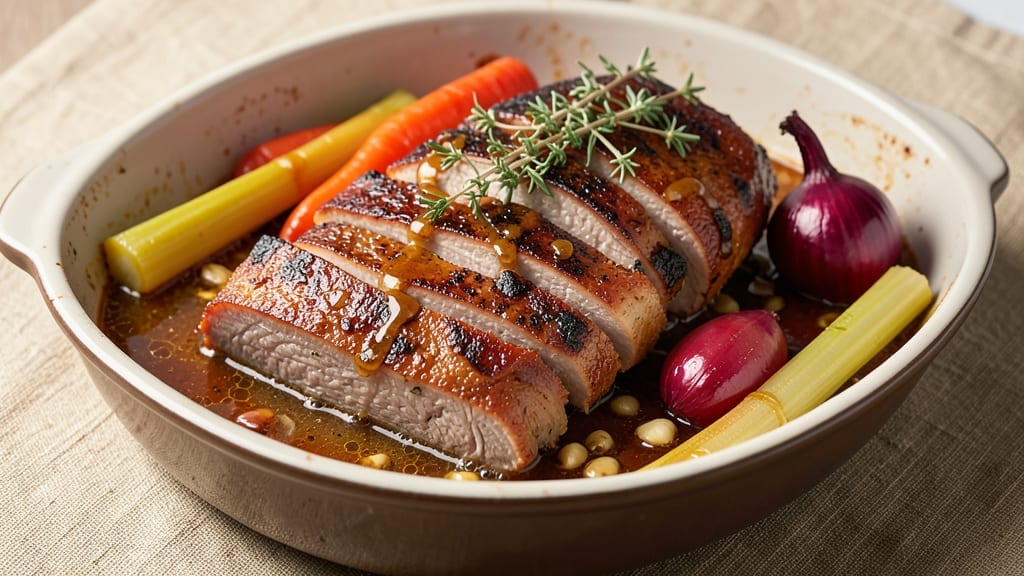
This braised pork shoulder roast recipe transforms tough cuts into melt-in-your-mouth perfection through slow, patient cooking. The key lies in searing the meat first to lock in juices, then braising it low and slow until it practically falls apart.
I've been perfecting this technique for years, and it never fails to impress—whether for a family dinner or a crowd.
The process begins with a simple marinade of garlic, herbs, and spices that penetrate the meat, then a deep sear in a heavy pot to build flavor. Deglazing with wine or broth captures every caramelized bit, forming the base for a rich, aromatic braising liquid.
The real magic happens during the hours of gentle simmering, where collagen dissolves into the liquid, creating tender, flavorful meat and a sauce worth drinking.
By the time you pull this pork from the pot, you'll have shreds so tender they dissolve at the touch of a fork, all coated in a sauce that's rich with depth.
The aroma alone will have everyone gathering at the table, and the texture—juicy, succulent, and falling apart—is what makes this recipe worth the wait. It's the kind of dish that turns a simple weeknight into a memorable feast.
Serve with crusty bread to soak up the sauce, or pair it with roasted vegetables and mashed potatoes for a complete meal. This method works equally well in a Dutch oven on the stove or in the oven, giving you flexibility for any kitchen setup.
Let's get started on creating pork that's impossible to resist.
Ingredients for braised pork shoulder roast
Six ingredients transform tough pork into melt-in-your-mouth perfection. Nothing fancy, just good stuff.
| Ingredient | Amount | Notes |
|---|---|---|
| Pork Shoulder Roast 🐖 | 4 lb | Bone-in for best flavor |
| Yellow Onion 🧅 | 1 whole | Chopped into wedges |
| Carrots 🥕 | 4 whole | Cut into 2-inch chunks |
| Celery Stalk 🌿 | 3 whole | Cut into 2-inch pieces |
| Garlic Cloves 🧄 | 6 cloves | Smashed, not minced |
| Fresh Thyme 🌿 | ¼ cup | Leaves only, stems removed |
| Fresh Rosemary 🌿 | ¼ cup | Chopped, not powdered |
| Dry Red Wine 🍷 | 1 cup | Bold, like Cabernet |
| Beef Broth 💧 | 2 cups | Low-sodium preferred |
| Olive Oil 🫒 | ¼ cup | Extra-virgin for richness |
| Salt 🧂 | 1 ½ tsp | Kosher or sea salt |
| Ground Black Pepper 🌶️ | 1 tsp | Freshly cracked |
| Bay Leaves 🌿 | 2 whole | Fresh if possible |
| Tomato Paste 🍅 | 1 tbsp | Squeeze tube preferred |
The pork shoulder is the star—look for a cut with good marbling at Costco or your local butcher. Bone-in roasts stay juicier, but boneless works if that's what you've got. 4 pounds feeds a crowd, but scale up if you're feeding more. The onions, carrots, and celery form your flavor base—don't skip chopping them into even pieces so they cook at the same rate. Fresh herbs are ideal, but dried thyme and rosemary work in a pinch (use half the amount). For the wine, any bold red works—Cab Sauv, Merlot, whatever's open.
No red wine? Beef broth with a splash of balsamic gets you close. Fresh thyme and rosemary are best, but dried works at one-third the amount. The tomato paste can be skipped if you're short, but it adds depth. For the broth, low-sodium is key—you don't want to over-salt the whole dish. If you're using a boneless roast, trim any excess fat to keep the sauce from getting too greasy. And trust me on the bone-in version—it's worth the extra minute to find it.
This reheats beautifully—honestly tastes better the next day once everything melds. Keeps 4-5 days in the fridge, freezes for 3 months. I portion mine into containers so lunches are sorted for the week. The sauce thickens as it cools, so add a splash of water or broth when reheating if it gets too stiff. And save those bay leaves—they're perfect for soups or stews next time.
Why You'll Love This Recipe
- One-Pot Magic: I swear by this—just toss the pork, onions, carrots, and celery into a Dutch oven, add a splash of broth, and let it do the work. No chopping boards full of mess, no separate pans to wash. The aromatics (especially that garlic) caramelize right in the pot while you’re free to read a book or scroll through your phone.
- Melts in Your Mouth: The slow braise turns tough pork shoulder into tender, pull-apart perfection—crisp edges hugging a center so soft it practically dissolves. Honestly, the way the carrots and celery absorb the rich, savory sauce? It’s the kind of dish that makes you close your eyes and sigh.
- Budget Hero: Pork shoulder is the unsung MVP of affordable proteins, and this recipe stretches it across multiple meals without skimping on flavor. A few bucks’ worth of veggies and garlic transforms it into a hearty, restaurant-worthy dish that’ll have everyone asking for seconds—without breaking the bank.
Step-by-step instructions for braised pork shoulder roast
Here's how to transform a tough cut into melt-in-your-mouth shreds with rich, aromatic sauce.
Sear the Pork Shoulder for Deep Flavor
Heat a large Dutch oven over medium-high heat until it's smoking hot. Add the 4 lb pork shoulder roast and sear on all sides until deeply browned, about 8-10 minutes total. This step develops that incredible Maillard reaction that creates complex flavors. You'll know it's ready when the pork releases easily from the pan—don't rush this or the meat will steam instead of brown.
Remove the pork and set it aside on a plate. In the same Dutch oven, add the 0.25 cup olive oil and let it get hot again. Add the 1 whole yellow onion, 4 whole carrots, and 3 whole celery stalks, all chopped as directed. Cook for 5-6 minutes until the vegetables begin to soften and take on color. This builds the flavor foundation for your braise.
Build the Aromatic Base
Add the 6 cloves garlic cloves (smashed as directed), 0.25 cup fresh thyme, 0.25 cup fresh rosemary, 1 tbsp tomato paste, 1.5 tsp salt, and 1 tsp ground black pepper to the Dutch oven. Stir everything together and cook for 1-2 minutes until the garlic is fragrant but not browned. This is where all the flavors start to meld together—don't walk away, or the garlic will burn quickly.
Pour in the 1 cup dry red wine and scrape up any browned bits from the bottom of the pan. Let it simmer for 3-4 minutes until reduced by half. This step concentrates the wine's flavors and removes some of the alcohol. The liquid should be reduced enough to coat the bottom of the pan but still be pourable.
Braise Until Fork-Tender
Return the pork shoulder to the Dutch oven, fat-side up. Add the 2 cups beef broth and 2 whole bay leaves, then bring everything to a gentle simmer. Here's the key: cover the Dutch oven with a tight-fitting lid and reduce heat to low. Braise for 2.5-3 hours until the pork is fork-tender and the meat easily pulls apart with two forks.
Check the liquid level after 1 hour—if it's reduced too much, add ½ cup water or beef broth to keep the pork submerged. The pork should be mostly covered by liquid throughout the cooking process. This slow cooking process breaks down the tough connective tissue, transforming it into tender, flavorful meat.
Rest and Shred for Perfect Texture
Once the pork is fork-tender, remove it from the Dutch oven and transfer it to a cutting board. Let it rest for 15-20 minutes before shredding. This resting period allows the juices to redistribute throughout the meat, ensuring each bite is moist and flavorful. While the pork rests, you can skim any excess fat from the braising liquid if desired.
Shred the pork using two forks, pulling it apart against the grain. Return the shredded pork to the Dutch oven and mix it with the braising liquid. Taste and adjust seasoning if needed—you might want to add a pinch more salt or a splash of wine to enhance the flavors. The sauce should coat the pork beautifully, creating that irresistible combination of tender meat and rich, aromatic liquid.
Pro Tips For Making Braised Pork Shoulder Roast
- SEAR THE PORK HARD: Get that pan screaming hot—think smoke curling up—and sear the pork shoulder until it’s deep golden brown in spots. I used to rush this, and the meat just absorbed liquid like a sponge instead of building flavor. Two minutes per side, no peeking.
- CHOP VEGETABLES UNIFORM: Onions, carrots, and celery should be cut to roughly the same size—about ½-inch chunks. Sounds tedious, but it guarantees even cooking and prevents mushy bits. I learned this after serving a batch where the celery was still crunchy while the carrots turned to mush.
- DEGLAZE WITH WINE OR BROTH: After browning the pork, splash in ½ cup of dry white wine or low-sodium broth—don’t just add water. The alcohol burns off, leaving behind a rich base for the braise. I skip this sometimes, and the sauce tastes flat.
- COVER TIGHTLY, LOW AND SLOW: Use a heavy pot or Dutch oven, cover it with a lid, and cook at 300°F (150°C) for 2.5–3 hours. The lid should steam up immediately, and you shouldn’t need to add liquid midway. I’ve seen people crank the heat, and the meat turns tough—don’t fall for it.
Troubleshooting your braised pork shoulder roast
Uneven Cooking Fix
If your pork shoulder cooks unevenly, it’s usually because the liquid level dropped too low during braising. Keep the pork mostly submerged by adding ½ cup beef broth every 30-45 minutes—this ensures even heat distribution.
I’ve seen this happen when using a small Dutch oven, so if your pot can’t hold enough liquid, transfer the pork to a roasting pan and add liquid separately to maintain coverage. 🌡️
Tough Meat Prevention
Tough pork happens when it doesn’t cook long enough or the temperature fluctuates. Use a meat thermometer—pull the pork at 203°F internal temperature (it’ll rise to 210°F while resting).
If your oven lacks precision, place a baking sheet under the Dutch oven to stabilize heat. I swear by my Lodge cast iron for even heat retention.
Sauce Too Thin?
A watery sauce means you didn’t reduce it enough during braising. After removing the pork, simmer the sauce uncovered for 10-15 minutes to thicken. For extra richness, whisk in 1 tbsp cornstarch mixed with 2 tbsp cold water and cook until thickened.
Pro tip: Skim excess fat first—it can make the sauce greasy.
Burnt Bottom?
Burnt bits ruin the flavor, but they’re easy to prevent. Deglaze immediately after searing with ½ cup red wine or broth—scrape every last browned bit from the bottom. If you notice burning during braising, reduce the heat slightly and stir gently to lift the meat off the pan.
I’ve had this happen when using high heat on induction burners—always use medium-low for braising.
Pork Too Dry
Overcooking or skipping the rest time causes dryness. Once the pork reaches 203°F, remove it immediately and rest for 15-20 minutes before shredding. The juices redistribute during this time—trust me, it makes all the difference.
If your pork is still dry after resting, add a splash of the braising liquid when serving to keep it moist. 💡
Weak Flavor Profile
Muted flavors usually mean insufficient searing or underseasoned braising liquid. Next time, sear the pork longer until deeply browned, and taste the liquid midway—adjust with extra salt, pepper, or a splash of wine if needed.
Fresh herbs make a huge difference, so don’t substitute dried unless you halve the amount. I keep a jar of Penzeys smoked paprika on hand for an extra depth boost.
Nutrition facts
Frequently asked questions
Why do you recommend bone-in pork shoulder?
Bone-in pork shoulder stays juicier during braising because the bone acts as an insulator, helping retain moisture. The bone also adds natural depth to the flavor as it slowly renders during cooking. If you only have boneless, trim excess fat to prevent greasy sauce—just be prepared for slightly faster cooking.
Can I substitute beef broth with chicken broth?
Yes, but expect a slightly lighter flavor profile. Beef broth enhances the rich, meaty taste that pairs perfectly with pork. For a compromise, mix equal parts chicken and beef broth, or add 1 tsp Worcestershire sauce to chicken broth for depth. The texture and tenderness won't be affected.
How do I know when the pork is done?
Use a meat thermometer—pull the pork at 203°F internal temperature (it'll rise to 210°F while resting). The meat should also separate easily with two forks. If you don't have a thermometer, cut into the thickest part: juices should run clear, and the meat should pull apart with minimal resistance.
Can I make this in an Instant Pot instead of a Dutch oven?
Sear the pork first in a skillet, then transfer to your Instant Pot with all ingredients. Cook on high pressure for 90 minutes, then let it naturally release. The sauce will be thinner, so reduce it on the stovetop afterward. For extra tenderness, add 1 cup extra broth to the Instant Pot.
What's the best way to reheat leftovers?
Reheat in the same Dutch oven over low heat with 2-3 tbsp broth to revive the sauce. Cover and cook until warmed through (10-15 minutes). For microwave reheating, cover with a damp paper towel and heat in 1-minute intervals, stirring between each. The texture stays best when reheated gently.