
Soups & Stews
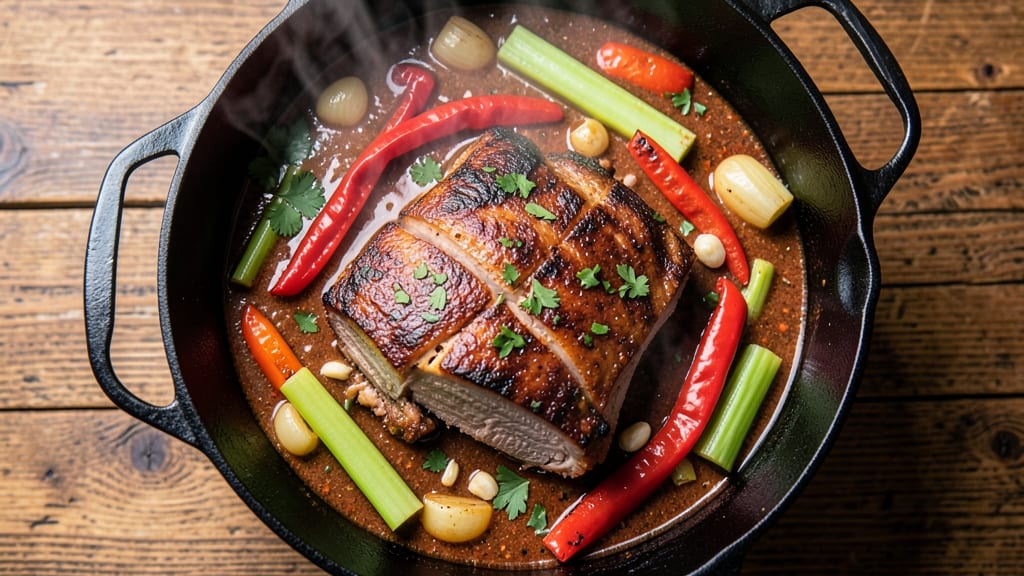
This Cajun pork stew recipe transforms tough pork shoulder into melt-in-your-mouth tenderness through slow simmering and bold Southern spices. After years of perfecting this dish at Atlanta The Smoky Pig, I've developed a method that delivers restaurant-quality depth with minimal effort—just sear, simmer, and let the spices work their magic.
The key lies in layering flavors: a deep brown crust from searing, a rich broth base, and a custom Cajun blend that infuses every bite with smoky, spicy warmth.
The beauty of this stew is its versatility—it works equally well in a Dutch oven on the stove, a slow cooker for hands-off cooking, or even on a grill for that extra smoky character.
I use pork shoulder for its fat content, which renders beautifully and keeps the meat juicy through hours of cooking. Fresh vegetables like onions, bell peppers, and celery form the aromatic base, while a splash of Worcestershire and a bay leaf add complexity that separates this from basic recipes.
What you'll end up with is a pot of deeply aromatic stew where the pork falls apart at the touch of a fork, the broth is thick with flavor, and every spoonful carries layers of heat and sweetness.
The spices don't just season—they transform, creating a dish that's hearty enough for a winter dinner but flexible enough for a summer gathering. This is the kind of stew that disappears quickly and leaves everyone asking for seconds.
Serve it over buttery white rice or with warm cornbread to soak up every last drop of that rich, spiced broth. The secret to making it your own? Adjust the heat level to your preference—add more cayenne for a kick or a pinch of sugar to balance the acidity.
Let's get cooking, and experience the kind of soul-warming comfort that comes from a properly simmered Cajun pork stew.
Ingredients for cajun pork stew
Six hearty ingredients transform into a spice-packed stew that melts in your mouth.
| Ingredient | Amount | Notes |
|---|---|---|
| Pork Shoulder 🥩 | 3 lb | Bone-in for best flavor |
| Yellow Onion 🧅 | 2 whole | Chopped into 1/2-inch pieces |
| Green Bell Pepper 🌶️ | 1 whole | Chopped into strips |
| Celery Stalk 🥬 | 3 whole | Chopped into 1/2-inch pieces |
| Garlic Cloves 🧄 | 6 cloves | Minced for aromatic base |
| Cajun Seasoning 🌶️ | 2 tbsp | Homemade or store-bought blend |
| Smoked Paprika 🌶️ | 1 tbsp | For extra smoky depth |
| Dried Thyme 🌿 | 1 tsp | Or 1 tbsp fresh thyme |
| Bay Leaf 🍃 | 2 whole | Remove before serving |
| Worcestershire Sauce 🍶 | 2 tbsp | For umami richness |
| Chicken Bouillon Cube 💧 | 1 whole | Dissolved in 1 cup hot water |
| Tomato Paste 🍅 | 2 tbsp | For depth of flavor |
| Dark Brown Sugar 🍯 | 1 tbsp | Balances acidity |
| Apple Cider Vinegar 🍏 | 1 tbsp | Brightens flavors |
| Olive Oil 🫒 | 2 tbsp | For searing pork |
The pork shoulder is non-negotiable here—bone-in for maximum flavor. Look for well-marbled cuts at your local butcher or the meat department at Whole Foods or Kroger. If you're buying a whole shoulder, ask them to cut it into 2-3 lb chunks for even cooking. The bell pepper and celery should be fresh—no rubbery stems or bruised spots. For the Cajun seasoning, Tony Chachere's is my go-to, but any quality blend works. If you're making your own, toast the spices first for deeper flavor. The Worcestershire sauce adds that unmistakable umami kick—Lea & Perrins is the classic choice.
No smoked paprika? Regular paprika plus a pinch of liquid smoke gets you close. Short on thyme? Oregano at half the amount works in a pinch, but thyme's earthy note is essential. The bouillon cube can be swapped for 1 cup homemade chicken stock if you've got it. Tomato paste from a squeeze tube is perfect—Trader Joe's has great options that last forever. The apple cider vinegar might seem odd, but it brightens the whole dish—Bragg's is my favorite, but any good-quality vinegar does the trick. For extra richness, add a splash of dark beer when deglazing the pot.
This stew tastes even better the next day—plan ahead and make a double batch. It keeps for 4-5 days in the fridge, and freezes beautifully for up to 3 months. For serving, I like to reheat it on the stove with a splash of water or broth to restore the moisture. The pork should be fork-tender, and the broth should coat the back of a spoon. Leftovers reheat perfectly, so it's great for meal prep. Store in airtight containers, and the flavors only get better with time.
Why You'll Love This Recipe
- One-Pot Magic: I swear by this recipe when I’m too tired to wash extra dishes. Toss everything—pork shoulder, onions, peppers, celery, and garlic—into one pot, and let the spices do the work. No chopping boards to clear, no pans to scrub. Just pure, satisfying simplicity.
- Deep, Smoky Richness: That pork shoulder? It melts into tender, pull-apart perfection while soaking up the Cajun spices. The bell pepper and celery add a bright, fresh crunch that cuts through the heat, and the garlic? Oh, it’s the secret weapon—layered in every bite for that irresistible depth.
- Leftovers That Shine: Honestly, this stew tastes better the next day. I make a double batch on Sundays because it’s perfect for lunches, potlucks, or even stuffed into sandwiches. The flavors meld into something even richer, and reheating takes two minutes. No sad, dry leftovers here.
- Budget-Friendly Crowd-Pleaser: Pork shoulder is affordable, and this recipe stretches it to feed four (or five if you’re feeding teenagers). The veggies are cheap staples, and the spices? A tiny jar goes a long way. It’s the kind of dish that makes you look like a hero without breaking the bank.
Step-by-step instructions for Cajun pork stew
Here's how to build layers of smoky, spicy flavor that'll make your stew melt-in-your-mouth tender.
Sear the Pork Shoulder for Deep Flavor
Pat the 3 lb pork shoulder dry with paper towels—this ensures a proper sear. Heat the 2 tbsp olive oil in a heavy Dutch oven over medium-high heat until shimmering. Place the pork in the pan and sear on all sides until deeply browned, about 8-10 minutes total. You're not cooking through yet—just building that rich crust that'll dissolve into the stew later.
While the pork sears, remove it from the pan and set it aside. This step is non-negotiable—those browned bits are pure flavor gold. If you notice the oil smoking excessively, reduce the heat slightly. You want a sizzle, not a fire. The pork will continue cooking as we build the stew base, so don't worry about it being fully done yet.
Build the Aromatic Base
In the same Dutch oven, add the chopped 2 whole yellow onions, 1 whole green bell pepper, and 3 whole celery stalks. Cook over medium heat for 5-6 minutes, stirring occasionally, until the vegetables begin to soften. This is where the holy trinity of Cajun cooking comes together—sweet, earthy, and fresh flavors melding beautifully.
Add the 6 minced garlic cloves and cook for another 30 seconds until fragrant. Here's where it gets good—sprinkle the 2 tbsp Cajun seasoning, 1 tbsp smoked paprika, and 1 tsp dried thyme over the vegetables. Stir well to coat everything evenly. You should see the spices darken slightly and fill your kitchen with that unmistakable Cajun aroma. This is your flavor foundation, so don't rush it.
Deglaze and Simmer the Stew
Return the seared pork shoulder to the Dutch oven. Pour in the 2 tbsp Worcestershire sauce and scrape up all those beautiful browned bits from the bottom of the pan with a wooden spoon. This deglazing step captures all that meaty flavor that would otherwise go to waste. Add the dissolved 1 whole chicken bouillon cube (dissolved in 1 cup hot water), 2 tbsp tomato paste, 1 tbsp dark brown sugar, and 1 tbsp apple cider vinegar.
Bring everything to a gentle simmer, then add enough water to just cover the pork—about 3-4 cups. The liquid should come about halfway up the side of the pork shoulder. Add the 2 whole bay leaves and stir gently. Now comes the long part: cover the pot and simmer on low heat for 2-2.5 hours, or until the pork is fork-tender and falls apart easily. This is where patience pays off—don't peek or stir too often, as that can make the stew tough.
Finish and Serve with Perfect Texture
Once the pork is tender, remove it from the stew and let it rest on a cutting board for 10 minutes. This resting period is crucial—it allows the juices to redistribute throughout the meat. While it rests, skim any excess fat from the surface of the stew (about 1-2 tablespoons should do it). This isn't necessary for flavor, but it does make the stew look cleaner and can help thicken the sauce slightly.
Shred the pork using two forks, then return it to the stew. Taste and adjust the seasoning if needed—you might want to add a pinch more salt or a splash of apple cider vinegar for brightness. Serve the stew hot, with the pork and vegetables evenly distributed in each bowl. The stew should be rich, slightly thickened, and packed with layers of Cajun spice. Each bite should deliver tender pork, caramelized vegetables, and that perfect balance of smoky, spicy, and sweet flavors.
Pro Tips For Making Cajun Pork Stew
- SEAR THE PORK FIRST: High heat for 5 minutes on each side—don’t skimp. You want that crust to lock in flavor and melt into the stew later. I used to rush this, and the pork always tasted bland compared to when I take the time.
- CHOP VEGETABLES UNIFORM: Cut onions, bell peppers, and celery into ¼-inch dice—no big chunks. They’ll soften at different rates, and you’ll end up with a stew that’s either mushy or still crunchy. (Yes, even if you’re impatient like me.)
- DON’T SKIP THE DEGLAZE: After browning the pork, splash in ½ cup of liquid (broth, beer, or even water) and scrape every bit of fond from the pot. That’s where half the flavor hides. I learned this the hard way—my first few batches tasted flat until I started scraping.
- USE A DUTCH OVEN OR LID: Low and slow is key, but if your pot isn’t heavy, the liquid will evaporate too fast. A Dutch oven or tight-fitting lid keeps everything steady. I was skeptical until I tried it—now it’s non-negotiable for rich, tender pork.
Essential equipment for perfect results
Dutch Oven Essentials
Your Dutch oven is the heart of this recipe—I swear by my Lodge 5.5-quart cast iron for its even heat distribution and durability. The deep sides prevent spills during the long simmer, and cast iron retains heat beautifully, keeping your stew at the perfect low-and-slow temperature.
If you don't have cast iron, a heavy stainless steel Dutch oven like All-Clad works well, though it may require slightly more attention to temperature control. 🔥
Slow Cooker Adaptation
For hands-off cooking, a 6-quart slow cooker is a game-changer. I use my Hamilton Beach 6-Quart Programmable on the low setting for 8 hours—it's foolproof and keeps the pork tender without drying it out.
Transfer the seared pork and aromatics directly to the slow cooker, add all liquid ingredients, and let it work its magic. The only downside? You lose that beautiful caramelized crust from the Dutch oven, but the flavor is still incredible.
Smoker Accessories
If you're smoking your stew, you'll need a water pan (like the Meater 2000) to maintain moisture and a meat probe thermometer (I love the ThermoWorks Smoke) to monitor internal temperature.
For a smoky twist, add 1-2 oak or hickory chips to your Dutch oven during the final 30 minutes of cooking.
If you don't have a smoker, a grill with a smoker box works—just place the Dutch oven on the grill grates and add wood chips to the smoker box. 🌶️
Essential Tools
Grab a wooden spoon (like OXO Good Grips) for stirring without scratching your Dutch oven, and a fine-mesh skimmer (I use Nordic Ware) to skim excess fat.
A measuring spoon set (like KitchenAid Stainless Steel) ensures precise spice measurements, and a sharp chef's knife (my go-to is Wüsthof) makes chopping onions, peppers, and celery a breeze. Don't skip the paper towels—they're crucial for patting the pork dry before searing. 💡
Optional Upgrades
For next-level flavor, invest in a mortar and pestle (like Kuhn Rikon) to toast and grind your own Cajun seasoning blend. A digital instant-read thermometer (such as Thermoworks Thermapen) helps you nail the 195-205°F internal temperature for perfectly tender pork.
If you love presentation, a ladle with a strainer (like OXO Good Grips) makes serving stew effortlessly elegant. These tools aren't mandatory, but they'll elevate your cooking experience. ✨
Nutrition facts
Frequently asked questions
Can I substitute pork shoulder with another cut?
Pork shoulder is ideal for its fat content and tenderness when slow-cooked, but you can use pork butt (almost identical) or pork ribs (remove meat from bones). Avoid lean cuts like tenderloin—they'll dry out. Bone-in cuts add more flavor, but boneless works too. For ribs, cook them 1.5-2 hours less since they're smaller.
How do I adjust the heat level for spice-sensitive eaters?
Reduce the Cajun seasoning to 1 tbsp instead of 2 tbsp and omit the cayenne if your blend contains it. For extra mildness, add 1/2 tsp more brown sugar to balance any residual heat. If you're using a pre-made blend, check the label for cayenne content first.
What's the best way to reheat leftovers?
Reheat in the same Dutch oven over medium-low heat for 10-15 minutes, adding 1/4 cup water or broth to restore moisture. Never microwave—it makes the pork rubbery. For extra flavor, add a splash of apple cider vinegar while reheating. Store leftovers in airtight containers for up to 5 days.
Can I make this stew in an Instant Pot?
Yes! Sear the pork first, then add all ingredients except water. Cook on high pressure for 40 minutes, then natural release for 15 minutes. The Instant Pot version finishes faster but may need 1/2 cup extra liquid to prevent burning. For smokiness, add 1 tsp liquid smoke after pressure cooking.
Why did my stew turn out too thin?
The most common causes are overcooking (which breaks down the meat too much) or insufficient liquid. For next time, use 3-4 cups broth instead of water, and check the pork's internal temperature—it should reach 195-205°F. If it's still thin, simmer uncovered for 5-10 minutes to reduce the liquid naturally.