
Soups & Stews
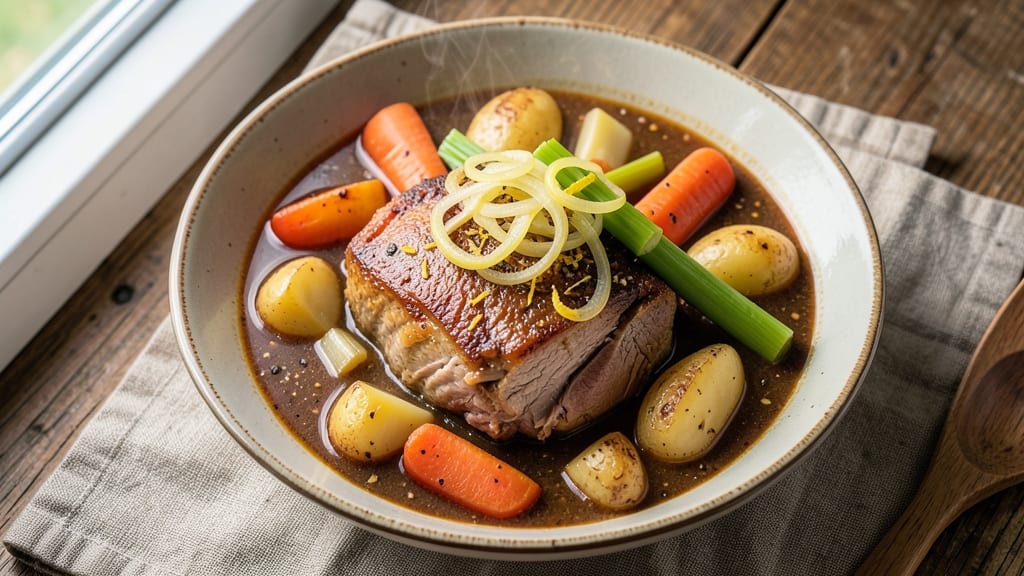
This canned pork stew recipe transforms humble pantry staples into a rich, comforting meal that tastes like home. Growing up in Georgia, I learned that pork—whether fresh or canned—holds the secret to deep, satisfying flavors that simmer into perfection.
The key is balancing the natural saltiness of canned pork with aromatic vegetables and a touch of acidity, creating a stew that’s hearty yet approachable.
The beauty of this one-pot recipe lies in its simplicity: no fancy techniques, just a cast iron pot (my trusty 10-inch skillet works perfectly) and 45 minutes of hands-off time. The pork breaks down into tender, flavorful chunks while absorbing the caramelized onions, garlic, and herbs.
I’ve perfected this method over years of cooking for crowds—whether for a family dinner or a gathering of friends—because it delivers restaurant-quality results without the fuss.
What you’ll end up with is a stew that’s rich, slightly smoky, and packed with layers of flavor—where the pork melts effortlessly and the vegetables soften just enough to soak up every drop of that savory broth. The secret?
A splash of vinegar at the end to brighten the flavors and a sprinkle of fresh parsley to add freshness. It’s the kind of meal that warms you from the inside out, especially on chilly evenings.
Pair it with crusty bread to soak up the broth or serve it alongside buttered cornbread for a true Southern touch. This recipe is versatile enough to adapt—add a bay leaf for depth, a pinch of smoked paprika for warmth, or even a handful of canned beans for extra heartiness.
Let’s get cooking!
Ingredients for canned pork stew
Pantry staples meet Southern comfort in this easy canned pork stew—just 15 ingredients for a hearty meal.
| Ingredient | Amount | Notes |
|---|---|---|
| Canned Pork (Pork Shoulder) 🥩 | 14 oz | Drained, with juices reserved |
| Yellow Onions 🧅 | 2 large | Chopped into 1/2-inch pieces |
| Garlic Cloves 🧄 | 4 cloves | Minced, or 1 tsp pre-minced |
| Carrots 🥕 | 4 medium | Peeled, cut into 1-inch chunks |
| Celery Stalks 🧅 | 3 whole | Chopped into 1/2-inch pieces |
| Potatoes 🥔 | 2 large | Russet or Yukon Gold, cubed |
| Tomato Paste 🍅 | 2 tbsp | Squeeze tube or canned |
| Apple Cider Vinegar 🍎 | 1 tbsp | Or white vinegar |
| Chicken or Vegetable Broth 💧 | 2 cups | Low-sodium preferred |
| Fresh Parsley 🌿 | ¼ cup | Chopped, for garnish |
| Smoked Paprika 🌶️ | 1 tsp | Optional, for smoky depth |
| Bay Leaves 🌿 | 2 whole | Dried, for aroma |
| Salt 🧂 | 1 tsp | Kosher or sea salt |
| Black Pepper 🌶️ | ½ tsp | Freshly ground |
| Olive Oil 🫒 | 2 tbsp | For sautéing |
The canned pork is the star, so grab the high-quality, pre-cooked variety from the canned meat aisle—Armour or Hormel are my go-tos. If you're feeling fancy, Costco's bulk canned pork is a game-changer for big batches. The onions, carrots, and celery are your holy trinity—chop them evenly so they cook at the same rate. Fresh garlic makes all the difference here (the pre-minced kind works in a pinch), and Trader Joe's sells it in those little jars that keep for months. Don't skip the vinegar—it cuts through the richness and brightens everything up.
No canned pork? Substitute with diced ham or smoked sausage, but reduce the salt by half since canned pork is already salty. Running low on broth? Water plus a bouillon cube works, but add an extra pinch of salt. The potatoes can be any variety, but Yukon Golds hold up better than Russets if you're reheating leftovers. Smoked paprika is optional but adds that classic Southern smokiness—Penzeys has the best if you want to splurge. Fresh parsley is ideal, but dried works at one-third the amount if you're in a hurry. The tomato paste? Squeeze tubes are perfect—no waste, and they keep forever.
This stew tastes even better the next day—make a double batch and freeze half for lazy weeknights. Store in the fridge for 4-5 days with a lid on tight to keep the flavors locked in. For freezing, portion into 1-cup servings so you can grab exactly what you need. Reheat gently on the stove with a splash of water or broth to keep it from drying out. Leftovers reheat beautifully for sandwiches or over rice—just add a drizzle of olive oil to keep everything moist.
Why You'll Love This Recipe
- No Chopping Struggle: I swear by this recipe because the canned pork does half the work—just drain it and toss it in. The onions and celery get a quick dice (five minutes max), and the carrots stay in chunks. My hands stay clean, my knife stays dull, and I still end up with something hearty.
- Deep, Savory Magic: That canned pork? It’s already got layers—smoky, slightly sweet, and packed with flavor. When you simmer it with garlic and onions until the edges caramelize, it turns into something rich and satisfying. Honestly, the first bite makes me forget it started in a can.
- Leftovers That Beg: This stew tastes even better the next day—like a slow-cooked secret. I make a big batch on Sunday, and by Wednesday, my kids are fighting over the last bowl. It reheats perfectly, and the flavors only get richer, so you’re basically getting two meals for the price of one.
- Budget-Friendly Powerhouse: A can of pork, a few veggies, and some broth? This is the kind of recipe that stretches a dollar without sacrificing taste. I’ve fed my whole family for under $10, and we all leave the table happy. Plus, it’s one of those dishes that feels special but won’t break the bank.
Step-by-step instructions for canned pork stew
This one-pot wonder comes together faster than you'd think—rich, flavorful, and ready in under an hour.
Sauté the Vegetable Base
Heat the 2 tablespoons olive oil in a large Dutch oven or heavy pot over medium heat. Add the 2 large chopped yellow onions, 4 medium peeled and chunked carrots, and 3 chopped celery stalks. Cook for 8-10 minutes, stirring occasionally, until the vegetables soften and the onions become translucent.
Here's the thing—don't rush this step. You want the vegetables to release their natural sugars and develop that sweet, caramelized flavor. If they start to stick, just add a splash of water and scrape up those browned bits from the bottom of the pot. Those bits are pure flavor.
Build the Flavor Foundation
Once the vegetables are tender, add the 4 cloves minced garlic and cook for 30 seconds until fragrant—you'll know it's ready when the kitchen smells amazing. Stir in the 2 tablespoons tomato paste and cook for another 1 minute to toast it slightly. This helps develop deeper flavors in your stew.
Next, add the 1 tablespoon apple cider vinegar, 1 teaspoon smoked paprika, 1 teaspoon salt, and ½ teaspoon black pepper. Stir everything together and cook for 1 minute to let the spices bloom. This is where all the magic happens—those spices will infuse into the stew and create that hearty, savory base.
Add the Pork and Potatoes
Drain the 14 ounces canned pork shoulder, reserving the juices. Add the pork to the pot along with the 2 large cubed potatoes and the 2 cups chicken or vegetable broth. Stir everything together, making sure the potatoes are well-coated in the liquid. Bring the mixture to a gentle boil, then reduce the heat to low and let it simmer.
I know it seems like too much liquid now, but trust me—this is the perfect amount. The potatoes will absorb some of the broth as they cook, and the pork will release its own juices. If the broth level looks too high, don't worry. The stew will thicken up nicely as it simmers.
Simmer to Perfection
Add the 2 whole bay leaves to the pot. Cover with a lid and let the stew simmer gently for 30-35 minutes. You want the potatoes to be fork-tender and the pork to be heated through. The stew should have thickened slightly, but still have a nice, saucy consistency.
During this time, check the stew occasionally to make sure it's not sticking to the bottom. If it starts to get too thick, you can add a splash of water or broth to loosen it up. The bay leaves will add a subtle, aromatic depth to the stew—don't forget to remove them before serving.
Finish and Serve
Once the stew is done, remove the bay leaves. Taste and adjust the seasoning if needed—you might need a little more salt or pepper to balance the flavors. Stir in the ¼ cup chopped fresh parsley just before serving to add a bright, fresh finish.
Serve the stew hot, straight from the pot. The flavors will only get better as it sits, so if you have leftovers, they'll taste even better the next day. This hearty one-pot meal is perfect for a cozy dinner, especially on chilly evenings. Enjoy!
Pro Tips For Making Canned Pork Stew
- Sear the Pork First: Drain the canned pork and pat it dry with paper towels before browning—even if it’s pre-cooked. I learned this the hard way after making stew that tasted like it was cooked in broth, not seared. Hit medium-high heat and let those edges turn golden for 2-3 minutes per side, then remove. The crust adds depth the canned pork alone can’t.
- Mince Onions, Don’t Dice: Tiny onions cook faster and dissolve into the stew instead of sitting as chunks. Use a knife to press and shred them into a rough paste—no need for perfect uniformity. This keeps the texture smooth and prevents soggy onion bits lurking at the bottom. (Yes, even if you’re impatient like me.)
- Salt the Water, Not the Pork: The canned pork is already packed in brine or salted water, so adding extra salt to it will make the stew taste flat. Instead, season the cooking liquid—broth or water—with 1 teaspoon of salt per quart before adding the pork. This guarantees even flavor distribution without overpowering.
- Deglaze with a Splash of Vinegar: After searing the pork, don’t just add liquid—deglaze the pan with 2 tablespoons of apple cider vinegar first. It cuts through the richness and lifts stuck-on bits, giving the stew a brighter, more complex base. Skip the vinegar, and you’ll miss that little flavor punch that makes homemade stew taste restaurant-worthy.
Wine and beer pairings for this recipe
Red Wine Pairings
For this hearty pork stew, I reach for a medium-bodied red wine with enough acidity to stand up to the richness. A Southern Italian Chianti—like Castello di Volpaia—cuts through the pork’s saltiness while its cherry notes complement the tomato paste.
If you prefer something smoother, a Rioja Tempranillo from Spain offers earthy undertones that pair beautifully with the stew’s smoky paprika. 🍷
Pro tip: Let the wine breathe for 10-15 minutes before pouring to soften its tannins. Serve at 60-65°F—too cold, and the wine’s flavors will be muted. I keep a bottle of Montepulciano d’Abruzzo in my fridge for quick weeknight dinners; its juicy berry notes make this stew sing.
Malty Beer Options
Beer lovers, don’t worry—this stew pairs wonderfully with amber ales or brown ales. A craft amber ale like Fat Tire from New Belgium balances the stew’s heartiness with its caramel malt sweetness and subtle hop bitterness.
For something bolder, try a Belgian-style dubbel like Westmalle Dubbel, which adds a fruity depth that mirrors the stew’s tomato and vinegar notes. 🍺
If you’re grilling or serving outdoors, a smoked porter (like Founders Kentucky Breakfast Stout) adds a smoky echo to the paprika in the stew. Just chill the beer to 45-50°F—room temperature makes it taste flat.
I’ve even used a honey ale for a sweeter contrast, especially when serving with cornbread.
White Wine Brighteners
Don’t overlook white wines—they can be game-changers for lighter versions of this stew. A dry Riesling from Germany, like Dr. Loosen Blue Slate, brings crisp acidity and a touch of petrol that cleanses the palate between bites.
For a citrusy twist, a Vermentino from Sardinia (like Argiolas) pairs perfectly with the apple cider vinegar’s tang. ✨
Serve these whites slightly chilled at 50-55°F. I’ve also enjoyed a sparkling rosé (like La Crema) with this stew—its bubbles cut through the richness, making it feel lighter. It’s a crowd-pleaser for summer dinners when you want something refreshing but still hearty.
Regional Beer Twists
In the Southeast, where I grew up, local craft beers elevate this stew. A Georgia amber ale like Atlanta Brewing Company’s Southern Ale has just the right malt sweetness to complement the pork.
For a smoky kick, try a North Carolina bourbon barrel-aged ale—the vanilla and oak notes mirror the stew’s depth. 🔥
If you’re near Charleston, grab a local hooch like Sawmill Brewing’s Carolina Amber—its caramel and biscuit flavors make this stew taste like a Lowcountry feast. For a non-alcoholic option, a ginger beer (like Brew Dr. Brown’s) adds a zesty lift that brightens the dish without alcohol.
Nutrition facts
Frequently asked questions
Can I use canned ham instead of canned pork?
You can substitute canned ham, but reduce the salt by half since ham is often heavily cured. For best results, opt for low-sodium canned ham and add extra broth to balance the flavors. The texture will be slightly different—ham stays firmer than pork shoulder, but it still works well in stews.
How do I make this stew in a slow cooker?
Sauté the onions, garlic, and tomato paste as directed, then transfer everything to a 6-quart slow cooker. Add all remaining ingredients and cook on low for 6-7 hours or high for 3-4 hours. The low-and-slow method makes the pork extra tender. Stir occasionally to prevent sticking, and add a splash of water if needed.
What can I add to make this stew more filling?
For extra heartiness, stir in 1 cup of canned beans (kidney, black, or pinto) during the last 15 minutes of cooking. You can also add 1 cup of diced sweet potatoes or ½ cup of corn kernels. Another trick? Serve with crusty bread or cornbread to soak up the broth.
Why does my stew taste too salty?
Canned pork is naturally salty, so taste as you go! If it's too salty, add 1-2 extra potatoes or ½ cup of broth to dilute the flavor. You can also stir in 1 tablespoon of vinegar or lemon juice to brighten the stew and balance the salt. For future batches, use low-sodium canned pork if available.
Can I make this stew ahead of time?
This stew tastes even better the next day. Let it cool completely, then store in an airtight container in the fridge for 4-5 days. For freezing, portion into 1-cup servings and freeze for up to 3 months. Thaw overnight in the fridge and reheat gently on the stove with a splash of water or broth to restore moisture.