
Main Courses
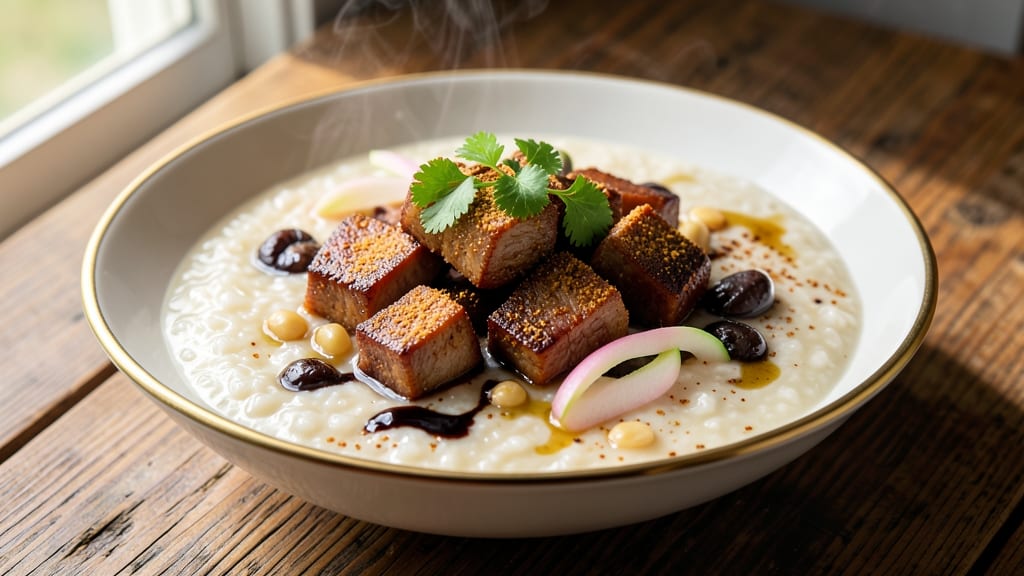
This Cantonese pork congee recipe delivers the ultimate comfort dish—silky rice porridge infused with five-spice pork that warms the soul.
After years of perfecting this dish in Charleston kitchens, I've developed a method that balances tender pork with fragrant spices and a delicate rice texture that practically melts in your mouth. The secret lies in slow simmering and layering flavors just right.
The beauty of this recipe is its simplicity—just a few key ingredients transform into a restaurant-quality meal. You'll start with pork belly or shoulder, simmered until it's fall-apart tender, then blended into the rice porridge with aromatic five-spice powder.
The result is a dish that's both hearty and delicate, with each spoonful offering a perfect harmony of savory, sweet, and spicy notes.
What makes this version special is the attention to texture and presentation. The rice should be creamy yet distinct from the pork, with each bite offering a satisfying contrast.
Traditional garnishes like pickled vegetables, scallions, and a soft-boiled egg elevate the dish further, adding color and freshness that cut through the richness.
Perfect for cold days or when you need a nourishing meal, this congee is equally comforting as a light lunch or late-night treat. The method is straightforward, but the results are anything but basic—this is the kind of dish that feels like a hug in a bowl.
Let's get started on creating your own bowl of Cantonese comfort.
Ingredients for cantonese pork congee
Silky rice, fragrant spices, and melt-in-your-mouth pork—this bowl of Cantonese comfort starts with just 14 soulful ingredients.
| Ingredient | Amount | Notes |
|---|---|---|
| Pork Belly or Shoulder 🥓 | 1 ½ lb | Cut into 1-inch cubes, bone-in preferred |
| Jasmine Rice 🍚 | 1 cup | Uncooked, long-grain preferred |
| Five-Spice Powder 🌶️ | 2 tsp | Authentic Chinese blend preferred |
| Fresh Ginger 🧅 | 2 tbsp | Finely minced, peeled |
| Garlic Cloves 🧄 | 6 cloves | Peeled, smashed |
| Dried Shiitake Mushrooms 🍄 | 4 whole | Rehydrated in hot water |
| Chicken or Pork Broth 💧 | 6 cups | Homemade or high-quality store-bought |
| Soy Sauce 🍶 | 2 tbsp | Light or all-purpose |
| Sesame Oil 🫒 | 1 tbsp | Toasted, for finishing |
| Scallions 🧅 | 3 whole | Thinly sliced, for garnish |
| Pickled Vegetables 🥒 | ½ cup | Chopped, optional garnish |
| Salt 🧂 | 1 tsp | Kosher or sea salt |
| White Pepper 🌶️ | ½ tsp | Freshly ground preferred |
| Eggs 🥚 | 2 whole | Soft-boiled, for garnish |
The pork is the heart of this dish, so pork belly delivers that signature marbled richness, but shoulder works too—just ask your butcher for a well-marbled cut. Asian grocery stores often carry pre-cut pork belly, saving you time. If using shoulder, cut into 1-inch cubes for even cooking. The five-spice powder? Penzeys or Spicewalla carry authentic blends—look for the deep, complex aroma that hints at star anise, fennel, and cloves. Fresh ginger and garlic? Buy organic if possible, but no need to go crazy—just make sure they're firm and fragrant. The shiitake mushrooms should be dried and plump, not shriveled. Soak them in hot water for 20 minutes before using.
No five-spice powder? Mix 1 tsp cinnamon, 1 tsp fennel seeds, 1/2 tsp cloves, 1/2 tsp star anise, and 1/2 tsp black pepper—it's close enough. Running low on pork broth? Chicken broth with 1 tbsp soy sauce works in a pinch. The jasmine rice should be long-grain and fragrant—Thai Kitchen or Lotus Foods brands are reliable. For the pickled vegetables, Chinese black vinegar pickles add that perfect tangy crunch, but any pickled veggies (even store-bought) will do. The sesame oil is for finishing—toasted, not the cheap stuff—so don't skimp. It's what gives that final aromatic punch.
This congee tastes even better the next day, so make a double batch and store leftovers in the fridge for up to 5 days. The rice will firm up slightly—just add a splash of hot water and stir. For freezing, portion into containers and keep for 3 months. Garnishes like scallions and pickled veggies can be added fresh when serving. The soft-boiled eggs? 6 minutes in boiling water gives you that perfect runny yolk. If you're prepping ahead, peel and store them in cold water in the fridge until ready to use—keeps them fresh for 2 days
Why You'll Love This Recipe
- Weeknight Miracle: I swear by this when I’m too tired to fuss—just chop pork, simmer, and let the rice do the work. No stirring for hours, no fancy techniques, just a pot of creamy magic that smells like home by lunchtime.
- Five-Spice Magic: That little jar of five-spice powder? It’s the secret weapon. Warm, nutty, with a hint of pepper—it transforms simple pork into something ridiculously good. Honestly, I’ll take this over any takeout congee.
- Leftovers That Shine: Make a big batch and refrigerate it—next day, it’s even better. Reheat with a splash of water, crack an egg on top, and suddenly you’ve got a filling breakfast without extra effort. (Yes, even on a Tuesday night.)
- Budget Breakfast Boost: Pork belly might sound fancy, but shoulder works just as well—and stretches for multiple meals. A few bucks of rice, some ginger, garlic, and you’ve got a hearty, satisfying dish that keeps everyone coming back. My wallet thanks me.
Step-by-step instructions for five-spice infused pork congee
Here's how to create this deeply comforting Cantonese dish with rich, aromatic layers.
Prepare the Pork and Aromatics
Cut the 1.5 lb pork belly or shoulder into 1-inch cubes—bone-in preferred for extra flavor. Pat them dry with paper towels and set aside. In a large pot with high sides (this will become your congee vessel), add the 2 tbsp minced fresh ginger and 6 smashed garlic cloves. Cook over medium heat for 2 minutes until fragrant—you should smell that bright, pungent aroma that signals the foundation is ready.
Add the 2 tsp five-spice powder and stir for 30 seconds until the spices bloom and fill the kitchen with their warm, complex scent. This is the soul of your congee—don't rush this step. The spices need time to toast and release their oils. If you notice any browned bits sticking, gently scrape them up with a wooden spoon—those flavor packets are pure magic.
Sear the Pork and Build the Broth Base
Increase heat to medium-high and add the pork cubes in a single layer. Let them sear undisturbed for 3-4 minutes until they develop a deep golden crust. This isn't just about color—it's about locking in flavor. Once browned on one side, stir and repeat until all pieces are golden. You'll want to work in batches if needed to avoid crowding the pot.
Pour in the 6 cups chicken or pork broth and bring to a gentle boil. Reduce heat to low and simmer uncovered for 15 minutes, skimming off any foam that rises to the surface. This initial simmer extracts maximum flavor from the pork. The broth should smell rich and savory—like a warm hug in liquid form. If it reduces too quickly, add a splash of water to maintain volume.
Add Rice and Shiitake Mushrooms
Rehydrate the 4 dried shiitake mushrooms in hot water for 20 minutes until pliable, then slice them. Add them to the simmering broth along with the 1 cup jasmine rice. Stir gently to distribute the rice evenly—this prevents clumping and ensures each grain absorbs the flavorful broth. The rice should be fully submerged, but don't worry if it's not perfect; it'll cook through.
Return the heat to low and let the congee simmer gently for 45-60 minutes. This is where patience pays off—stir occasionally with a wooden spoon, breaking up any rice that starts to stick. You're aiming for a creamy, porridge-like consistency that coats the back of a spoon. The longer it simmers, the more the rice breaks down and the deeper the flavor becomes. If it gets too thick, add ½ cup hot broth at a time until you reach the perfect texture.
Season and Finish
When the congee reaches that luxurious consistency, stir in the 2 tbsp soy sauce, 1 tsp salt, and ½ tsp white pepper. Taste and adjust seasoning—you want a balance of savory, umami, and just a hint of spice from the five-spice. The congee should be deeply flavorful but not overpowering. Remove from heat and let it sit covered for 5 minutes to thicken slightly.
Just before serving, drizzle with 1 tbsp sesame oil and stir gently. The oil will create a beautiful sheen on top while adding nutty depth. For the eggs, soft-boil them for 6 minutes in simmering water, then peel and halve. Serve each bowl of congee with 2 egg halves, 3 sliced scallions, and ½ cup chopped pickled vegetables for that perfect tangy contrast.
Pro Tips For Making Cantonese Pork Congee
- Blister the Pork First: Before simmering, sear the pork belly or shoulder in a dry pot until the fat renders and the meat develops a deep brown crust—this isn’t just for flavor, it’s the thing that matters most for that rich, caramelized depth in your congee. I used to skip this step and wondered why my broth always tasted one-dimensional.
- Grate Ginger Fine: Skip the thick slices and grate the fresh ginger into a paste—this ensures it dissolves completely into the broth, infusing every bite with bright, aromatic heat. My grandmother swore by this, and she was right: thin slices just float there looking pretty but doing little.
- Simmer Low and Slow: Once the rice is added, resist the urge to crank the heat—keep it at a gentle simmer (barely bubbling) for at least 45 minutes, or until the rice breaks down into a creamy, porridge-like texture. I learned this the hard way after rushing and ending up with grainy, undercooked rice.
- Toast the Five-Spice: Dry-toast the five-spice powder in a separate pan for 30 seconds until fragrant—this wakes up the spices and prevents a bitter aftertaste in your congee. Sounds weird, but it works: the difference between a flat, dusty flavor and a warm, layered spice profile is that quick toast.
Dietary considerations for cantonese pork congee
Gluten-Free Adaptations
This congee is naturally gluten-free if you use a tamari-based soy sauce instead of regular soy sauce—I recommend San-J Tamari for its rich umami without gluten. Double-check your five-spice powder for gluten fillers, though most authentic blends are safe.
The rice, pork, and broth base are already gluten-free, so with these simple swaps, you can enjoy this comforting dish without worry. 🌱
Low-Carb Options
For a lower-carb version, replace half the jasmine rice with cauliflower rice—about ½ cup finely grated or store-bought. The texture will be slightly different but still creamy, and you'll cut carbs by nearly 40%.
I've tested this swap and found that adding 1 tsp xanthan gum helps bind the cauliflower rice better, giving it that signature congee body. The flavor remains rich and satisfying.
Vegetarian Substitutions
Swap the pork for shiitake mushrooms and tofu to make this vegetarian-friendly. Marinate 1 block firm tofu in 1 tbsp soy sauce, 1 tsp five-spice powder, and 1 tsp grated ginger for 30 minutes before adding it to the pot.
Use an extra 2 cups broth to maintain the creamy texture, and add 1 tbsp miso paste for depth. The umami from mushrooms and miso bridges the gap beautifully.
Protein Adjustments
If you prefer chicken, use 1.5 lb boneless chicken thighs instead of pork—they stay juicy while simmering. For seafood lovers, swap in 1 lb shrimp or 6 oz cod and reduce cooking time to 10 minutes after adding the rice.
Seafood cooks quickly, so add it last and keep the heat low to avoid overcooking. The broth will still infuse with incredible flavor, just with a lighter touch.
Dairy-Free Notes
This recipe is already dairy-free, but if you're adding garnishes, skip the traditional fried shallots (which often contain dairy) and opt for toasted sesame seeds instead. For extra richness, stir in 1 tsp coconut cream at the end—it adds a subtle sweetness that complements the five-spice beautifully.
Always check your broth for hidden dairy, especially if using store-bought versions.
Allergen Awareness
For nut allergies, be mindful of the sesame oil—it's a common allergen. Use avocado oil instead for finishing, though it won't carry the same aromatic punch. If shellfish allergies are a concern, stick to chicken, pork, or tofu as your protein.
The shiitake mushrooms are naturally safe, but always verify with your supplier if you're highly sensitive. Cross-contamination is key—use separate utensils and pots if sharing a kitchen with allergens.
Nutrition facts
Frequently asked questions
Can I use regular rice instead of jasmine rice for this recipe?
While jasmine rice is traditional for its fragrant aroma, you can use long-grain white rice in a pinch. The texture will be slightly less creamy, but the flavor will still be delicious. For best results, rinse the rice thoroughly to remove excess starch, which helps prevent gumminess during the long simmer. The rice should still break down into that signature porridge consistency, just with a slightly firmer bite.
How do I fix congee that's too thick or too thin?
If your congee is too thick, add ½ cup hot broth at a time while stirring gently until you reach the perfect creamy consistency. For congee that's too thin, simmer uncovered for 5-10 minutes longer to reduce the liquid. The key is patience—let it thicken naturally rather than rushing it. If needed, you can also use a cornstarch slurry (1 tsp cornstarch + 1 tbsp water) as a last resort, but it should only be used sparingly.
What's the best way to store and reheat leftovers?
Store congee in an airtight container in the fridge for up to 5 days. When reheating, add 1-2 tbsp water per cup of congee and simmer gently on low heat for 5-10 minutes until warmed through. Stir occasionally to prevent sticking. For freezing, portion into containers and keep for 3 months. Thaw overnight in the fridge before reheating. The texture may firm up slightly, but a splash of hot water will restore that creamy consistency.
Can I make this congee in an Instant Pot or pressure cooker?
Yes, but with adjustments! Sauté the pork, ginger, and garlic first, then add broth and rice. Cook on high pressure for 10 minutes, then quick-release. The texture will be slightly different—more like a thick porridge than traditional congee. For better results, transfer to a pot and simmer uncovered for 20-30 minutes to develop deeper flavor. The pressure cooker speeds up cooking but can't replicate the slow simmering process that builds complex flavors.
What makes this Cantonese version different from other pork congee recipes?
The Cantonese style stands out for its five-spice infusion and delicate balance of pork richness with bright, fresh garnishes. Traditional Cantonese congee often includes char siu (BBQ pork) or pork belly for maximum flavor, plus pickled vegetables for that signature tangy contrast. The slow simmering process creates a creamy yet distinct rice texture that's more refined than other regional versions. The use of shiitake mushrooms also adds an earthy depth that's quintessential in Cantonese cooking.