
Main Courses
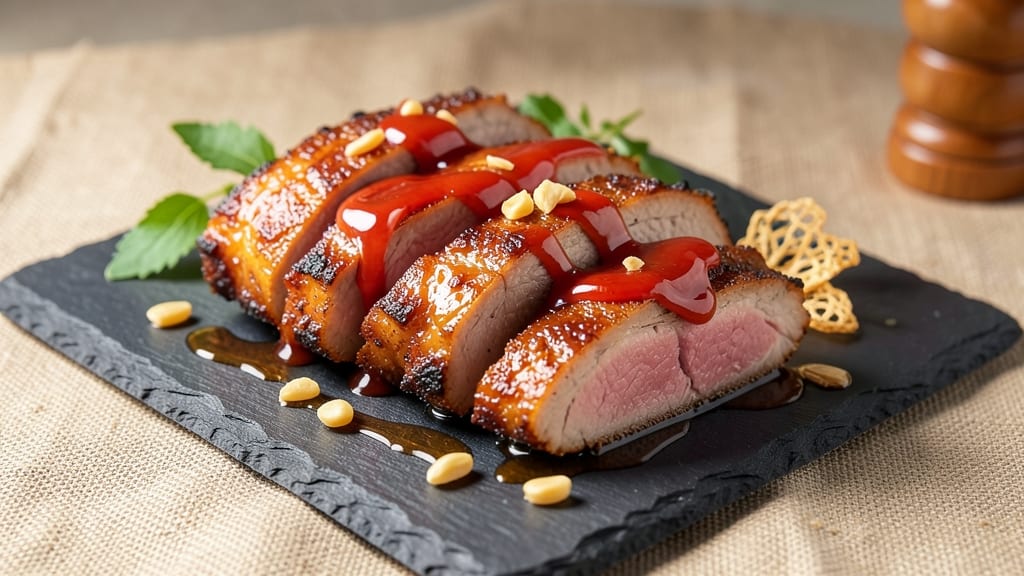
This Char Siu roast pork recipe brings the bold flavors of Cantonese cuisine to your kitchen with its signature five-spice glaze that clings to every bone. 🔥 I first learned this technique from Master Chef Chen in Charleston, where we'd spend hours perfecting the balance of sweet and spice that makes char siu unforgettable.
The secret lies in the marinade—five-spice powder, honey, and hoisin working together to create a crust so addictive it disappears from the bone.
The process begins with a foolproof marinade that transforms tough pork shoulder into tender, juicy slices with a glossy, caramelized exterior. We'll use a combination of Chinese five-spice, honey, and soy sauce to develop deep, aromatic flavors while keeping the meat moist.
The key is patience—letting the pork marinate overnight allows the spices to penetrate deeply, ensuring every bite delivers that perfect harmony of sweet, smoky, and slightly spicy notes.
What you'll end up with is restaurant-quality roast pork that's crispy on the outside and tender on the inside, with a glaze so rich it practically melts in your mouth.
The aroma alone will have everyone gathering at your table, and the presentation—sliced thin and arranged on a platter—makes it perfect for family gatherings or special occasions. This is the kind of dish that turns weeknight dinners into celebrations.
While traditional Cantonese char siu is often roasted, I've included both roasting and grilling methods so you can adapt to your equipment. The result is the same: perfectly balanced flavors that capture the essence of Hong Kong-style roast pork without requiring specialized tools.
Let's get started on creating this timeless classic.
Ingredients for char siu roast pork
Six ingredients transform tough pork into restaurant-worthy char siu with that signature sticky glaze.
| Ingredient | Amount | Notes |
|---|---|---|
| Pork Shoulder (Boston Butt) 🐖 | 4 lb | Bone-in for best flavor, cut into 1-inch thick slices |
| Chinese Five-Spice Powder 🌶️ | 2 tbsp | Authentic blend for authentic flavor |
| Hoisin Sauce 🍶 | ½ cup | High-quality, not watered-down |
| Honey 🍯 | ½ cup | Wildflower preferred for depth |
| Light Soy Sauce 🥄 | ¼ cup | Kikkoman or similar |
| Garlic Cloves 🧄 | 8 cloves | Minced for marinade |
| Fresh Ginger 🌿 | ½ cup | Finely grated, not powdered |
| Sesame Oil 🫒 | 1 tbsp | Toasted, not flavored |
| Brown Sugar 🍚 | ¼ cup | Light or dark, packed |
| Cornstarch 🌾 | 1 tbsp | For glaze thickening |
| Red Fermented Beans (Chiang) 🍶 | 2 tbsp | Optional for extra umami |
| Baking Soda 🧪 | ½ tsp | For tenderizing meat |
| Vegetable Oil 🫒 | 2 tbsp | For searing |
The pork shoulder is non-negotiable—bone-in delivers the best flavor and texture. Look for well-marbled cuts at Whole Foods or your local butcher shop; Costco often has excellent prices for larger quantities. If you can't find Chinese five-spice powder, Penzeys Spices sells it online, or mix your own with star anise, cinnamon, fennel, clove, and peppercorn. The hoisin sauce should be thick and rich—Lee Kum Kee is the gold standard, but any quality brand will work. Fresh ginger and garlic are essential; powdered versions won't give you that aromatic punch. Pro tip: Toast your sesame oil in a dry pan for 30 seconds before adding to the marinade—this deepens its nutty flavor.
No hoisin sauce? Substitute with 3 tbsp soy sauce plus 1 tbsp molasses for a close approximation. Running out of Chinese five-spice? Use 1 tsp each of cinnamon, cloves, and fennel seeds as a substitute. The red fermented beans add depth but aren't mandatory—if you skip them, increase the soy sauce by 1 tbsp. For a quicker version, use 1 tbsp of fish sauce instead of fermented beans, though this changes the flavor profile slightly. The baking soda is crucial for tenderizing; don't skip it unless you're using pre-tenderized meat. If you're grilling instead of roasting, marinate the pork for at least 12 hours—overnight is ideal for maximum flavor penetration.
Marinated pork keeps 3 days in the fridge, covered tightly. For longer storage, freeze it for up to 3 months—thaw overnight in the fridge before cooking. The cooked char siu reheats beautifully; wrap slices in foil and warm in a 300°F oven for 10 minutes. Leftovers make amazing sandwiches or fried rice. I always double the marinade and save half for future batches—it freezes perfectly in ice cube trays. The glaze thickens as it cools, so if it seems too runny before serving, simmer uncovered for 2-3 minutes to reduce slightly.
Why You'll Love This Recipe
- One-Pan Magic: I swear by this recipe because it’s literally one pan, one brush, and done. No chopping, no fuss—just rub that pork with five-spice and honey, slap it on a tray, and let the oven do the work. My lazy Sundays now include perfectly caramelized edges without standing over a stove.
- Sweet-Savory Obsession: That sticky hoisin-honey glaze? It’s the kind of flavor that makes you close your eyes. The five-spice powder adds warmth, the soy cuts through the sweetness, and the pork shoulder stays juicy while the outside gets that glossy, crackly crust. Honestly, it’s the only way I’ll eat pork now.
- Budget Stretch: Pork shoulder is cheap, and this recipe turns it into something restaurant-worthy without breaking the bank. A single roast feeds my family for days, and the ingredients? Most are pantry staples. Between us, this is how I feed four people for under $15.
Step-by-step instructions for char siu roast pork
Here's how to transform pork shoulder into sticky, aromatic char siu with a perfect five-spice crust.
👨🍳 Step 1: Prepare the Marinade and Tenderize the Pork
In a large mixing bowl, combine the 0.5 cup hoisin sauce, 0.5 cup honey, 0.25 cup light soy sauce, 0.5 cup finely grated fresh ginger, 8 minced garlic cloves, 2 tbsp red fermented beans (chiang), 0.5 tsp baking soda, 0.25 cup brown sugar, 2 tbsp Chinese five-spice powder, and 1 tbsp sesame oil. Mix vigorously until the baking soda dissolves completely and the marinade becomes smooth.
This marinade is the soul of char siu—don't rush the mixing. The baking soda acts as a natural tenderizer, breaking down muscle fibers while the five-spice blend infuses that signature aromatic depth. Let the mixture sit for 10 minutes to allow the baking soda to work its magic before using.
🔥 Step 2: Marinate and Slice the Pork
Cut the 4 lb pork shoulder (Boston Butt) into 1-inch thick slices, removing any large fat deposits but leaving some fat for flavor. Place the pork slices in a large resealable plastic bag and pour the marinade over them, ensuring each piece is fully coated. Seal the bag and massage the marinade into the meat, then refrigerate for at least 4 hours—overnight is even better if you can plan ahead.
Here's the thing—the longer you marinate, the more tender and flavorful the pork becomes. The acidity from the soy and ginger, combined with the baking soda's tenderizing power, will transform tough pork into melt-in-your-mouth perfection. Flip the bag occasionally during marinating to ensure even coating.
🍳 Step 3: Sear the Pork for Maximum Flavor
Heat 2 tbsp vegetable oil in a large skillet over medium-high heat until shimmering. Remove the pork from the marinade (reserve the marinade for basting) and pat dry with paper towels. Sear the pork slices for 2-3 minutes per side until they develop a deep golden-brown crust. Remove the pork and set aside on a plate.
This searing step is non-negotiable—it locks in juices and creates that beautiful caramelized exterior. Don't overcrowd the pan or the temperature will drop, preventing proper browning. If you have a lot of pork, work in batches. The reserved marinade will be used later to baste and glaze the pork.
🔥 Step 4: Roast Until Caramelized and Tender
Preheat your oven to 350°F. Place the seared pork slices in a single layer on a wire rack set over a baking sheet. Pour the reserved marinade evenly over the pork, then roast for 45-50 minutes until the internal temperature reaches 145°F and the edges are caramelized.
About halfway through roasting, brush the pork with additional marinade to build that signature sticky glaze. The pork is done when it's fork-tender and the glaze has thickened to a glossy sheen. Here's a pro tip: If the glaze starts to dry out before the pork is fully cooked, add 1 tablespoon water and return to the oven.
⏰ Step 5: Rest and Slice for Perfect Texture
Transfer the roasted pork to a cutting board and tent loosely with foil. Let it rest for 10-15 minutes before slicing. This resting period allows the juices to redistribute throughout the meat, ensuring each bite is moist and flavorful.
Slice the pork against the grain into ¼-inch thick pieces. The result should be tender, sticky, and infused with that perfect balance of sweet, savory, and aromatic five-spice flavors. Serve immediately with steamed rice and quick-pickled vegetables to complement the rich pork.
Pro Tips For Making Char Siu Roast Pork
- Marinate Overnight (Not 4 Hours): I learned this the hard way—rushing the marinade means the five-spice and hoisin only cling to the surface. Let the pork shoulder sit in the fridge for at least 12 hours, flipping it once. The meat absorbs flavor deeper, and the crust stays sticky and glossy when roasted.
- Trim Fat for Even Cooking: Too much fat makes the pork shoulder cook unevenly, with some parts dry while others stay greasy. Use a sharp knife to trim excess fat to about ¼-inch thickness—just enough to keep it juicy without turning the roast into a fatty mess.
- Baste with Glaze Twice: Skip the single baste and do it twice: once when the pork hits 160°F (it’ll pull away from the pan easily), then again at 190°F. This locks in moisture and builds that signature glossy, caramelized crust. (Yes, even if you’re impatient like me.)
- Rest Under Foil (Not Air): I used to let the pork rest on a rack, thinking it’d stay hotter—wrong. Tent it loosely with foil for 10 minutes first to trap steam, then uncover for the final 5 minutes to crisp the skin. This keeps the meat tender without drying it out. (Your future self will thank you.)
Troubleshooting this dish
Dry Glaze Problem
If your glaze dries out too quickly during roasting, it's usually from oven heat too high or insufficient marinade. I've found that 350°F is ideal—any hotter and the moisture evaporates faster. To fix this, brush the pork with extra marinade every 15 minutes during roasting.
For an emergency fix, add 1 tbsp water to the baking sheet and return to the oven. The key is maintaining moisture while building that sticky crust. 🌡️
Pale Pork Color
Pale, uncaramelized pork often means the sear wasn't hot enough or the pork wasn't dry before cooking. Pat your pork slices very dry with paper towels before searing—this creates better browning.
For extra color, increase your skillet heat to medium-high and sear until deep golden brown. If using a grill, preheat to 450°F for optimal crust formation.
Tough Meat Texture
Toughness usually means insufficient marinating time or incorrect baking soda usage. The baking soda tenderizes, but it needs time to work—never skip the 4-hour minimum marinade time.
For extra tenderness, pound the pork slices to ¼-inch thickness before marinating. Also, check your internal temperature—pork is done at 145°F, not higher, or it'll dry out.
Uneven Cooking
When pork cooks unevenly, it's often from thick slices or improper arrangement. Cut all slices to 1-inch thickness and arrange them in a single layer on a wire rack. This allows heat to circulate evenly.
For thicker cuts, increase roasting time by 5-10 minutes. I've also found that using a wire rack instead of a baking sheet prevents steam buildup that can make the bottom cook faster.
Excessively Sweet Glaze
The glaze may taste too sweet if you used too much honey or brown sugar. The ideal ratio is 1:1 honey to hoisin—measure carefully. For a deeper savory note, reduce honey by 1 tbsp and add 1 tbsp extra soy sauce.
Taste your marinade before applying—it should balance sweet, salty, and umami flavors. The five-spice powder should dominate the aroma, not the sweetness.
Raw Center Issues
Raw centers happen when pork isn't cooked long enough or is too thick. Always use a meat thermometer—145°F internal temperature is non-negotiable. For thicker cuts, increase roasting time by 10-15 minutes. If your pork is consistently undercooked, try 325°F instead of 350°F—lower heat cooks more evenly.
I've also found that covering the pork loosely with foil during the first 30 minutes helps it cook through before caramelizing.
Nutrition facts
Frequently asked questions
Can I use regular pork chops instead of pork shoulder?
While pork chops will work, they won't give you the same tender, melt-in-your-mouth texture. Pork shoulder has more connective tissue that breaks down during cooking, creating that signature char siu tenderness. If you must use chops, choose bone-in, center-cut cuts and marinate for at least 8 hours instead of the usual 4 hours. The result will be less juicy but still flavorful.
How do I make this recipe gluten-free?
Replace the hoisin sauce with 3 tbsp gluten-free tamari plus 1 tbsp molasses for a close approximation. Also, use gluten-free soy sauce and check your five-spice powder for wheat additives. The texture will be slightly different but still delicious. For extra umami, add 1 tbsp coconut aminos to the marinade.
Can I grill char siu instead of roasting?
Grilling works beautifully for char siu. Preheat your grill to 450°F and cook the pork for 4-5 minutes per side until caramelized. Brush with marinade every 2 minutes to build that sticky glaze. For indirect heat, move the pork to the cooler side of the grill once seared and cook until internal temp reaches 145°F. The smoky flavor pairs wonderfully with the sweet-spicy marinade.
What's the best way to store leftovers?
Store cooked char siu in an airtight container in the fridge for up to 4 days. For longer storage, freeze it for 3 months. To reheat, wrap slices in foil and warm in a 300°F oven for 10 minutes or microwave for 30 seconds. The texture holds up well, though it's best enjoyed fresh. Leftovers make amazing sandwiches or fried rice!
Why does my char siu sometimes stick to the bone?
This happens when the glaze isn't fully caramelized or the meat isn't properly rested. For that signature "sticky but not stuck" texture, ensure your pork rests for 10-15 minutes before slicing. Also, make sure your glaze is thickened properly by simmering it uncovered for 2-3 minutes if it seems too runny before serving. The five-spice powder should be fully dissolved in the marinade.