
Main Courses
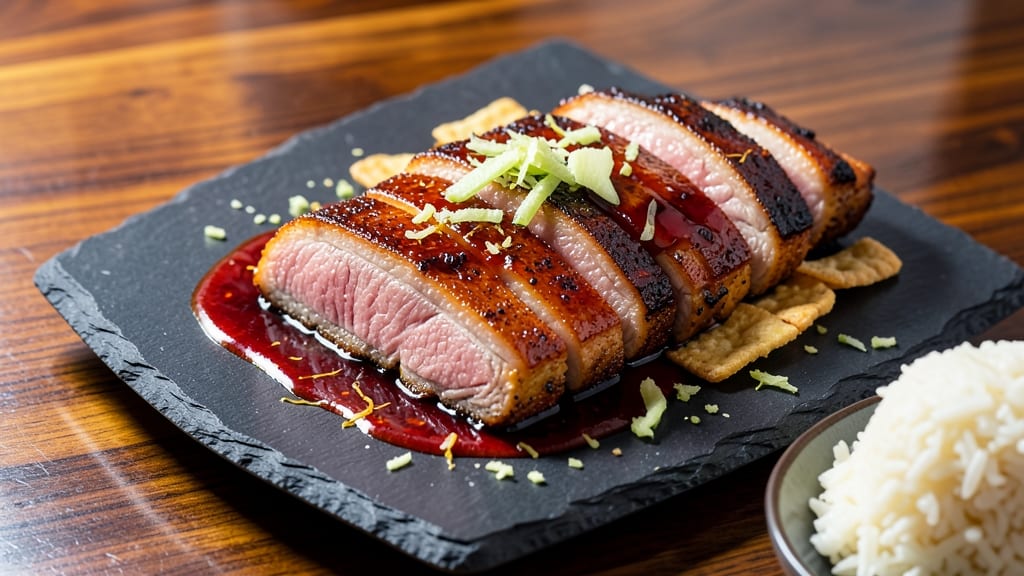
This chashu pork loin recipe transforms tough cuts into melt-in-your-mouth perfection with a five-spice braise that infuses every bite with aromatic depth. 🔥 After years of perfecting this technique—first in Charleston kitchens, then at my Atlanta smokehouse—I’ve streamlined it into a one-pot wonder that delivers restaurant-quality results at home.
The secret lies in the slow braise, where soy, sugar, and mirin create a glossy, caramelized glaze that clings to tender, juicy pork. What sets this apart is the balance of tradition and simplicity.
While authentic chashu often requires a full day, this method delivers fall-apart tenderness in under 3 hours—no fancy equipment, just a Dutch oven and patience. The five-spice blend (star anise, cinnamon, cloves, fennel, and peppercorn) builds layers of warmth that pair beautifully with the salty-sweet braising liquid.
I’ve tested this with everything from bone-in loins to boneless cuts, and the results are consistently restaurant-worthy. By the time you serve it—sliced thin over steamed rice with quick-pickled vegetables—you’ll understand why chashu is a staple in Asian eateries worldwide.
The pork stays juicy and flavorful, the sauce reduces to a sticky glaze, and every bite carries that unmistakable five-spice magic. This isn’t just a recipe; it’s a technique that elevates pork to something extraordinary.
For those who love leftovers (and trust me, you will), the braised pork only gets better as it sits. The flavors deepen overnight, making it ideal for meal prep or feeding a crowd. Let’s get to the braising—your taste buds will thank you.
Ingredients for chashu pork loin
The five-spice magic starts with these 15 ingredients—simple but transformative for melt-in-your-mouth pork.
| Ingredient | Amount | Notes |
|---|---|---|
| Pork Loin (Bone-In) 🥩 | 2 lb | Center-cut, 1.5-inch thick slices |
| Dark Soy Sauce 🍶 | ½ cup | For deep umami color |
| Mirin 🍶 | ¼ cup | Sweet rice wine |
| Sake 🍶 | ¼ cup | Dry variety preferred |
| Brown Sugar 🍯 | ¼ cup | Packed, light brown preferred |
| Fresh Ginger 🧡 | 2 tbsp | Thinly sliced, peeled |
| Garlic Cloves 🧄 | 6 cloves | Smashed, not minced |
| Star Anise 🌿 | 2 whole | Lightly crushed |
| Cinnamon Sticks 🌿 | 2 whole | 2-inch pieces |
| Cloves 🌿 | 4 whole | Lightly crushed |
| Fennel Seeds 🌶️ | 1 tsp | Toasted lightly |
| Black Peppercorns 🌶️ | 1 tsp | Crushed |
| Sesame Oil 🫒 | 1 tbsp | For finishing |
| Neutral Oil 🫒 | 1 tbsp | For searing |
| Green Onions 🧅 | 3 whole | Sliced, for garnish |
The pork loin is non-negotiable here—bone-in delivers the most flavor and stays juicier. Costco or your local butcher will have the best cuts, but if you're shopping at Whole Foods, look for center-cut loins labeled 'pork loin roast'. The thickness matters too: 1.5-inch slices ensure even cooking. For the five-spice blend, Penzeys has pre-mixed versions if you're short on time, but toasting whole spices fresh makes all the difference. The ginger and garlic? Fresh only—dried just won't cut it for that bright, aromatic punch.
No mirin? Substitute with 1 tbsp sugar plus 1 tbsp dry sherry. Short on sake? Dry white wine works, but add an extra splash of soy to balance. The brown sugar can be swapped for white sugar plus 1 tsp molasses if that's what you've got. For the spices, skip the star anise if you can't find it—just double the cinnamon and cloves. The sesame oil is for finishing only, so don't substitute with vegetable oil. And if you're using pre-sliced green onions, buy the freshest bunch—they wilt fast once cut.
This braise gets better with time—3-4 days in the fridge is ideal for maximum flavor development. Store in the braising liquid to keep it moist. For meal prep, portion into containers with a little sauce and rice—freezes beautifully for 3 months. The pork reheats perfectly in the microwave or oven, and the sauce thickens further, becoming even more glorious. Leftovers? Double the batch—it disappears faster than you'd think.
Why You'll Love This Recipe
- One-Pot Magic: I swear by this—just toss the bone-in pork loin into a pot with soy sauce, mirin, sake, and brown sugar, then let it simmer. No chopping, no fuss, and the bone renders slowly, making the meat insanely tender.
- Umami Bomb: That combo of dark soy, mirin, and sake? It’s like a flavor explosion in your mouth. The caramelized edges and sticky glaze make every bite worth the wait—honestly, I’ve had people ask what restaurant I got it from.
- Leftover Goldmine: This recipe practically begs to be made in bulk. The pork stays delicious for days—slice it thin for buns, toss it in ramen, or serve it cold over rice. My freezer is always stocked with it.
- Budget-Friendly Luxury: You’re getting restaurant-quality pork for a fraction of the cost. The bone adds depth without extra effort, and the ingredients are simple but pack a punch. Between us, it’s my go-to for feeding a crowd without breaking the bank.
Step-by-step instructions for chashu pork loin
Transform simple ingredients into restaurant-quality chashu with this foolproof braising method.
🔥 Step 1: Sear the Pork Loin for Deep Flavor
Heat a heavy-bottomed Dutch oven over medium-high heat until a drop of water sizzles instantly. Add the 1 tablespoon neutral oil and swirl to coat the bottom. Place the 2 lb bone-in pork loin in the pan, bone-side down, and sear for 4-5 minutes until a deep golden-brown crust forms.
Flip the pork and sear the other side for another 4-5 minutes. The goal is to develop maximum flavor through the Maillard reaction—don't rush this step. If the pork releases easily from the pan, it's ready. Remove the pork and set aside on a plate, leaving all the browned bits in the pan.
👨🍳 Step 2: Build the Five-Spice Aromatics
In the same Dutch oven, add the 2 tablespoons fresh ginger and 6 smashed garlic cloves. Sauté for 1 minute until fragrant and lightly golden. Here's where the magic happens: add the 2 whole star anise, 2 cinnamon sticks, 4 whole cloves, 1 teaspoon fennel seeds, and 1 teaspoon black peppercorns.
Toast the spices for 30 seconds until you smell their warm, earthy aromas filling your kitchen. This step unlocks the depth of flavor that makes chashu so special. Immediately pour in the 0.5 cup dark soy sauce, 0.25 cup mirin, 0.25 cup sake, and 0.25 cup brown sugar, scraping up all those beautiful browned bits from the bottom.
🍳 Step 3: Braise Until Fork-Tender
Return the pork loin to the Dutch oven, bone-side up. Pour in just enough water to come about halfway up the sides of the pork—about 1 cup. Bring to a simmer over medium heat, then reduce heat to low and cover tightly with a lid. Here's the crucial part: simmer for 2.5-3 hours until the pork is fork-tender.
Check the liquid level after 1.5 hours—if it's reduced too much, add a splash of water to keep the pork moist. The pork is done when it slides off the bone with minimal resistance and the internal temperature reaches 205°F. Real talk: don't peek too often—the steam helps tenderize the meat, and each time you open the lid, you lose heat and moisture.
🥘 Step 4: Rest and Finish with Sesame Oil
Remove the pork from the braising liquid and transfer it to a cutting board. Tent loosely with foil and let it rest for 15-20 minutes. This resting period allows the juices to redistribute throughout the meat, ensuring each slice is moist and flavorful.
While the pork rests, skim any excess fat from the braising liquid and pour it through a fine-mesh strainer into a clean saucepan. Return the liquid to medium heat and reduce until it thickens slightly, coating the back of a spoon. Remove from heat and stir in 1 tablespoon sesame oil. Taste and adjust seasoning if needed—you might want to add a splash more soy sauce or a pinch of sugar to balance the flavors.
🍽️ Step 5: Slice and Serve with Garnish
Slice the rested pork loin against the grain into ¼-inch thick slices. The grain runs lengthwise along the pork, so you'll want to cut perpendicular to that direction. Arrange the slices on a platter and drizzle generously with the reduced braising sauce.
Garnish with the 3 sliced green onions for a pop of fresh color and brightness. Serve immediately with steamed rice and quick-pickled vegetables to balance the rich, savory pork. The contrast of textures and temperatures—warm, tender pork with cool pickles—is what makes this dish so satisfying.
Pro Tips For Making Chashu Pork Loin
- USE A THICK CUT: Bone-in pork loin works best when it’s at least 2 inches thick—thinner slices dry out before the center cooks through. If your butcher gives you something thinner, ask for a thicker cut or stack two thinner pieces with a slice of bacon between them to hold shape.
- SALT THE PORK BEFORE SEARING: Pat the pork bone-dry, then hit it with kosher salt 12 hours ahead (or at least 2 hours before cooking). The salt breaks down proteins, keeping the meat juicy—no one wants a chewy chashu. I used to skip this, and my pork always ended up tougher than it should’ve been.
- BASTE WITH THE SAUCE: Don’t just pour the soy-sake-mirin mix over the pork once and call it a day. Every 15 minutes, spoon the reduced glaze back onto the meat—this guarantees a sticky, caramelized crust. I learned this the hard way when I walked away and came back to dry, flavorless pork.
- LOW AND SLOW AFTER SEARING: After the initial sear, drop the heat to 275°F (135°C) and cover the pan loosely with foil. Too high a temperature after searing = tough meat. I used to blast it at 350°F, and the pork always turned out like shoe leather. Patience here makes all the difference.
Serving suggestions for leftovers
Classic Japanese Plating
Serve your chashu pork loin the traditional way: thinly sliced over a bed of steamed Japanese short-grain rice (like Koshihikari or sushi rice). The sticky rice soaks up the braising sauce beautifully, creating each bite's perfect balance.
I like to arrange the pork slices in a fan shape on the plate—this not only looks impressive but also makes it easier for everyone to grab a piece. 🍚
For the ultimate Japanese experience, add quick-pickled vegetables like cucumber or daikon radish to cut through the richness.
I make a simple batch by thinly slicing ½ cucumber and ½ daikon, then soaking in a mix of 2 tbsp rice vinegar, 1 tbsp sugar, and ½ tsp salt for 30 minutes. The tangy crunch contrasts perfectly with the tender pork.
Southern BBQ Fusion
Channel my Southeast roots by serving chashu pork over buttery cornbread or white bread with a side of collard greens. The smoky-sweet flavors of the braise pair wonderfully with the Southern classics.
I often drizzle a little hot honey over the top for a sweet-heat balance that reminds me of my time in Charleston. 🍯
For a full Southern spread, add pickled jalapeños and a simple tomato-basil salad to round out the meal. The acidity from the pickles and the freshness of the salad keep the rich pork from feeling too heavy. This fusion works perfectly for family gatherings—it’s familiar yet exciting.
Modern Plating Ideas
For a restaurant-worthy presentation, slice the chashu pork into thin strips and arrange them on a platter with microgreens and edible flowers for a pop of color. Drizzle the reduced braising sauce in artistic swirls and garnish with toasted sesame seeds.
Serve with jasmine rice or roasted sweet potatoes for a contemporary twist. 💫
If you're feeling adventurous, try serving the pork in buns with a drizzle of the braising sauce, a sprinkle of scallions, and a side of kimchi for a Korean-inspired chashu burger.
The crispy bun adds a fun texture contrast to the tender pork. This is a crowd-pleaser that’s perfect for game day or casual dinners.
Leftovers Reinvented
Chashu pork is even better the next day—use leftovers to make chashu ramen or pork fried rice. For ramen, simmer the pork slices in chicken or pork broth with ramen noodles, soft-boiled eggs, bamboo shoots, and green onions.
The braising sauce adds instant depth to the broth. 🍜
For fried rice, chop the pork into bite-sized pieces and stir-fry with day-old rice, peas, carrots, and a soy-ginger sauce. The five-spice flavors shine in this dish, making it a quick and satisfying meal.
I always double the batch because these leftovers inspire creativity—trust me, you’ll find new ways to enjoy it!
Nutrition facts
Frequently asked questions
Can I use boneless pork loin instead of bone-in for chashu?
Yes, but there are trade-offs. Boneless pork loin will cook faster and stay slightly more tender, but it lacks the flavor depth from the bone marrow. If using boneless, reduce the braising time to 2 hours and add 1 extra tablespoon soy sauce to compensate for lost richness. The texture will be more uniform but slightly less complex than bone-in.
Why does my chashu sauce turn out too thin or too thick?
The sauce consistency depends on reduction timing. For a thicker sauce, simmer the braising liquid uncovered for 10-15 minutes after removing the pork. If it's too thin, reduce it longer or add 1 teaspoon cornstarch mixed with water as a slurry. Too thick? Thin with a splash of water or broth. The ideal sauce should coat the back of a spoon but still be pourable.
Can I make chashu pork in a slow cooker instead of a Dutch oven?
Use a 6-quart slow cooker on low for 6-7 hours. Sear the pork first in a skillet, then transfer it to the slow cooker with all aromatics. Add ½ cup water (less than the Dutch oven method) and cook covered. The texture will be slightly more tender but equally flavorful. Just avoid lifting the lid during cooking to maintain moisture.
What's the best way to reheat leftover chashu pork?
Reheat in the braising liquid over low heat for 10-15 minutes until warmed through. For microwave reheating, place slices in a bowl with 1 tablespoon sauce, cover with a damp paper towel, and heat for 1-2 minutes. Never reheat dry—this makes the pork tough. The sauce keeps it juicy and restores that melt-in-your-mouth texture.
Can I substitute regular soy sauce for dark soy sauce?
You can, but your chashu will lack that signature deep color and slightly smoky flavor. Dark soy sauce adds both color and complexity. If substituting, use ½ cup light soy sauce plus 1 teaspoon molasses to approximate the color and depth. The texture and tenderness won't be affected, just the visual presentation and subtle flavor notes.