
Main Courses
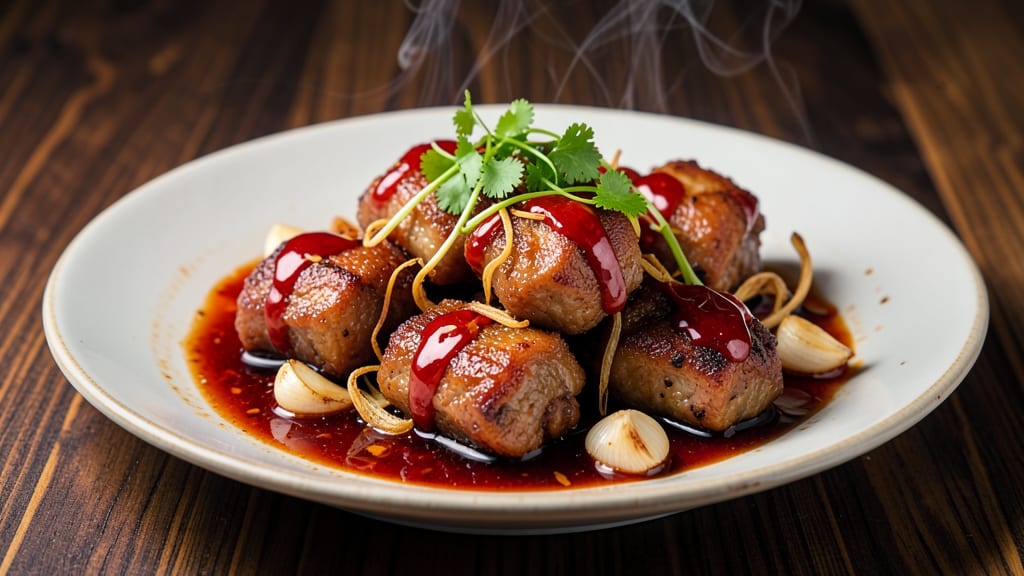
This Chinese chilli pork recipe delivers the bold, aromatic flavors that make Chinese street food so addictive—five-spice crunch meets tangy-sweet bites in every forkful. 🌟 I perfected it after years of adapting my grandmother's handwritten notes, balancing heat, sweetness, and texture just right.
The secret lies in the marinade: chili paste, soy sauce, and a touch of honey create a sticky, caramelized crust that clings to tender pork pieces.
The magic happens in the stir-fry, where high heat transforms the pork into crispy-edged, juicy bites while developing deep umami flavors. Traditional ingredients like garlic, ginger, and Sichuan peppercorns add layers of complexity without overwhelming the dish.
My grandmother always said the best Chinese dishes "sing in your mouth"—this one absolutely does.
What you'll end up with is a dish that's restaurant-quality but made in your home kitchen—golden-brown pork with a glossy, slightly sticky glaze, packed with chili heat and sweet undertones.
The aroma alone will have everyone gathering at the table. Serve it over steamed rice with pickled vegetables for the full experience.
This recipe scales beautifully for crowds but works just as well for weeknight dinners. The marinade can be prepped ahead, and the stir-fry comes together in under 30 minutes—perfect for when you want authentic Chinese flavors without the fuss. Let's get cooking!
Ingredients for chilli pork recipe chinese
Bold flavors start with these 14 ingredients—each playing its part in the perfect Chinese chilli pork symphony.
| Ingredient | Amount | Notes |
|---|---|---|
| Pork Shoulder 🥩 | 1 ½ lb | Cut into 1-inch cubes, boneless |
| Chinese Chili Paste 🌶️ | ½ cup | Lao Gan Ma brand preferred |
| Light Soy Sauce 🥄 | ⅓ cup | Kikkoman brand recommended |
| Dark Soy Sauce 🥄 | 1 tbsp | For deep color and flavor |
| Honey 🍯 | 2 tbsp | Wildflower preferred for depth |
| Garlic Cloves 🧄 | 6 cloves | Minced for marinade |
| Fresh Ginger 🌿 | 2 tbsp | Finely grated, aromatic |
| Sichuan Peppercorns 🌶️ | 1 tsp | Toasted for numbing spice |
| Five-Spice Powder 🌶️ | 1 tsp | Authentic Chinese blend |
| Cornstarch 🌾 | 2 tbsp | For crispy texture |
| Neutral Oil 🫒 | 2 tbsp | Peanut or vegetable oil |
| Green Onions 🧅 | 4 whole | Sliced, for garnish |
| Sesame Seeds 🌰 | 1 tbsp | Toasted for crunch |
| Steamed White Rice 🍚 | 2 cups | Cooked, for serving |
The pork shoulder is non-negotiable—its fat marbling keeps the meat tender while frying. Ask your butcher to cut it into 1-inch cubes for even cooking. For the chili paste, Lao Gan Ma is the gold standard, but Huy Fong works too. If you can't find it, blend 1 tbsp chili flakes with 1 tbsp soy sauce as a substitute. The five-spice powder should be authentic Chinese—avoid the generic blends at regular grocery stores. Asian markets carry the real deal, and it's worth the trip for this dish. Toast your Sichuan peppercorns in a dry pan for 30 seconds—their nutty aroma becomes the dish's signature numbing spice.
No honey? Maple syrup or agave work in a pinch, though honey's floral notes are ideal. Running short on cornstarch? Arrowroot powder at the same amount gives similar crispiness. The green onions can be swapped for scallions, but use the white and green parts for maximum flavor. For the oil, peanut oil's rich flavor complements the dish, but vegetable oil works if that's what you have. If you're making this ahead, prep the marinade a day in advance—the flavors meld beautifully overnight. Fresh ginger loses potency fast, so buy it just before cooking if possible, or freeze it whole until needed.
Marinated pork keeps 3 days in the fridge, but the flavor intensifies after 24 hours. For best results, pat the pork dry before frying—this ensures maximum crispiness. The cooked pork reheats beautifully in a skillet with a splash of water. Store leftovers in an airtight container, and they'll stay tender for 4 days. Freeze portions for up to 3 months—just thaw overnight in the fridge before reheating. The sesame seeds should be toasted right before serving to preserve their crunch. Serve immediately over steamed rice to capture that restaurant-quality aroma.
Why You'll Love This Recipe
- One-Pan Magic: I swear by this—just toss everything on a sheet pan, let the pork shoulder caramelize, and walk away. The chili paste and soy sauces do all the heavy lifting while you sip tea or scroll through your phone.
- Sweet-Spicy Balance: That honey glaze? It’s the star. The dark soy gives it depth, the light soy keeps it savory, and the chili paste brings the heat—just enough to make it addictive without overwhelming. (Yes, even my picky husband eats seconds.)
- Leftovers That Don’t Suck: Between us, most stir-fries turn into sad, dry piles by day three. Not this one. The pork stays tender, the sauce clings perfectly, and I’ve reheated it for breakfast burritos or rice bowls—no one complains.
- Budget-Friendly Protein: Pork shoulder is cheap, and this recipe stretches it far. A single cut feeds four, and the ingredients? Basic pantry staples. Honestly, it’s my go-to when I’m broke but still want to feel like I cooked something special.
Step-by-step instructions for Chinese chilli pork
Here's how to transform tender pork into crispy, aromatic bites bursting with five-spice warmth and chili heat.
👨🍳 Step 1: Marinate the Pork for Maximum Flavor
In a large bowl, combine the 1.5 lb pork shoulder cut into 1-inch cubes with the 0.5 cup Chinese chili paste, 0.33 cup light soy sauce, 1 tbsp dark soy sauce, 2 tbsp honey, 6 cloves minced garlic cloves, 2 tbsp finely grated fresh ginger, 1 tsp toasted Sichuan peppercorns, and 1 tsp five-spice powder. Mix vigorously until every pork piece is thoroughly coated in the marinade.
Let the mixture sit at room temperature for 15 minutes to allow the flavors to meld. This marinating step is crucial—it ensures the pork absorbs all those complex spices and sweet-savory elements. I like to press the marinade into the meat with my hands for even distribution. The Sichuan peppercorns will give you that signature numbing tingle, while the five-spice adds warm, aromatic depth.
🔥 Step 2: Build the Crispy Coating
Transfer the marinated pork to a clean bowl and sprinkle with 2 tbsp cornstarch, tossing gently to coat each piece evenly. The cornstarch creates that perfect crispy crust we're after. Let the coated pork sit for 10 minutes while you prepare your cooking vessel.
Heat 2 tbsp neutral oil in a large skillet over medium-high heat until shimmering but not smoking. You want the oil hot enough to sear the pork but not so hot it burns the delicate marinade coating. If you're using peanut oil, you'll get that extra nutty aroma that pairs beautifully with the chili and five-spice flavors.
🍳 Step 3: Sear the Pork to Golden Perfection
Working in batches to avoid crowding, add the coated pork to the hot skillet. Let each piece sear undisturbed for 2-3 minutes until golden brown on all sides. This is where the magic happens—the cornstarch crust turns crispy while the marinade caramelizes into a sticky glaze. You'll smell that incredible aroma of chili, garlic, and honey filling your kitchen.
Once all pork pieces are golden and crispy, transfer them to a plate and set aside. The pork should be cooked through but still juicy inside. If you cut into one, the center should reach 160°F on an instant-read thermometer. Don't skip this temperature check—undercooked pork can be tough, and overcooked pork can be dry.
🥘 Step 4: Finish with Aromatic Garnishes
Return the seared pork to the skillet and drizzle any accumulated juices from the plate over the top. Let it cook for another 1 minute to allow those juices to caramelize slightly and coat the pork. This step intensifies the flavors and ensures every bite is packed with that sweet-savory chili goodness.
Remove from heat and transfer to a serving platter. Garnish with 4 whole green onions sliced diagonally and 1 tbsp toasted sesame seeds. The green onions add a fresh contrast to the rich, spicy pork, while the sesame seeds provide that satisfying crunch. Serve immediately over 2 cups steamed white rice to soak up all those delicious juices and sauces.
Pro Tips For Making Chilli Pork Recipe Chinese
- Par-Cook the Pork: Skip the raw struggle—parboil the pork shoulder for 5 minutes first, then drain and pat bone-dry. This locks in moisture while ensuring the chili paste clings instead of sliding off like it’s on a greased slide. (Yes, even if you’re impatient like me.)
- Bloom the Chili Paste: Heat your wok smoking hot before adding the chili paste—let it sizzle for 30 seconds until the oil separates and the aroma hits you like a spicy hug. This builds flavor faster than simmering it slowly, and it cuts the raw, vinegary edge that makes cheap pastes taste like regret.
- Balance the Soy Sauces: Use dark soy sauce only for color—add it last, stir once, then pull the pan off heat immediately. Light soy sauce does the real work; dark sauce burns faster than a gossip session and turns your dish into a muddy brick. (Trust me, I’ve seen it.)
- Deglaze with Honey Early: Toss in the honey after the pork browns but before the chili paste—this prevents a sticky, caramelized mess that glues your wok to the burner. A splash of water or stock first loosens the fond, so the honey can glaze the meat instead of fighting for space like a toddler at a buffet.
Flavor customization for this chilli pork recipe chinese
Sweet Heat Balance
Adjust the chili heat to your preference by tweaking the honey and chili paste ratio. For milder heat, reduce the chili paste to 0.375 cup and add 1 extra tbsp honey—this creates a sweeter, less spicy glaze.
If you crave more fire, increase the chili paste to 0.625 cup and keep the honey at 2 tbsp. My grandmother always said, "Start with less heat—you can always add more." 🌶️
For a smoky depth, add ½ tsp smoked paprika to the marinade. This works surprisingly well with the five-spice powder, giving the dish a subtle BBQ-like warmth. If you love tangy notes, stir in 1 tsp rice vinegar during the final searing step—it brightens the flavors beautifully.
Texture Variations
Want extra crispiness? Toss the pork in 1 extra tbsp cornstarch after marinating, but beware—it’ll get very crunchy. For a softer texture, reduce the cornstarch to 1 tbsp and increase the marinade time to 30 minutes to tenderize the meat further.
I’ve found that baby back ribs (cut into chunks) work beautifully too—they stay juicier than pork shoulder.
For a sticky-sauce version, after searing, deglaze the pan with 2 tbsp water, scraping up all the browned bits. Simmer for 3 minutes until thickened, then toss the pork in the sauce. This creates a glossy, clingy coating that’s perfect for dipping rice into.
Spice Profile Swaps
Swap the Sichuan peppercorns for 1 tsp ground white pepper if you can’t find them—they add a milder, earthy warmth. For a citrusy twist, zest 1 tbsp orange peel into the marinade.
The bright acidity cuts through the richness, especially if you’re serving this with a cucumber salad on the side.
Craving a nutty crunch? Toast 1 tbsp peanuts and sprinkle them over the finished dish. The contrast with the crispy pork is next-level—my grandmother’s trick for adding texture without extra effort.
For a vegetarian option, use extra-firm tofu (pressed and cubed) instead of pork, but marinate it for 1 hour to absorb the flavors.
Regional Twists
For a Hong Kong-style version, add 1 tbsp oyster sauce to the marinade and finish with 1 tsp sesame oil over the pork. The umami depth is incredible.
In Sichuan province, they’d use doubanjiang (fermented chili bean paste) instead of regular chili paste—it’s spicier and funkier, but worth seeking out at Asian markets.
If you’re in the mood for Cantonese flavors, reduce the heat by omitting the Sichuan peppercorns and adding ½ tsp star anise to the marinade. Serve with pickled mustard greens for a tangy crunch.
For a Hunan-style kick, stir in 1 tsp dried chili flakes during the final searing step—this adds a smoky, fiery punch that’s addictive.
Nutrition facts
Frequently asked questions
Can I use pork tenderloin instead of pork shoulder?
Pork tenderloin works but requires adjustments! Since it's leaner, marinate it for 30 minutes (not 15) and reduce the cornstarch to 1 tbsp to prevent dryness. Cook at medium heat (not high) to avoid overcooking. The texture will be more tender than crispy, but still delicious with that signature chili-sweet flavor.
How do I make this recipe less spicy?
Reduce the chili paste to 0.375 cup and add 1 extra tbsp honey to balance the heat. For extra mildness, swap the Sichuan peppercorns for ½ tsp ground white pepper. The five-spice powder will still give that warm aromatic depth without the spice. My grandmother always said, "Sweetness tames the fire!"
Can I make this in a slow cooker?
Yes! Brown the pork first in a skillet, then transfer to the slow cooker with all marinade ingredients (except cornstarch). Cook on Low for 4-5 hours, stirring occasionally. For crispiness, broil for 3-5 minutes before serving. The texture will be tender rather than crispy, but the flavors stay authentic.
What's the best way to store leftovers?
Store in an airtight container in the fridge for 4 days. For best texture, reheat in a skillet with 1 tsp oil over medium heat for 3-4 minutes, adding a splash of water to prevent drying. Freeze portions for up to 3 months—thaw overnight in the fridge before reheating. The cornstarch crust stays crispy when reheated properly!
Why did my pork turn out dry?
Most likely, the pork was overcooked or didn't rest after frying. Use an instant-read thermometer—pork should reach 160°F internally. For juicier results, marinate longer (30 minutes) and pat the pork dry before cooking. Also, avoid overcrowding the pan during frying. Baby back ribs stay juicier than pork shoulder!