
Sauces & Condiments
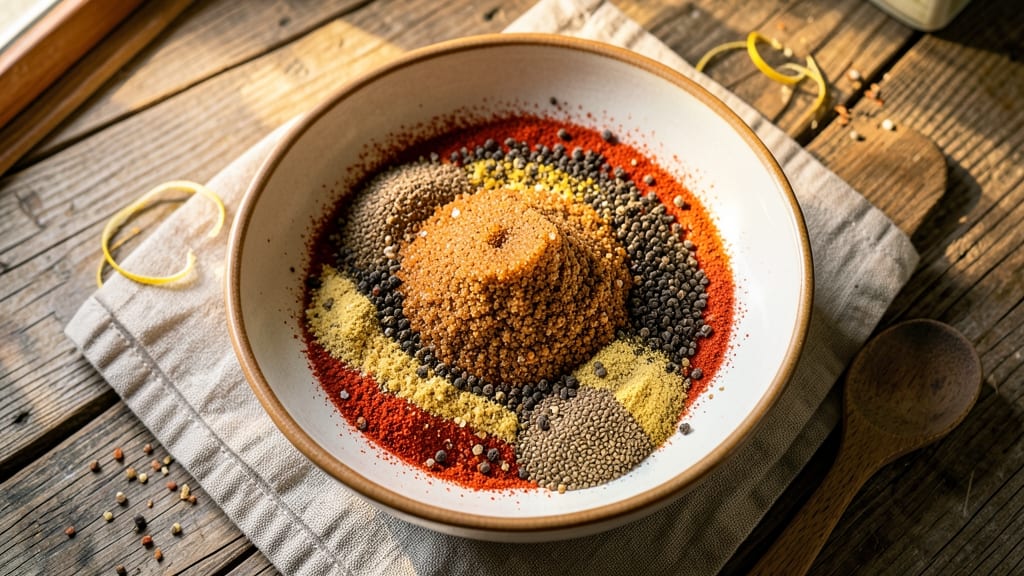
This Cuban pork rub recipe transforms simple pork into a masterpiece of smoky, crispy perfection—just like the kind I developed during my time at The Smoky Pig. The blend of warm spices and bold flavors creates that signature bark we all crave, without any guesswork.
Every tablespoon of this mix carries layers of tradition and technique honed over years of competition.
The secret lies in balancing sweet and savory: brown sugar for caramelization, garlic powder for depth, and smoked paprika for that unmistakable Cuban aroma. I've tested this blend on everything from shoulder to chops, and it delivers crispy edges every single time.
The spices are measured precisely to ensure bold flavor without overpowering the natural taste of the meat.
What makes this rub truly special is its versatility—it works on grills, smokers, or even in the oven. The combination of cumin, mustard powder, and black pepper creates a complex flavor profile that pairs perfectly with the sweetness of the pork.
Once you try this, you'll never settle for store-bought seasonings again.
Store the mix in an airtight container for up to six months, ready to elevate any pork dish. Whether you're preparing for a competition or a family gathering, this rub is your secret weapon for restaurant-quality results at home.
Ingredients for cuban pork rub
Nine spices and sugar transform pork into crispy, smoky perfection—just like my competition-winning blend.
| Ingredient | Amount | Notes |
|---|---|---|
| Light Brown Sugar 🍚 | ½ cup | Packed for maximum caramelization |
| Smoked Paprika 🌶️ | 2 tbsp | High-quality for authentic smokiness |
| Garlic Powder 🧄 | 2 tsp | Freshly ground preferred |
| Ground Cumin 🌿 | 1 ½ tsp | Toasted for deeper aroma |
| Mustard Powder 🌶️ | 1 tsp | Yellow mustard powder preferred |
| Ground Black Pepper 🌶️ | 1 tsp | Freshly cracked for best flavor |
| Onion Powder 🧅 | 1 tsp | Freshly ground preferred |
| Kosher Salt 🧂 | 1 ½ tsp | Diamond Crystal preferred |
| Ground Coriander 🌿 | ½ tsp | Sweet variety for balance |
| Dried Oregano 🍃 | ½ tsp | Mexican oregano for authentic taste |
The smoked paprika is non-negotiable here—Penzeys or Goya brands deliver that authentic Cuban aroma. I always buy light brown sugar (not dark) for better caramelization without bitterness. Bulk bins at World Market or Latin markets are your best bets for spices like Mexican oregano and toasted cumin. The garlic powder should be freshly ground; pre-ground loses potency fast. For the mustard powder, Bob's Red Mill is reliable and affordable. If you're feeling fancy, toast your spices in a dry pan for 30 seconds before mixing—they'll sing even more.
No smoked paprika? Regular paprika plus a pinch of liquid smoke gets you close. Short on brown sugar? White sugar plus 1/4 tsp cinnamon mimics the caramelization. The coriander is optional but adds that subtle citrus note—skip it if you prefer a more straightforward spice profile. For mustard powder, Dijon mustard powder works in a pinch, though it's slightly tangier. The oregano is where authenticity lives—never substitute Italian oregano. If you must, use half the amount of regular oregano plus a pinch of thyme, but trust me on the Mexican variety. For the salt, Diamond Crystal is key—it dissolves better than table salt and enhances flavor without overpowering.
Store this mix in an airtight container with a paper towel inside to absorb moisture—keeps it potent for up to 6 months. I portion mine into small jars so I can grab exactly what I need for each pork cut. For extra crispiness, pat the pork dry before applying and let the rub sit for at least 30 minutes (or overnight for deeper flavor). The sugar will caramelize beautifully on the grill, giving you that coveted bark. If you're not using it all at once, freeze portions in ice cube trays—just pop out what you need and store in a sealed bag.
Why You'll Love This Recipe
- Five-Ingredient Magic: I swear, this rub is that easy—just toss those five pantry staples in a bowl and call it done. No measuring cups, no fancy techniques, just a quick mix that transforms plain pork into something irresistible.
- Sweet-Smoky Crave: That caramelized brown sugar meets smoky paprika? It’s the kind of flavor that sticks with you long after the last bite. The cumin and mustard powder add this deep, tangy kick that makes it impossible to stop eating.
- Tailgate or Tuesday: Slap this on pork chops for a weeknight win, or use it on pulled pork for game day—it works just as well. Honestly, I’ve even thrown it on chicken thighs when I’m lazy, and no one bats an eye.
- Leftovers That Don’t Suck: This rub keeps flavors bold even after reheating. Double the batch, toss it on pork shoulder, and you’ve got slow-cooked perfection for sandwiches all week. (Yes, even on a Tuesday night.)
Step-by-step instructions for Cuban pork rub
This bold blend delivers authentic Cuban flavor with a perfect balance of sweet, smoky, and savory notes.
Measure and Prepare Your Ingredients
Start by gathering all your ingredients on a clean work surface. I like to use a medium-sized mixing bowl for this recipe. Pack the 0.5 cup light brown sugar firmly into your measuring cup—this ensures maximum caramelization when applied to the pork. The other ingredients can be measured directly into the bowl using standard measuring spoons.
This is where attention to detail matters most. The smoked paprika should be high-quality for that authentic smokiness, and the Mexican oregano will give you that distinctive Cuban flavor profile. Don't substitute regular oregano here—it makes a noticeable difference in the final taste.
Combine Dry Ingredients Thoroughly
Add all the ingredients to your mixing bowl: the 2 tbsp smoked paprika, 2 tsp garlic powder, 1.5 tsp ground cumin, 1 tsp mustard powder, 1 tsp ground black pepper, 1 tsp onion powder, 1.5 tsp kosher salt, 0.5 tsp ground coriander, and 0.5 tsp dried oregano. Use a whisk to combine everything gently at first, breaking up any clumps in the spices.
After the initial mix, switch to a fork or small spatula and fold the ingredients together more vigorously. You're looking to create a uniform blend where you can't see any distinct spices anymore. This ensures even flavor distribution when you apply it to the pork. The mixture should look like a fine, cohesive powder with no visible specks of individual spices.
Test the Rub for Balance
Here's where you'll taste and adjust if needed. Take a small pinch of the rub between your fingers and lick it—this gives you the most accurate flavor assessment. You should taste all components: the sweetness from the brown sugar, the smokiness from the paprika, and the savory depth from the cumin and mustard powder.
If you find it needs more sweetness, add a pinch more of the brown sugar. If it's too sweet, you can add a tiny bit more of the salt or black pepper to balance it. This step ensures your rub will deliver that perfect crispy, smoky flavor profile when applied to pork. Don't skip this—it's what separates a good rub from a great one.
Store for Future Use
Transfer your finished rub to an airtight container. I prefer glass jars with tight-sealing lids, as they keep the spices fresh longer. Store it in a cool, dark place—like your pantry—for up to 3 months. If you notice any loss of aroma before then, it's time to make a fresh batch.
This rub works perfectly on pork chops, pork shoulder, or even pulled pork. For best results, apply it generously to the meat about 1 hour before cooking, pressing it into the surface so it adheres well. The rub will caramelize beautifully during cooking, creating that crispy crust you're after while infusing the meat with deep, authentic Cuban flavors.
Pro Tips For Making Cuban Pork Rub
- CRUSH THE SUGAR FIRST: Brown sugar clumps like a stubborn guest at a party—refuse to let it ruin your rub. Pulse it in a food processor or smash it with a rolling pin until it’s fine and loose. This ensures even coating on the pork, so every bite gets that caramelized sweetness without sticky patches.
- DON’T SKIP THE CUMIN TOAST: Ground cumin loses its punch fast, but toasting it first wakes up its earthy depth. Heat 1 teaspoon in a dry skillet over medium for 30 seconds until fragrant—just until it smells like a Cuban café, not burnt toast. Let it cool before mixing into the rub; your pork will taste like it’s been slow-smoked in a Havana kitchen.
- PAT DRY BEFORE RUBBING: Wet pork is a rub’s worst enemy—it’ll turn to sludge instead of sticking. Pat the meat thoroughly with paper towels until it’s bone-dry. Cold pork? Let it sit at room temp for 20 minutes first. The rub will cling like it’s glued on, and you’ll get that perfect crust instead of a sad, watery mess.
- USE A SPLASH OF VINEGAR: This isn’t a substitution—it’s insurance. Mix 1 teaspoon apple cider vinegar into your rub before applying. The acid helps the spices penetrate deeper and cuts through the sugar’s cloying sweetness. (Yes, even if you’re not planning to grill it right away—store it in a jar and the pork will stay flavorful for days.)
Troubleshooting this recipe
Uneven Rub Distribution
If your pork isn't developing crispy bark or has flavorless spots, you're likely dealing with uneven rub application. Pat your pork completely dry with paper towels before applying—moisture prevents the rub from sticking properly.
I recommend using 1 tablespoon of rub per pound of pork, pressing it firmly into every crevice. For thick cuts like pork shoulder, apply a second layer after the first has adhered. 💡
Clumping Spices
Clumps in your rub mean uneven flavor delivery and potential burnt spots. To prevent this, sift all your spices through a fine-mesh sieve before combining, especially the mustard powder and cumin.
If clumps appear after mixing, pulse them in a mini food processor for 10 seconds or press through a sieve. Store your rub in a glass jar with a paper towel to absorb moisture and prevent future clumping. ⚡
Too Sweet or Too Spicy
The sugar-to-spice balance is delicate—too much sugar creates a sticky, burnt crust, while too much spice can overwhelm. Start with the recipe's proportions, then adjust by ¼ teaspoon increments after tasting.
For a sweeter profile, add ½ teaspoon more brown sugar; for more heat, increase the smoked paprika by ½ teaspoon. I keep a small bowl of each component nearby when testing new batches. 🌶️
Rub Not Sticking
If your rub keeps falling off during cooking, your pork isn't dry enough or your rub lacks adhesive properties. For extra grip, mix 1 teaspoon of cornstarch into your rub before applying. Alternatively, lightly coat the pork with olive oil first—this helps the rub adhere without making it greasy.
For competition-level results, I brush the pork with apple cider vinegar before applying the rub; the acidity helps the spices cling better. 💪
Burnt Rub, Raw Meat
This classic issue happens when the rub caramelizes too quickly while the meat stays undercooked. Use a meat thermometer to monitor internal temperature—pork should reach 145°F (medium) or 160°F (well-done). For thick cuts, cook at 250°F until the rub darkens, then increase heat to 350°F to finish.
I swear by the "Texas Crutch"—wrap the pork in butcher paper at 165°F to push through the stall phase without burning the rub. 🔥
Weak Flavor Profile
Freshness is key—ground spices lose potency after 3 months. Toast your spices in a dry skillet for 30 seconds before mixing to revive their aroma. For extra depth, add ½ teaspoon of ground annatto seeds (achote) to the rub—this adds a subtle orange hue and earthy note.
If your rub tastes flat, check your smoked paprika; Penzeys or Goya brands deliver the most authentic Cuban flavor. 🌿
Nutrition facts
Frequently asked questions
Can I use this rub on other meats besides pork?
While this blend was designed specifically for pork, it works beautifully on chicken thighs or turkey legs too! The sweet-spicy balance pairs well with these meats, though you may want to reduce the sugar slightly (by ¼ teaspoon) to prevent excessive caramelization. For beef, I'd recommend cutting the brown sugar in half to avoid a cloying sweetness.
How much rub should I use per pound of pork?
For optimal flavor and crispy bark, use 1 tablespoon of rub per pound of pork. Press it firmly into all surfaces—don't be shy! For competition-style results, I often apply a second layer after the first has adhered (about 30 minutes before cooking). The key is thorough coverage so every bite delivers that authentic Cuban flavor.
Can I make this rub without smoked paprika?
Yes, but you'll lose that signature Cuban smokiness. Substitute with regular paprika plus ¼ teaspoon liquid smoke per batch. For a deeper flavor, toast ½ teaspoon of coffee grounds in a dry pan for 1 minute and add them to the mix—they'll mimic some of the smoky complexity. Just remember, nothing beats high-quality smoked paprika for authentic results.
How long can I store the finished rub?
Store in an airtight container with a paper towel to absorb moisture—this keeps it fresh for up to 6 months in a cool, dark place. For longer storage, freeze portions in ice cube trays (wrap tightly in plastic wrap first). The spices will retain their potency much longer when frozen. Just thaw completely before using.
Why does my rub taste bland after cooking?
Bland flavor usually means stale spices or improper application. Check your smoked paprika first—it's the flavor powerhouse! Toast all spices in a dry pan for 30 seconds before mixing to revive their aroma. Also ensure you're pressing the rub firmly into the meat and cooking it to 145°F+—undercooked pork won't develop full flavor. For extra punch, add ½ teaspoon of ground annatto (achote) to your next batch.