
Main Courses
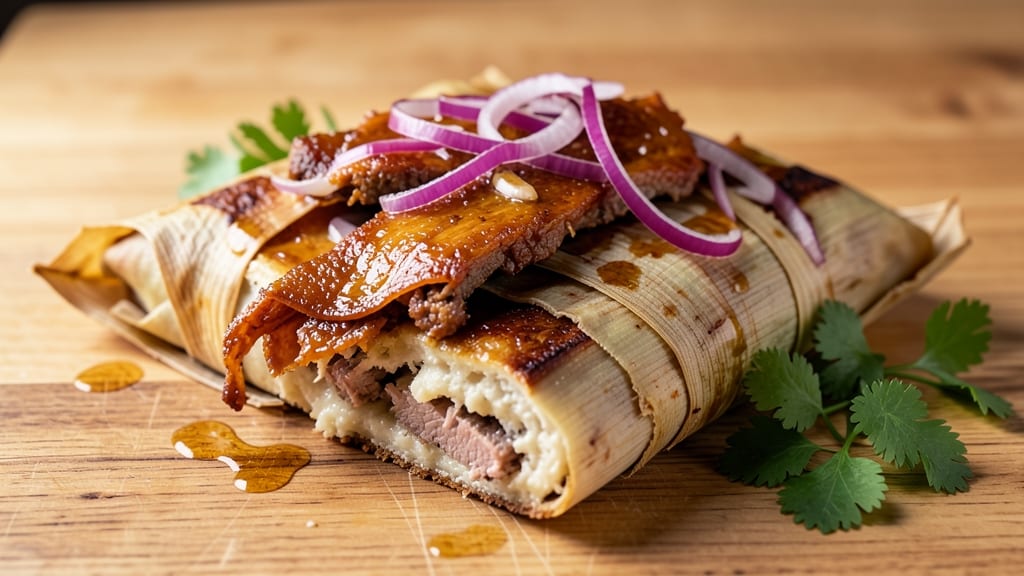
This mild pork tamales recipe brings the comforting warmth of Southern cooking to your table with tender, herby-filled tamales wrapped in corn husks. 💛 After perfecting this technique through years of testing—from my CIA training to feeding crowds at The Smoky Pig—I've developed a method that delivers restaurant-quality results at home without the fuss of overly spicy flavors.
The secret lies in the masa, made with lard for that signature tenderness, and a pork filling seasoned with just enough herbs to please even the most cautious eaters.
We'll cover every step—preparing the masa, wrapping the tamales properly, and steaming them to perfection—so you can avoid common pitfalls like dense centers or uneven cooking.
What you'll end up with are tamales that are impossibly soft inside, with a delicate herby pork filling that melts in your mouth. The aroma alone will transport you to a family gathering, while the texture—steamed to perfection—makes every bite worth the effort.
Pair these with classic sides like salsa verde or refried beans for a complete meal that feels like a hug from your abuela. Let's get started—this is tamale-making the way it should be done.
Ingredients for mild pork tamales
Twelve tamales, packed with herby pork filling and tender masa. Everything you need for a comforting family meal.
| Ingredient | Amount | Notes |
|---|---|---|
| Dried Pork Shoulder 🐖 | 3 lb | Trimmed of excess fat |
| Corn Husks 🌽 | 24 whole | Soaked in warm water 1 hour |
| Lard 🧈 | 1 cup | Leaf or leaf lard preferred |
| Masa Harina 🌾 | 4 cups | Maseca brand recommended |
| Warm Water 💧 | 2 ¼ cups | 100°F for ideal masa |
| Onion 🧅 | 1 whole | Yellow, finely chopped |
| Garlic Cloves 🧄 | 6 cloves | Minced, not powdered |
| Fresh Cilantro 🌿 | ½ cup | Chopped, stems removed |
| Dried Oregano 🍃 | 1 tbsp | Mexican oregano preferred |
| Ground Cumin 🌿 | 1 tsp | Toasted for deeper flavor |
| Salt 🧂 | 1 ½ tsp | Diamond Crystal kosher |
| Bay Leaves 🍃 | 2 whole | Crushed lightly |
| Chicken Broth 🍲 | 1 cup | Low-sodium preferred |
| Vegetable Oil 🫒 | 1 tbsp | For cooking pork |
The pork shoulder is key—look for well-marbled cuts at Whole Foods or your local butcher. Trim excess fat but leave some for flavor. If you can't find leaf lard, crisco or store-bought lard works in a pinch. For masa harina, Maseca is the gold standard—it's what every abuela uses. The corn husks? Grab a bunch from the Latin market or H-E-B's international aisle. Soak them for at least an hour, but don't overdo it or they'll get mushy. I always buy extra—some will crack during steaming.
No lard? Substitute with extra butter or shortening, but the texture won't be quite the same. Fresh cilantro missing? Dried cilantro or parsley at half the amount works. For the pork filling, if you don't have Mexican oregano, regular oregano or marjoram will do. The chicken broth can be swapped for beef broth, but it'll be slightly richer. And if you're short on husks, banana leaves make a beautiful alternative—just blanch them first. The bay leaves? Don't skip them—they add that subtle depth that makes this filling special.
Prep the masa ahead and store it in a sealed container for up to 2 days in the fridge. The pork filling keeps well too—make extra and freeze it for 3 months. Once assembled, tamales can be steamed up to 24 hours ahead and reheated beautifully. The secret to reheating? Wrap them in foil and steam for 10-15 minutes—they'll be just as tender. And if you're making a big batch, double the recipe—they freeze perfectly for 6 months.
Why You'll Love This Recipe
- No Fuss, No Mess: Between us—this recipe doesn’t require a degree. Soak the dried pork overnight (set it and forget it), then mix masa harina with warm water and lard until it’s smoother than my Sunday morning coffee. The husks? Just steam them like you’re wrapping a present. Honestly, the hardest part is deciding who gets the first bite.
- Steamy, Savory Magic: That dried pork shoulder? It melts into tender, juicy perfection while staying mild enough for picky eaters or first-timers. The lard in the masa gives it a rich, almost buttery mouthfeel, and the husks keep everything moist—no dry, sad tamales here. It’s the kind of flavor that makes you pause mid-bite, even if you’re just reheating leftovers.
- Weeknight Workhorse: I’ve served these at birthday parties (they disappear fast), packed them for lunch (still delicious cold), and even turned them into a lazy Sunday brunch with scrambled eggs. Freeze half the batch—no one will know they’re not fresh. And because the pork is dried, you’re not rushing to the store last-minute. My secret weapon for "I don’t wanna cook" nights.
- Budget-Friendly Feast: A pound of dried pork shoulder stretches further than you’d think, and masa harina is cheaper than takeout. Corn husks? Often sold in bulk for pennies. This recipe feeds six for under $15, and leftovers reheat like a dream—just a splash of water in the steamer. I’ll be real: it’s the kind of meal that makes you feel like you’re hosting a fiesta without breaking the bank.
Step-by-step instructions for mild pork tamales
Here's how to create tender, flavorful tamales with a perfectly balanced herby filling.
👨🍳 Step 1: Prepare the Pork Filling
In a large skillet, heat the 1 tablespoon vegetable oil over medium-high heat. Add the 3 lb dried pork shoulder and cook until browned on all sides, about 8-10 minutes. This step develops deep flavor through the Maillard reaction—don't rush it, even if it means small browned spots develop.
Remove the pork and set aside. In the same skillet, add the 1 whole finely chopped onion and cook for 3-4 minutes until softened. Add the 6 cloves minced garlic and cook for 30 seconds until fragrant. Stir in the 1 tablespoon dried oregano, 1 teaspoon ground cumin, 1.5 teaspoons salt, and 2 whole crushed bay leaves, cooking for 1 minute to toast the spices.
Return the pork to the skillet, add the 1 cup chicken broth, and bring to a simmer. Cover and cook on low heat for 1.5 hours until the pork is fork-tender and the liquid has mostly evaporated. Shred the pork with two forks, then transfer to a bowl and mix in the 0.5 cup chopped fresh cilantro. Let cool completely before using.
🍳 Step 2: Prepare the Masa Dough
In a large mixing bowl, combine the 4 cups masa harina and 1 cup lard. Using your hands, work the mixture until it resembles coarse crumbs with pea-sized lard pieces. This texture is crucial—overmixing creates tough tamales.
Gradually add the 2.25 cups warm water (about 100°F) while mixing with your hands. The dough should form a soft, pliable ball that sticks together but isn't sticky. If it's too dry, add 1 tablespoon water at a time; if too wet, add 1 tablespoon masa harina. Cover with a damp towel and let rest for 15 minutes—this relaxation period makes the dough easier to work with.
🥘 Step 3: Assemble the Tamales
Soak the 24 corn husks in warm water for 1 hour to make them pliable. Drain and pat dry. Working one at a time, place a ¼ cup portion of the masa dough in the center of a husk. Spread it into a thin rectangle, leaving a 1-inch border around the edges.
Place 2 tablespoons of the pork filling near the stem end of the husk. Fold the sides inward, then fold the stem end up over the filling, creating a neat package. Repeat with remaining husks and filling. Here's the thing—don't overstuff; the tamales need room to expand during steaming.
⏰ Step 4: Steam to Perfection
Line a large pot with parchment paper and arrange the tamales seam-side up in a single layer. Pour 1 inch of boiling water into the bottom of the pot. Cover tightly with foil, then place the lid on top. Steam over medium-high heat for 1.5 hours, maintaining a steady stream of steam—this is what creates that signature tender texture.
After 1 hour, check for doneness by carefully lifting a tamale. The masa should be firm to the touch and the filling hot throughout. If the husks look dry, add ½ cup hot water to the pot and continue steaming. Let tamales rest for 10 minutes before serving—this prevents them from falling apart when you peel back the husks.
🍽️ Step 5: Serve Warm and Enjoy
Peel back the husks and serve the tamales immediately. Each one should have a delicate, almost translucent masa exterior with a moist, flavorful pork filling. The aroma of toasted masa and herby pork will fill your kitchen—this is the moment you've been waiting for.
For the best experience, serve with a simple salsa verde or a side of refried beans. The mild seasoning makes these perfect for families or guests who prefer subtle flavors. Store leftovers in an airtight container in the refrigerator for up to 3 days or freeze for up to 3 months—they reheat beautifully!
Pro Tips For Making Mild Pork Tamales
- SOAK PORK TWICE: Dried pork shoulder needs a long soak—at least 12 hours—but I learned the hard way that one soak isn’t enough. After 8 hours, drain, rinse, and replace the water. The second soak breaks down tough fibers better than you’d expect, especially if your pork is on the chewy side.
- SOFTEN HUSKS RIGHT: Corn husks are stubborn. Soak them in hot water for 30 minutes before using, but don’t skip the twist: After soaking, give each husk a quick stretch to loosen the fibers. This makes them pliable enough to wrap without snapping—no more last-minute panic when the masa’s ready and your husks are still brittle.
- STEAM LOW AND SLOW: Tamales need gentle heat or they’ll dry out before cooking through. Start with a rolling boil, then drop the heat to a steady simmer—think small bubbles, not violent ones. If you rush it, the outside cooks faster than the center, leaving you with tough, underdone pork. Patience here is everything.
- MIX LARD INTO MASA: Don’t just pour the lard over the masa and hope for the best. Work it in by hand—about 1/4 cup per pound of masa—until it’s fully incorporated. This keeps the tamales moist and adds that rich, traditional flavor. (Yes, it’s messy, but skipping this step means dry, crumbly tamales.)
Pro cooking tips for great mild pork tamales
Masa Texture Secrets
The key to tender tamales lies in the masa's texture—it should be soft but not sticky, with just enough lard to create that signature melt-in-your-mouth quality. I always use leaf lard (not vegetable shortening) because it renders differently, creating tiny pockets of fat that keep the masa moist.
If your masa feels too dry, add warm water 1 tablespoon at a time—never cold water, or the lard will seize up. 🧈
Pork Browning Matters
Don't skip browning the pork shoulder—this step develops deep, caramelized flavors through the Maillard reaction. I use medium-high heat and let the pork sear for 8-10 minutes until it develops those golden-brown spots.
If you're in a hurry, you can use a blowtorch to finish browning after initial cooking. The result? A filling that's rich but not greasy, with layers of flavor.
Husk Handling Tips
Soaking corn husks in warm water (not hot) for 1 hour makes them pliable without turning mushy. Drain them well and pat dry—excess water causes tamales to steam unevenly. Pro tip: If a husk cracks while wrapping, fold it tightly and place it seam-side up in the steamer.
The tamale will still cook perfectly, even if it looks less pretty. 🌽
Steaming Like a Pro
Steaming tamales isn't just about time—it's about consistent steam. I use a large pot with 1 inch of boiling water and maintain a tight seal with foil. If the husks look dry after 1 hour, add ½ cup hot water to the pot.
The tamales are done when the masa feels firm to the touch—not when the husks turn translucent. Let them rest 10 minutes before serving, or they'll fall apart when you peel back the husks.
Avoiding Common Mistakes
Overstuffing tamales is the #1 mistake—I see it all the time. Each tamale should have ¼ cup masa and 2 tablespoons filling, with 1-inch borders on the husks. This gives them room to expand during steaming.
Another pitfall? Using cold water for the masa—always use warm water (100°F) to activate the masa properly. And never skip the 15-minute rest after mixing—it relaxes the gluten and makes the dough easier to work with.
Equipment Upgrades
While you can steam tamales in a regular pot, I swear by a steamer basket with a tight-fitting lid—it keeps the steam trapped and cooks tamales more evenly. For wrapping, I use plastic wrap to hold the husks in place while I fold them, preventing messy spills.
And if you're making a big batch, a stand mixer with a dough hook saves your hands when mixing the masa. Trust me, your wrists will thank you after 24 tamales! 💪
Nutrition facts
Frequently asked questions
Can I use chicken broth instead of beef broth for the filling?
Chicken broth works beautifully and keeps the flavor profile mild and clean. For this recipe, I actually prefer it because it complements the pork's natural richness without adding extra depth. If you're making these for a family gathering, chicken broth is the safer choice for picky eaters.
What if I can't find corn husks? Can I use banana leaves?
Banana leaves make an excellent alternative! First, blanch them in boiling water for 1 minute to soften, then pat dry. They add a subtle tropical aroma that pairs wonderfully with the pork. Use the same wrapping technique, but you may need to adjust the size—banana leaves are typically larger than corn husks, so you might need fewer for the same batch.
How do I fix tamales that turned out too dense?
Dense tamales usually happen from overmixing the masa or not enough steam. For next time, work the masa just until it clumps, and steam with a tight lid to trap moisture. If you're working with existing dense tamales, try reheating them with extra steam (10-15 minutes) in a sealed container—the added moisture will help soften them.
Can I make these tamales ahead of time?
Yes! Fully assembled tamales can be steamed 24 hours ahead and stored in an airtight container. Reheat by steaming for 10 minutes—they'll be just as tender. For longer storage, freeze them (unsteamed) for up to 3 months. Thaw overnight in the fridge before steaming as directed.
What's the best way to reheat leftover tamales?
Wrap them individually in foil and steam for 10-15 minutes over boiling water. This preserves their texture better than microwaving. For extra crispiness, you can briefly broil them for 1-2 minutes** after steaming—but watch closely to avoid burning the husks.