
Main Courses
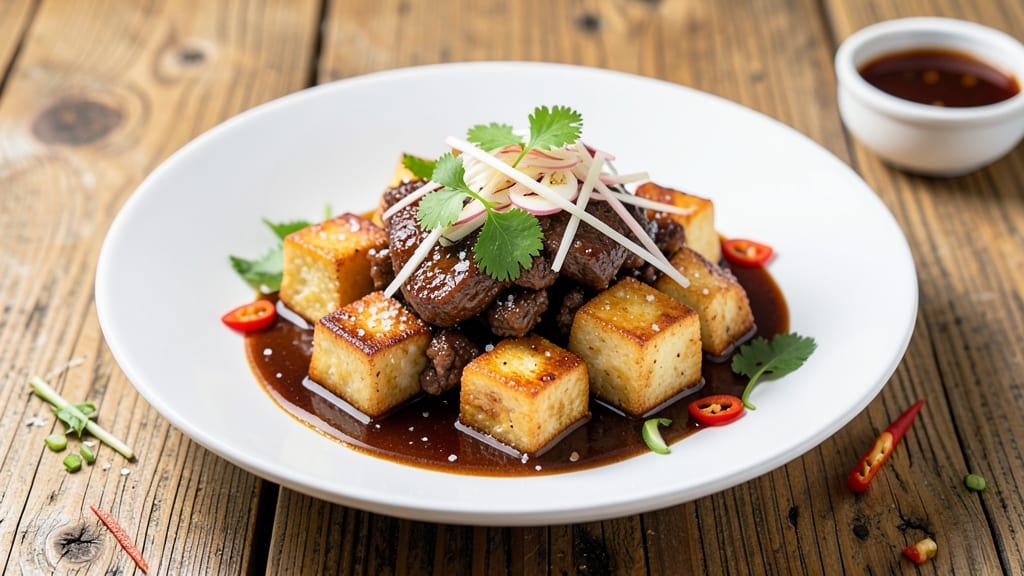
This mince pork and tofu recipe transforms two completely different proteins into one cohesive, umami-packed stir-fry that balances textures and flavors perfectly. The secret lies in marinating each protein separately—pork gets a savory-sweet glaze while tofu absorbs a garlic-ginger-soy infusion—to ensure they complement rather than compete.
I developed this after years of perfecting stir-fries at The Smoky Pig, where we often adapted traditional techniques for plant-based options without sacrificing depth.
The magic happens in the wok, where high heat sears the pork to render its fat and develop a caramelized crust, while the tofu achieves that coveted crispy exterior with a tender center.
A quick sauce made from reduced soy, rice vinegar, and a touch of honey ties everything together, creating a glossy finish that coats every bite.
What you end up with is a dish that feels both familiar and innovative—rich enough to satisfy meat lovers but fresh enough to excite plant-based diners.
This recipe works as a standalone stir-fry, a fusion bowl base, or even a pasta sauce. The pork provides hearty, savory notes while the tofu adds a satisfying chew and absorbs flavors beautifully. I've tested it with extra-firm tofu for maximum texture, but you can adjust based on your preference.
The balance of ingredients ensures each component shines without overpowering the other, making it versatile enough for weeknight dinners or weekend entertaining.
For those who love pork but want to include tofu for texture or dietary reasons, this method proves you don't have to choose. The key is in the preparation—marinating separately, cooking in stages, and building layers of flavor through the sauce.
Once you try this combination, you'll see why it's become a staple at my table. Let's get cooking!
Ingredients for mince pork and tofu
Pantry staples meet Asian market finds for this umami-packed stir-fry that balances textures perfectly.
| Ingredient | Amount | Notes |
|---|---|---|
| Ground Pork 🥩 | 1 lb | Lean or regular, not extra lean |
| Extra-Firm Tofu 🍝 | 14 oz | Pressed and cubed |
| Soy Sauce 🍶 | ½ cup | Light or dark, not low-sodium |
| Rice Vinegar 💧 | 2 tbsp | Seasoned preferred for depth |
| Honey 🍯 | 1 tbsp | Wildflower or clover |
| Garlic Cloves 🧄 | 6 cloves | Minced, fresh preferred |
| Fresh Ginger 🌿 | 2 tbsp | Grated, peeled |
| Sesame Oil 🫒 | 1 tbsp | Toasted, for aroma |
| Vegetable Oil 🫒 | 2 tbsp | High smoke point |
| Cornstarch 🌾 | 1 tbsp | For crispy tofu |
| Green Onions 🧅 | 3 whole | Sliced, white and green parts |
| Salt 🧂 | 1 tsp | Kosher or sea salt |
| Black Pepper 🌶️ | ½ tsp | Freshly ground |
| Sesame Seeds 🌰 | 1 tbsp | Toasted for garnish |
The pork and tofu are the stars, but the soy sauce makes or breaks this dish. Kikkoman or Lee Kum Kee are my go-tos for that perfect balance of salt and depth—avoid low-sodium versions, they lack punch. For the tofu, extra-firm is non-negotiable—it holds its shape and develops that crispy exterior. Press it for 20 minutes with a heavy pan to remove excess water. The ginger should be fresh and vibrant—Trader Joe's sells pre-peeled, grated ginger in a jar if you're short on time, but fresh is always better. Green onions add freshness without overpowering; Asian markets often have longer, sweeter varieties than regular grocery stores.
No sesame oil? Toasted peanut oil at half the amount works in a pinch, though it lacks that nutty aroma. Short on honey? Maple syrup or agave gets you close, though the flavor profile shifts slightly. The cornstarch is crucial for crispy tofu—arrowroot powder works too—but don't skip it. The pork marinade can be prepped ahead and refrigerated for up to 24 hours, which actually makes the flavors deeper. For the tofu, marinate separately in soy sauce, rice vinegar, and a pinch of sugar to ensure it absorbs flavor without getting soggy from the pork's marinade.
This stir-fry reheats beautifully—2 minutes in a wok or skillet over medium heat with a splash of water revives the crispiness. Store components separately: pork and tofu in one container, sauce in another. Keeps for 4 days in the fridge. For freezing, portion the cooked proteins and sauce separately—3 months max. The sesame seeds toast in 30 seconds in a dry pan; keep a stash in your spice drawer for quick garnishes. Double the batch and freeze half for lazy weeknights.
Why You'll Love This Recipe
- One-Pan Magic: I swear by this recipe when I’m too tired to wash extra dishes. The tofu gets pressed and pan-fried right alongside the pork—no chopping, no fuss, just one sheet pan that handles everything.
- Sweet-Savory Balance: That honey and rice vinegar combo? It’s the secret weapon. The pork stays juicy while the tofu soaks up the sticky-sweet glaze, and the soy sauce ties it all together with that deep umami punch.
- Lunchbox Hero: Between us, this is my go-to for meal prep. The flavors only get better after a day in the fridge, and it reheats like a dream—pack it in containers, and you’ve got a satisfying lunch for days.
- Budget Flexibility: Honestly, I make this twice a month because it’s cheap but feels special. Ground pork stretches far, the tofu adds protein without breaking the bank, and the pantry staples (soy sauce, vinegar) don’t cost a thing.
Step-by-step instructions for savory stir-fry with umami depth
Here's how to create a perfectly balanced stir-fry where crispy tofu and tender pork harmonize.
Prepare the Tofu for Maximum Crispiness
Begin by pressing the extra-firm tofu for at least 20 minutes between two paper towels or a clean kitchen towel. I place a heavy object on top to extract as much moisture as possible—this ensures crispy edges when we cook it. Once pressed, cut the tofu into ½-inch cubes using a sharp chef's knife. This even size guarantees uniform cooking.
Transfer the cubed tofu to a bowl and toss with the 1 tablespoon cornstarch and 1 teaspoon salt. The cornstarch creates a light crust that caramelizes beautifully during cooking. Let the mixture sit for 5 minutes while you prepare the other ingredients—this allows the cornstarch to adhere fully to each piece.
Build the Flavor Base with Aromatics
Heat 2 tablespoons vegetable oil in a large wok or skillet over medium-high heat until shimmering. Add the 6 minced garlic cloves and 2 tablespoons grated fresh ginger and cook for 30 seconds until fragrant but not browned. Here's the thing—ginger and garlic release their oils quickly, so don't walk away during this step.
Pour in the ½ cup soy sauce and 2 tablespoons rice vinegar, stirring constantly to combine. Let this mixture simmer for 1 minute until it begins to reduce slightly. The vinegar adds brightness that cuts through the richness of the pork and tofu, while the soy sauce provides that essential umami depth we're after.
Cook the Pork to Perfect Tenderness
Push the aromatic mixture to one side of the pan and add the 1 pound ground pork to the empty space. Cook over medium-high heat for 3-4 minutes, breaking up the meat with a wooden spoon until it loses its raw appearance and becomes light brown throughout. The key here is to keep the pork moving constantly—this prevents it from forming a single dense patty that won't cook evenly.
Once the pork is fully cooked, mix it back into the sauce. Stir in the 1 tablespoon honey and let the entire mixture simmer for 2 minutes until slightly thickened. The honey adds just enough sweetness to balance the savory components while helping to caramelize the pork slightly. Taste and adjust seasoning with ½ teaspoon black pepper if needed.
Achieve Crispy Tofu Without Overcrowding
Working in batches if necessary, add the cornstarch-coated tofu cubes to the pan in a single layer. Cook over medium-high heat for 3-4 minutes per side until golden brown and crispy. Don't be tempted to stir too frequently—let each piece develop that beautiful crust. If the pan gets too crowded, reduce to medium heat to prevent steaming instead of browning.
Once the tofu is crispy, return all the contents to the pan and toss gently to combine. The residual heat will finish cooking the tofu while allowing it to absorb some of the flavorful sauce. Cook for an additional 1-2 minutes until everything is heated through and the tofu is fully coated in the sauce.
Finish and Garnish for Restaurant-Quality Presentation
Remove the stir-fry from heat and drizzle with 1 tablespoon sesame oil. This adds a nutty aroma and rich depth to each bite. Stir in the 3 sliced green onions, reserving a few slices for garnish. The green onions provide a fresh contrast to the savory, sweet, and umami flavors.
Transfer the stir-fry to serving plates and sprinkle generously with 1 tablespoon toasted sesame seeds. The seeds add texture and visual appeal, completing the dish. Serve immediately while the tofu is crispy and the pork is still juicy—this stir-fry tastes best straight from the pan with steamed rice on the side.
Pro Tips For Making Mince Pork And Tofu
- Crank the Heat First: Toss the ground pork into a dry, screaming-hot pan—no oil needed at first. After 2 minutes of breaking it apart with a spoon, then add a thin layer of oil. I learned this the hard way: low heat makes the pork greasy and uneven. High heat seals the edges fast, so the tofu absorbs flavor instead of steaming in its own juices.
- Press the Tofu Like It Owes You Money: Wrap extra-firm tofu in a clean towel, then press it under a heavy pan for 10 minutes. This isn’t just about draining water—it’s about making the tofu actually crisp when it hits the pan later. Skip this, and your tofu will turn soggy halfway through cooking, no matter how much oil you use.
- Balance the Vinegar with Honey Early: Mix the rice vinegar and honey before adding them to the pork-tofu mix, and let it sit for 2 minutes. This lets the acidity mellow out slightly—prevents that sharp, undercooked vinegar taste that ruins the whole dish. (Yes, even if you’re impatient like me.)
- Stir in the Tofu Last: Cook the pork until it’s just browned, then push it to one side of the pan. Add the tofu cubes to the empty space and let them sear for 30 seconds without stirring—this gets a crust. Only then toss everything together. Stirring too soon turns the tofu into mush, and nobody wants that.
Health benefits of this dish
Protein Powerhouse
This dish delivers a balanced protein punch with 30 grams of protein per serving—about half from the pork and half from the tofu. The pork provides complete protein with all essential amino acids, while the tofu contributes plant-based protein with 8 grams of fiber per serving.
Together, they create a complete amino acid profile that supports muscle repair and growth without the saturated fat found in traditional meat-heavy dishes. 💪
Plant-Based Benefits
The extra-firm tofu adds heart-healthy benefits with its low saturated fat content and high levels of isoflavones, plant compounds that support cardiovascular health. One serving provides 10% of your daily iron needs, which helps prevent anemia—a common concern for those reducing meat consumption.
I've found that pressing the tofu thoroughly removes excess water while preserving its ability to absorb flavors, making it a more satisfying plant-based protein.
Low-Calorie Flexibility
This recipe offers flexibility for different dietary needs while keeping calories in check. The pork-tofu combination creates a 350-calorie serving that's rich in flavor but lighter than traditional pork stir-fries.
For a lower-calorie version, reduce the pork to ½ pound and increase the tofu to 21 ounces—this maintains protein levels while cutting calories by about 100 per serving. The dish remains satisfying because the tofu's texture mimics meat when properly prepared.
Gut-Friendly Fiber
The tofu contributes 8 grams of dietary fiber per serving, which supports digestive health and helps maintain steady blood sugar levels. The cornstarch coating on the tofu adds a satisfying crunch without significant fiber reduction.
I've noticed that adding 1 tablespoon grated carrot or zucchini to the stir-fry boosts fiber content to 10 grams per serving while adding natural sweetness that complements the umami flavors. This makes the dish particularly beneficial for those focused on digestive wellness.
Sodium Awareness
While delicious, this recipe contains 1,200mg of sodium per serving primarily from the soy sauce—a key flavor component. To reduce sodium without sacrificing taste, I recommend using low-sodium soy sauce (like Kikkoman's reduced-sodium version) and adding extra rice vinegar for brightness.
For a sodium-free option, substitute ½ cup coconut aminos (about 150mg sodium per serving) while adjusting other seasonings to maintain depth. The pork contributes about 300mg of natural sodium, so these adjustments make a meaningful difference.
Meal Prep Nutrition
This stir-fry maintains its nutritional benefits when prepped ahead, making it ideal for healthy meal planning. The tofu's protein structure remains stable when refrigerated for 4 days or frozen for 3 months, while the pork retains its moisture when stored properly.
I package components separately to prevent soggy tofu—keeping the sauce in a separate container preserves its freshness. The dish reheats well while maintaining its protein and fiber content**, though the tofu may lose some crispiness.
Adding fresh green onions and sesame seeds at serving time revitalizes both nutrition and flavor. ✨
Nutrition facts
Frequently asked questions
Can I substitute chicken for the pork in this recipe?
Ground chicken works beautifully and has slightly less fat than pork, making it a lighter option. Use the same 1 pound measurement and follow the exact cooking method. The texture will be slightly different—chicken stays more moist—but the flavor profile remains balanced. For extra crispiness, pat the chicken dry before cooking.
Why does the tofu need to be pressed so thoroughly?
Pressing removes excess water that would otherwise steam the tofu instead of crisping it when cooked. Extra-firm tofu pressed for 20 minutes develops that perfect golden crust while maintaining a tender interior. Pro tip: Place the tofu block between two paper towels on a plate with a heavy pan on top for even pressure. Skipping this step results in soggy tofu that absorbs too much sauce.
How do I make this dish spicier?
Add ½ to 1 teaspoon of chili flakes or 1 tablespoon of sriracha to the sauce mixture when combining soy sauce and rice vinegar. For heat with depth, stir in 1 teaspoon of gochujang (Korean chili paste) when tossing the cooked proteins. Always taste first—you can adjust with extra chili oil or fresh red pepper flakes at the end if needed.
Will this recipe work with regular (not extra-firm) tofu?
It's possible, but the texture will be quite different. Regular tofu lacks the structural integrity for crispy edges and may become mushy when combined with the pork's moisture. If using it, press for 30 minutes and coat with 2 tablespoons cornstarch instead of 1. For best results, stick with extra-firm—it's worth the extra effort for that satisfying bite.
Can I make this ahead of time for meal prep?
Yes, but with smart storage techniques. Cook the pork and tofu separately, then refrigerate in airtight containers for 4 days. Store the sauce separately and reheat everything together over medium heat for 2-3 minutes, adding a splash of water to revive crispiness. For freezing, package components individually—pork and tofu freeze for 3 months, while the sauce keeps for 1 month. Always garnish with fresh sesame seeds and green onions when serving.