
Main Courses
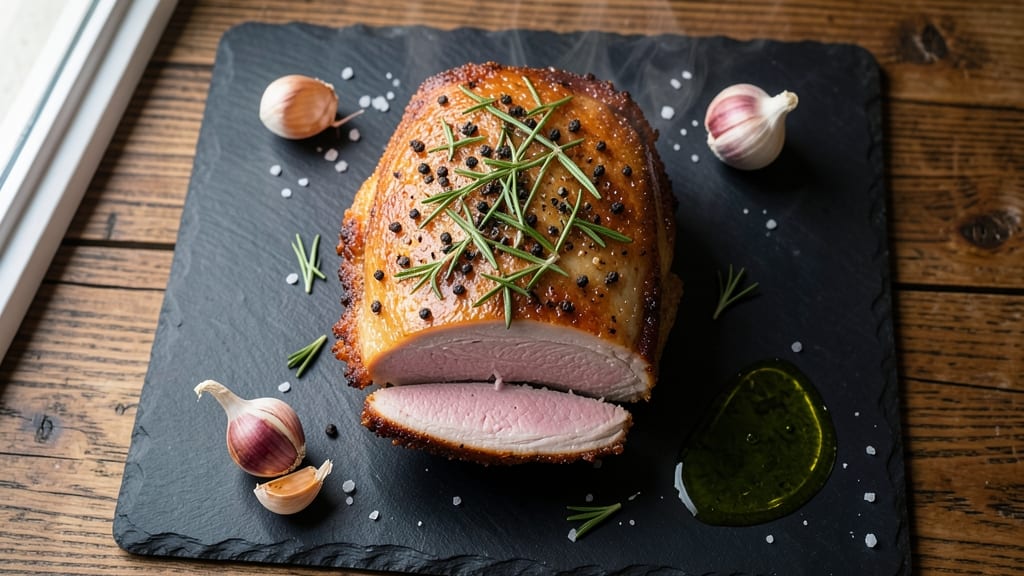
A 4-pound pork loin roast transforms from simple cut to showstopping centerpiece with the right technique—juicy, tender meat with a crispy crust that commands every dinner table. I've perfected this method after years of cooking pork for thousands at The Smoky Pig, where we roast 2,000 pounds weekly.
The secret lies in proper seasoning, precise temperature control, and knowing exactly when to rest that meat for maximum flavor impact.
This recipe delivers restaurant-quality results with minimal effort: just four simple seasonings, a single roasting pan, and about 45 minutes of active time. We start with a dry brine to ensure moisture retention, then sear the roast to lock in juices before finishing in the oven.
The high-heat sear creates that coveted crispy exterior while keeping the center juicy and tender—no guesswork, no overcooking.
By the time you carve into this roast, you'll see why it's worth the effort: perfectly golden edges that shatter at the touch, meat so tender it nearly falls apart, and a flavor profile that balances salt, pepper, and garlic without overpowering the natural pork sweetness.
The aroma alone will have your guests anticipating dinner before it's even served.
Serve with classic sides like roasted potatoes or a tangy apple sauce to complete the meal. This roast keeps well for leftovers, making it perfect for meal prep or feeding a crowd. Let's get cooking—your next dinner party just got an upgrade.
Ingredients for 4 pound pork loin roast
Four simple ingredients transform a basic pork loin into a showstopping centerpiece—crispy edges, juicy center, and aroma that fills your kitchen.
| Ingredient | Amount | Notes |
|---|---|---|
| Pork Loin Roast 🐖 | 4 lb | Center-cut, bone-in preferred |
| Kosher Salt 🧂 | 2 tbsp | Diamond Crystal preferred |
| Freshly Ground Black Pepper 🌶️ | 1 ½ tsp | Freshly cracked for best flavor |
| Garlic Cloves 🧄 | 6 cloves | Minced for dry brine |
| Extra-Virgin Olive Oil 🫒 | 2 tbsp | For searing and basting |
| Fresh Rosemary 🌿 | ¼ cup | Chopped, stems removed |
| Fresh Thyme 🌿 | ¼ cup | Leaves only, chopped |
| Unsalted Butter 🧈 | 4 tbsp | Cold, cubed for basting |
| Yellow Onion 🧅 | 1 whole | Quartered for garnish |
| Apple Cider Vinegar 🍎 | 1 tbsp | For basting liquid |
The pork loin is where it all begins—center-cut is key for even cooking and maximum tenderness. Whole Foods or local butchers often carry the best cuts, but any reputable grocery store should have it. Look for good marbling and a vibrant pink color. I always buy a few extra ounces to account for trimming—4 pounds is perfect for 4 servings. The garlic and herbs? Fresh is non-negotiable here. Trader Joe's has great pre-minced garlic if you're short on time, but fresh minced gives that restaurant-quality depth. For the salt, Diamond Crystal is my go-to—it's coarser and dissolves better than table salt.
No fresh rosemary? Dried works at half the amount, but trust me, fresh is worth the trip to the store. Running low on thyme? Oregano or marjoram can step in, though the flavor will shift slightly. The butter needs to be cold and cubed for basting—don't let it melt in your hands. For the vinegar, apple cider adds subtle sweetness, but white wine vinegar works too. Pro tip: if your pork loin has a thick fat cap, trim it down to about 1/4-inch for even browning. And if you're feeling fancy, score the fat cap in a crosshatch pattern before roasting—it renders beautifully and adds to the presentation.
This roast is a leftovers legend—3-4 days in the fridge, 3 months frozen. I always make extra because it reheats like a dream. For storage, wrap tightly in foil and let it cool completely before refrigerating. To reheat, low oven (300°F) with a splash of water keeps it moist. The crispy edges? Those are best enjoyed fresh, but the tender meat holds up beautifully. Garnish with fresh herbs or a drizzle of extra olive oil before serving—simple but makes it feel special. And if you've got leftover basting liquid, don't toss it—reduce it and use it as a sauce for roasted veggies.
Why You'll Love This Recipe
- Minimal Prep Required: I swear by this—just a quick rub of salt, pepper, and crushed garlic cloves, then a drizzle of olive oil. No fancy marinades, no last-minute chopping. Honestly, I’ve made it while still talking to the dog.
- Crispy-Garlic Magic: That simple garlic rub? It transforms the pork into something dangerously addictive—juicy inside, golden crust outside. The olive oil seals in the flavor while keeping it tender. (Yes, even on a Tuesday night.)
- Leftovers That Shine: This roast practically begs to be sliced for sandwiches or reheated for lunch. Between us, the second-day flavor is where it gets really good—crispy edges, rich meat, and that lingering garlic punch.
- Budget-Friendly Crowd-Pleaser: Four pounds feeds six without breaking the bank, and the ingredients? Salt, pepper, garlic, oil—stuff I already have. It’s my go-to for game nights or when friends drop by unannounced. No stress, all satisfaction.
Step-by-step instructions for perfectly crispy roast pork
Here's how to transform a simple pork loin into a showstopping centerpiece with tender meat and irresistible crust.
Prepare the Dry Brine for Maximum Flavor
Place the 4 lb pork loin roast on a wire rack set over a rimmed baking sheet. This allows air to circulate all around, ensuring even cooking. In a small bowl, combine the 2 tbsp kosher salt and 1.5 tsp freshly ground black pepper. Rub this mixture all over the pork, pressing gently so it adheres well. The salt will penetrate deeply during the dry brine, creating that perfect balance of flavor and moisture.
Next, minced the 6 cloves garlic and spread it evenly over the surface of the pork. This isn't just for flavor—it helps create a beautiful crust and adds depth to every bite. For the dry brine, refrigerate the pork uncovered on the rack for 12-24 hours. This step is crucial for developing that crispy exterior while keeping the interior juicy. I like to do this overnight so it's ready when I wake up.
Sear the Pork for Irresistible Crust
Remove the pork from the refrigerator and let it sit at room temperature for 30 minutes before cooking. Preheat your oven to 425°F. Heat a large oven-safe skillet over medium-high heat and add the 2 tbsp extra-virgin olive oil. Once the oil is shimmering, carefully place the pork loin in the skillet, fat-side down. Let it sear undisturbed for 5-6 minutes until the bottom develops a deep golden-brown crust.
Flip the pork and sear the other side for another 5-6 minutes. The goal is to create maximum surface area for that crispy texture. While the pork is searing, prepare a small bowl with 1 tbsp apple cider vinegar and 1 tbsp extra-virgin olive oil mixed together—this will be our basting liquid. The vinegar helps tenderize the meat and adds a subtle tang that complements the herbs.
Roast to Juicy Perfection with Herb Butter
Transfer the seared pork to a roasting pan and place it in the preheated 425°F oven. In a small bowl, combine the 4 tbsp cold unsalted butter, 0.25 cup chopped fresh rosemary, and 0.25 cup chopped fresh thyme. Cut the butter into small cubes and mix well with the herbs. The cold butter will help create steam during roasting, keeping the meat moist.
Roast the pork for 15 minutes, then brush it generously with the herb butter mixture. Repeat this basting every 15 minutes for a total of 45-60 minutes, or until the internal temperature reaches 145°F for medium-rare or 150°F for medium. The herb butter will create a fragrant crust while infusing the meat with aromatic flavors. You'll know it's done when the internal temperature hits your desired doneness and the juices run clear when you pierce the thickest part.
Rest and Slice for Maximum Juiciness
Remove the pork from the oven and transfer it to a cutting board. Tent loosely with aluminum foil and let it rest for 15-20 minutes. This resting period is critical—it allows the juices to redistribute throughout the meat, preventing them from pooling and running out when you slice. Don't skip this step, no matter how tempting it is to serve immediately.
While the pork rests, quarter the 1 whole yellow onion and set aside for garnish. After resting, slice the pork against the grain into ½-inch thick slices. The slices should be tender enough to pull apart slightly with a fork but still hold their shape. Arrange the slices on a platter and garnish with the quartered onions. Serve immediately with pan juices spooned over the top for that restaurant-quality presentation.
Pro Tips For Making 4 Pound Pork Loin Roast
- SEAR FIRST, THEN SALT: I used to salt the pork loin right before roasting, but the crust never stuck—until I realized you need to sear it first. Pat it dry, hit it with 2 tablespoons of olive oil in a screaming-hot skillet for 2-3 minutes per side, then salt after searing. The crust locks in moisture and flavor, and the garlic cloves you’re stuffing in later won’t burn into oblivion.
- STUFF GARLIC SMART: Don’t just toss whole garlic cloves on top—poke them into the cut sides of the pork loin like you’re threading beads. Use 8-10 cloves (peeled, but with skins on for easy removal) and space them evenly. This keeps them from charring and lets them infuse the meat as it roasts, not just sit as decorative garnish.
- DON’T SKIP THE REST: I learned this the hard way—slicing pork loin right out of the oven turns it into a sad, dry slab. Pull it at 140°F (it’ll hit 145°F while resting) and tent it loosely with foil for 15 minutes. The internal temp will even out, and the juices will redistribute. Trust me, your knife will thank you.
- USE A THERMOMETER: Guessing is how you end up with pork that’s either rubbery or raw in the center. A cheap instant-read thermometer is your best friend here—stick it in the thickest part and aim for 145°F. If you’re roasting at 375°F, plan for about 30-40 minutes total (depending on your oven’s quirks). No more cutting into a brick or serving undercooked slices.
Troubleshooting great 4 pound pork loin roast
Uneven Cooking Fix
If your pork loin emerges with uneven doneness—some parts rare while others are overcooked—it’s usually due to improper heat distribution. First, check your oven’s temperature accuracy with an oven thermometer (I swear by the Thermoworks Oven Thermometer—it’s a game-changer).
If your oven runs hot or cold, adjust the temperature by 25°F and roast at 400°F instead of 425°F. For future roasts, always use a wire rack over a baking sheet to ensure even air circulation.
And remember: bone-in pork loins cook faster than boneless—factor in 10-15 extra minutes if yours has bones. 🌡️
Dry, Tough Meat
Dry pork loin is a heartbreaker, but it’s almost always preventable. The #1 culprit? Overcooking or skipping the rest. Use a meat thermometer (I never cook without mine) and pull the pork at 145°F for medium-rare—any hotter and it’ll dry out.
For extra insurance, baste with cold herb butter every 15 minutes—the cold fat creates steam that keeps the meat moist. And never skip the 15-20 minute rest—this is when juices redistribute.
Pro tip: If your roast feels dry when testing, brush with a little extra olive oil during the last 5 minutes of roasting. 💧
Pale, Bland Flavor
Pale pork with no depth of flavor usually means insufficient seasoning or improper brining. First, double-check your salt: 2 tbsp Diamond Crystal kosher salt is the right amount for a 4 lb roast. If you used table salt, use half as much—it’s more concentrated.
For extra flavor punch, add 1 tsp smoked paprika or ½ tsp ground coriander to your dry brine. And always use fresh herbs—dried just won’t cut it.
For a smoky twist, try brushing the pork with 1 tbsp apple cider vinegar mixed with 1 tsp liquid smoke before roasting. 🌿
Fat Cap Won’t Brown
A stubborn fat cap that refuses to crisp? Trim it down to ¼-inch thickness before roasting and score it in a crosshatch pattern with a sharp knife. This helps render the fat evenly.
For extra crispiness, sear the fat side 2 minutes longer than the meat side—it needs that extra time. If your oven isn’t hot enough, finish under a broiler for 1-2 minutes at the end (watch closely to avoid burning).
And here’s a secret: butter-basting the fat cap with herb butter during roasting adds flavor and helps it brown beautifully. 🧈
Soggy Crust
A soggy crust ruins the whole dish, and it’s usually caused by steam buildup in the pan. Always roast on a wire rack over a baking sheet to allow air circulation. If your pan juices are pooling, tilt the roasting pan slightly to let liquid drain away from the meat.
For that perfect crust, sear the pork undisturbed for 5-6 minutes per side before transferring to the oven. And here’s my foolproof trick: After searing, sprinkle the pork with ½ tsp cornstarch before roasting—it helps create a crispier exterior. 🔥
Overcooked Exterior
If the outside is dark and leathery while the inside is still rare, your oven temperature is likely too high. Reduce heat to 375°F and roast for 10-15 extra minutes, basting frequently with herb butter.
For future roasts, try the reverse sear method: Roast at 275°F until the internal temp reaches 120°F, then sear in a hot skillet. This gives you control over the crust while ensuring even cooking.
And always let the pork rest before slicing—this prevents juices from escaping and keeps the exterior intact. ⏱️
Nutrition facts
Frequently asked questions
What's the best way to store leftover pork loin roast?
Wrap the cooled roast tightly in aluminum foil and refrigerate for up to 3-4 days. For longer storage, freeze it in portions for up to 3 months. To reheat, bake at 300°F with a splash of water or broth until warmed through—this keeps it moist. The crispy edges are best enjoyed fresh, but the tender meat reheats beautifully.
Can I use a boneless pork loin instead of bone-in?
Boneless pork loin cooks slightly faster than bone-in, so reduce your roasting time by about 10-15 minutes. The recipe works perfectly with either cut—just monitor the internal temperature closely. Bone-in versions have more flavor from the marrow, but boneless is easier to slice and serves the same number of people.
How do I adjust this recipe for a larger crowd?
For every additional 2 pounds of pork, increase the seasoning by 50% and the herb butter by 1 tbsp. Use two roasting pans if needed, spacing the roasts to allow even airflow. The dry brine time remains the same, but you may need to extend roasting by 5-10 minutes depending on your oven. Scale sides proportionally—double the recipe for 8 servings.
What's the ideal doneness temperature for pork loin?
For maximum tenderness, aim for 145°F internal temperature (medium-rare). This gives you that perfect balance of juicy center and slightly firm exterior. If you prefer medium, pull it at 150°F. Never go past 155°F—the meat will dry out quickly. Always use a meat thermometer for accuracy!
Can I make this ahead of time for a dinner party?
Yes! Prepare the dry brine up to 24 hours ahead and refrigerate uncovered. On the day of cooking, follow the recipe as written. For a stress-free dinner party, slice the roast and arrange it on a platter 1 hour before serving. Reheat gently in a 200°F oven for 10-15 minutes to maintain moisture. Garnish with fresh herbs just before serving.