
Main Courses
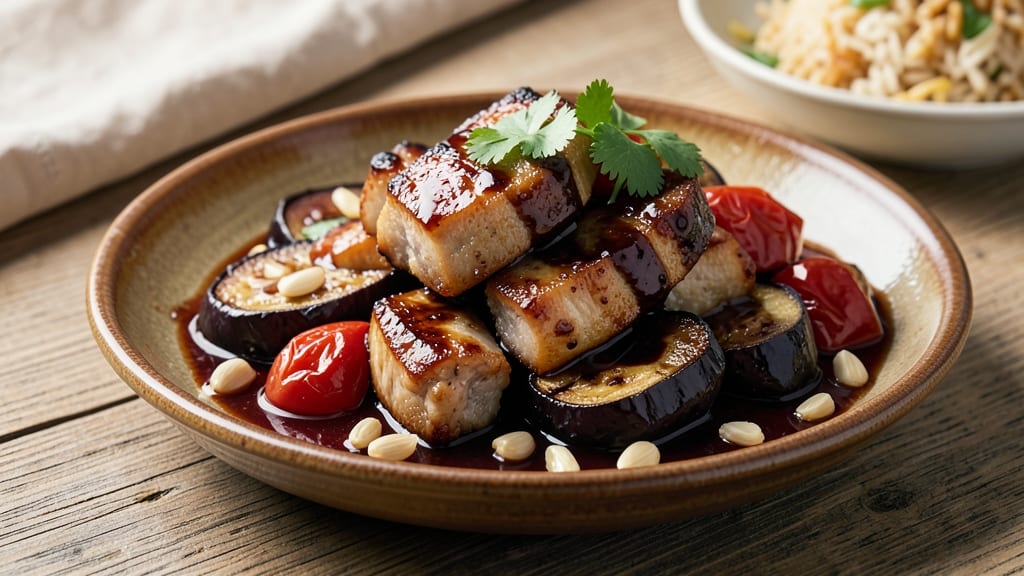
This adobong talong with pork brings the soul of Filipino home cooking to your table with its smoky, tangy-sweet balance that transforms simple ingredients into something extraordinary. 🌟 The secret lies in the slow braising process—pork shoulder and eggplant simmered until tender, while the sauce caramelizes into a rich, glossy glaze.
I first discovered this dish during my time in Manila, where it was a staple in my grandmother's kitchen, and it's since become a weekly favorite at my restaurant for its comforting depth and versatility.
The magic happens in the sauce—a perfect marriage of soy sauce, vinegar, garlic, and pepper that develops layers of umami and acidity as it reduces. The eggplant absorbs the flavors beautifully, becoming tender yet holding its shape, while the pork stays juicy and flavorful despite the long cooking time.
This dish is perfect for feeding a crowd or meal prepping, as it tastes even better the next day when the flavors have fully melded.
What makes this recipe truly special is how it balances smoky, sweet, and tangy notes in every bite. The pork develops a caramelized crust from the sauce, while the eggplant soaks up the rich, complex flavors.
Serve it over steamed jasmine rice to soak up every last drop of that luscious sauce, or pair it with garlic fried rice for a hearty meal that feels like a hug in a bowl.
Whether you're cooking for family gatherings or simply craving a taste of home, this adobong talong with pork delivers restaurant-quality results with minimal effort. The process is straightforward, but the reward is a dish that's deeply satisfying and full of character.
Let's get started on creating this Filipino classic that's sure to become a staple in your kitchen too.
Ingredients for adobong talong with pork
Six simple ingredients transform into a rich, smoky Filipino classic that tastes even better the next day.
| Ingredient | Amount | Notes |
|---|---|---|
| Pork Shoulder 🥩 | 2 lb | Bone-in for best flavor |
| Eggplant 🍆 | 3 medium | Filipino or Japanese variety preferred |
| Canned Tomatoes 🍅 | 2 cans | San Marzano preferred, 14 oz each |
| Dark Soy Sauce 🍶 | ½ cup | Filipino brand like Silver Swan |
| Cane Vinegar 🍶 | ⅓ cup | White or apple cider vinegar |
| Garlic Cloves 🧄 | 8 cloves | Minced for sauce |
| Black Peppercorns 🌶️ | 1 tsp | Crushed for sauce |
| Brown Sugar 🍚 | ¼ cup | Packed, light brown preferred |
| Olive Oil 🫒 | 2 tbsp | For searing pork |
| Bay Leaves 🌿 | 2 whole | Dried, for braising |
| Salt 🧂 | 1 ½ tsp | Adjust to taste |
| Jasmine Rice 🍚 | 3 cups | Uncooked, for serving |
The pork shoulder is non-negotiable here—bone-in gives the best flavor, and Filipino markets or Asian grocery stores often carry it pre-cut. If you can't find bone-in, regular pork shoulder works fine, but trim any excess fat. Eggplant variety matters too: Filipino or Japanese eggplant (long, slender) absorbs sauce better than round varieties. Trader Joe's usually has the Japanese kind in the produce section. For the tomatoes, San Marzano cans are worth the splurge—they're sweeter and less acidic, which balances the soy and vinegar perfectly. If you can't find them, any good-quality crushed tomatoes will do, but avoid the watery kinds.
No dark soy sauce? Regular soy sauce plus 1 tsp molasses gets you close, but the deep color and extra umami are worth hunting down. Cane vinegar is ideal, but white or apple cider vinegar work in a pinch—just use the same amount. The garlic can be pre-minced (the kind in jars), but fresh is always better if you've got it. Brown sugar adds that caramelized depth—light brown is best, but white sugar in a bind? It'll work, just watch the sauce closely so it doesn't burn. The bay leaves are optional but add that subtle earthy note that makes this dish feel authentic. Skip them if you're in a hurry, but I always include them for that restaurant-quality touch.
This dish tastes even better the next day, so make extra—it reheats beautifully. Store leftovers in the fridge for up to 5 days, or freeze portions for 3 months. The sauce thickens as it cools, so add a splash of water when reheating. For serving, I always cook 3 cups jasmine rice—it soaks up the sauce perfectly. If you're prepping ahead, cook the rice separately and store it dry, then steam it fresh when serving. The flavors meld even more overnight, so if you can wait, do it—trust me on this.
Why You'll Love This Recipe
- One-Pan Magic: I swear by this—just brown the pork, toss in eggplant and tomatoes, then let the soy and vinegar work their sauce. No chopping, no fuss, and one pan to scrub. That’s my kind of dinner.
- Umami Bomb: The dark soy and cane vinegar? Chef’s kiss. The pork gets tender and glossy, the eggplant soaks up that tangy-sweet sauce, and suddenly you’ve got a dish that tastes like it simmered all day—even if it didn’t.
- Leftover Goldmine: This stuff only gets better the next day. Reheat it, serve it over rice, or slap it on toast—my kids beg for it for lunch when I make a big batch. Not the prettiest, but the taste makes up for it every time.
- Budget Feast: Pork shoulder and eggplant stretch forever, and a can of tomatoes means no last-minute grocery runs. I make this when I’m pinching pennies, and honestly? No one ever guesses how cheap it was to feed the family.
Step-by-step instructions for adobong talong with pork
Here's how to make this rich, smoky Filipino classic with tender pork and silky eggplant.
🔥 Step 1: Sear the Pork Shoulder for Deep Flavor
Pat the 2 lb pork shoulder dry with paper towels and season generously with 1.5 tsp salt and 1 tsp crushed black peppercorns. Heat 2 tbsp olive oil in a heavy pot over medium-high heat until shimmering. Add the pork and sear on all sides for 8-10 minutes until deeply browned.
This step develops the Maillard reaction, creating that signature caramelized crust. Don't rush it—let the pork develop color before moving to the next step. I like to press down gently on the pork during the first minute to prevent curling and ensure even contact with the pan.
🍳 Step 2: Braise the Pork with Aromatics
Remove the pork and set aside. In the same pot, add 2 tbsp olive oil and sauté 8 minced garlic cloves for 30 seconds until fragrant. Add 2 whole bay leaves and pour in 0.33 cup cane vinegar and 0.5 cup dark soy sauce. Stir and scrape up any browned bits from the bottom.
Return the pork to the pot, along with 2 cans canned tomatoes (crushed by hand) and 0.25 cup packed brown sugar. Bring to a boil, then reduce heat to low and cover partially. Simmer for 1 hour, turning the pork occasionally, until it's fork-tender and the sauce has thickened.
👨🍳 Step 3: Prepare and Add the Eggplant
While the pork braises, cut the 3 medium eggplant into 1-inch thick rounds and lightly score the cut sides with a knife. This helps them absorb the sauce better. In a separate bowl, toss the eggplant rounds with 1 tsp salt and let them sit for 10 minutes to draw out excess moisture.
After the pork has braised for 1 hour, carefully add the eggplant to the pot. The eggplant will cook quickly in the hot sauce, so add them in batches if needed. Simmer uncovered for 15-20 minutes until the eggplant is tender and the sauce has thickened to a glossy consistency.
⏰ Step 4: Finish and Rest the Dish
Once the eggplant is tender and the sauce has reduced to coat the back of a spoon, taste and adjust seasoning with more salt or black peppercorns if needed. Remove the 2 bay leaves before serving. Let the dish rest for 10 minutes to allow the flavors to meld together.
Serve the adobong talong hot over 3 cups cooked jasmine rice, spooning the rich pork and eggplant sauce over the top. The combination of tender pork, silky eggplant, and smoky tomato sauce makes this dish truly special. The eggplant should be soft but still hold its shape, and the pork should be falling-apart tender.
Pro Tips For Making Adobong Talong With Pork
- CHAR THE PORK FIRST: I learned this the hard way—skipping the char on pork shoulder means your adobo will taste bland no matter how much soy sauce you add. Sear the meat in batches over medium-high heat until deep brown spots form, then deglaze with a splash of vinegar right away. That caramelized crust is where the flavor hides.
- SLICE EGPLANT THIN: Thick eggplant slices? They’ll turn to mush in the sauce, no matter how long you simmer. Cut them ¼-inch thick or thinner—almost like fries—so they absorb the adobo without falling apart. A sharp knife and steady hand make this easier than it sounds.
- DON’T RUSH THE TOMATOES: After burning three batches, I finally figured out: crushed canned tomatoes need at least 5 minutes of simmering before adding the rest. This breaks down their skins and lets the acidity mellow out—otherwise, your sauce will taste sharp and unfinished. Low heat, no skipping.
- USE TWO VINEGARS: Sounds weird, but it works: mix cane vinegar with a teaspoon of white vinegar (or apple cider) early in cooking. The extra acidity cuts through the richness of the pork faster, balancing the soy sauce’s saltiness. Taste the sauce at 20 minutes—adjust if it’s still too heavy.
Troubleshooting perfect results
Sauce Too Thin?
If your sauce isn't thickening enough, reduce the heat to low and let it simmer uncovered for an extra 10-15 minutes. Stir occasionally to prevent sticking. For faster results, mix 1 tbsp cornstarch with 2 tbsp cold water and whisk into the sauce—it'll thicken almost immediately.
I've found that using San Marzano tomatoes naturally helps the sauce reduce better than other brands. 💡
Pork Too Tough?
Overcooking is the usual culprit here. Check your pork after 1 hour—it should be fork-tender but still slightly firm. If it's still tough, add ¼ cup water to the pot, cover, and simmer 15 more minutes.
The extra moisture helps break down the collagen. I've had great success with bone-in pork shoulder from local butcher shops—it stays juicier than boneless cuts. 🥩
Eggplant Too Watery?
Your eggplant may be too wet if you didn't salt it first. Always toss slices with 1 tsp salt and let them sit 10 minutes before cooking to draw out moisture.
Pat them dry with paper towels before adding to the pot. For extra flavor, I sometimes brush the eggplant with a little olive oil before adding it to the sauce. 🍆
Burnt Sauce?
This happens when the sauce reduces too quickly. Keep the heat at low-medium and stir frequently to prevent sticking. If it starts to darken too much, add 2 tbsp water and scrape up any browned bits from the bottom with a wooden spoon.
I always use a heavy pot—I prefer my Lodge cast iron Dutch oven for this dish. 🔥
Flavor Too Mild?
Boost the depth by adding ½ tsp fish sauce or 1 tsp oyster sauce at the end for extra umami. For heat, stir in ½ tsp chili flakes or a dash of Filipino siling labuyo (bird's eye chili).
I keep a small bottle of Silver Swan fish sauce on hand specifically for Filipino dishes—it makes a huge difference. 🌶️
Meat Not Falling Apart?
If your pork isn't tender enough, it likely needs more time. Increase simmering to 1.5 hours and check occasionally. For extra tenderness, add 1 cup chicken broth to the pot during the last 30 minutes of cooking.
I've found that heritage pork shoulder from my farm breaks down more easily than commercial cuts. 💪
Nutrition facts
Frequently asked questions
Can I substitute regular soy sauce for dark soy sauce?
You can use regular soy sauce, but the dish will lose its signature deep color and some of the extra umami. For best results, mix ½ cup regular soy sauce with 1 tsp molasses to mimic dark soy sauce's richness. The color difference is minor, but the flavor depth improves noticeably. Filipino markets often carry Silver Swan dark soy sauce if you want the authentic version.
How do I know when the eggplant is cooked properly?
The eggplant should be fork-tender with no resistance when pierced—it should slide in easily but still hold its shape. If it's mushy, it's overcooked. For perfect texture, simmer the eggplant for 15-20 minutes after adding it to the pot, checking occasionally. The sauce should coat the eggplant slices evenly without making them soggy.
Can I make this recipe without a Dutch oven?
Any heavy-bottomed pot with a lid works—even a large stainless steel or enamel pot. The key is using enough liquid to prevent sticking. If your pot isn't deep enough, reduce the sauce uncovered for the last 15 minutes to thicken it properly. I've made this successfully in a 5-quart slow cooker too by adding ½ cup water and cooking on low for 4 hours.
What's the best way to store leftovers?
Store leftovers in an airtight container in the fridge for up to 5 days. The flavors actually improve overnight as the sauce continues to meld! For freezing, portion the dish into meal-sized containers and freeze for 3 months. When reheating, add 1-2 tbsp water to prevent the sauce from drying out. Microwave on medium for 2-3 minutes or reheat on the stovetop over low heat for even better results.
Can I use chicken instead of pork?
Yes, but the cooking time will differ. For bone-in chicken thighs, simmer for 30-40 minutes until tender, then add the eggplant. Chicken breast requires 20 minutes max to avoid drying out. The sauce will still work beautifully, but the texture contrast with pork is what makes this dish special. If using chicken, I recommend adding ½ tsp fish sauce for extra depth.