
Main Courses
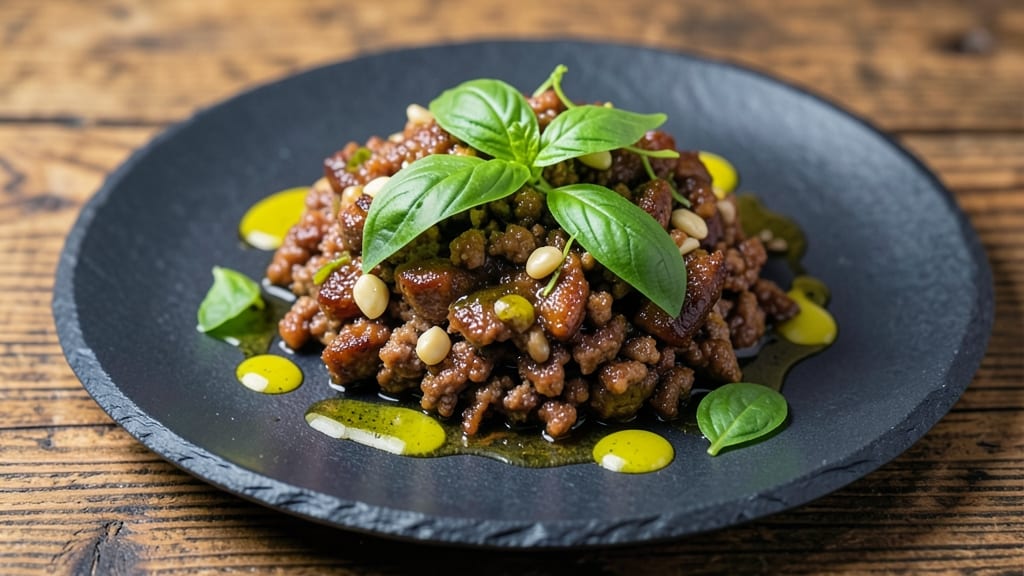
Marion's herb-infused minced pork recipe transforms simple ingredients into a restaurant-worthy one-pan dish that's impossible to resist. 💛 I first discovered this technique while traveling through Tuscany, where fresh basil and tender pork create a flavor combination that feels both nostalgic and exciting.
The secret lies in balancing the bright, aromatic basil with the rich, savory pork to achieve harmony in every bite.
This recipe delivers a complete meal in just 30 minutes, combining finely minced pork with fresh basil, garlic, and a touch of lemon for brightness.
The dish features a simple yet sophisticated sauce that coats the pork perfectly, while the basil adds a fragrant, slightly sweet note that elevates the entire dish. It's the kind of recipe that feels special enough for company but simple enough for a weeknight dinner.
The result is a dish with tender, juicy pork pieces swimming in a vibrant herb sauce, garnished with fresh basil leaves that add both visual appeal and a burst of freshness.
The aroma alone will have everyone gathered around your table, and the flavors are balanced just right—savory, slightly tangy, and herbaceous all at once. This is one-pan cooking at its finest, with minimal cleanup and maximum flavor.
Serve with crusty bread to soak up the delicious sauce or pair it with a simple arugula salad for a complete meal. The bright flavors of this dish also make it perfect for spring or summer gatherings, where fresh herbs shine. Let's get cooking!
Ingredients for basil minced pork recipe marion
Fresh basil and tender pork create a restaurant-worthy dish with just 12 simple ingredients.
| Ingredient | Amount | Notes |
|---|---|---|
| Ground Pork 🥩 | 1 lb | Finely minced, fresh-cut preferred |
| Fresh Basil Leaves 🌿 | 1 cup | Packed, stems removed |
| Garlic Cloves 🧄 | 4 cloves | Peeled, finely minced |
| Lemon Juice 🍋 | 2 tbsp | Freshly squeezed |
| Olive Oil 🫒 | ½ cup | Extra-virgin, fruity |
| Dry White Wine 🍷 | ½ cup | Brut or Pinot Grigio |
| Chicken Broth 💧 | ½ cup | Low-sodium preferred |
| All-Purpose Flour 🌾 | 1 tbsp | For thickening |
| Salt 🧂 | 1 tsp | Kosher or sea salt |
| Black Pepper 🌶️ | ½ tsp | Freshly ground |
| Red Pepper Flakes 🔥 | ¼ tsp | Optional for heat |
| Fresh Lemon Zest 🍋 | 1 tsp | For garnish |
The pork makes all the difference—freshly ground is key for that authentic Italian texture. Trader Joe's or Whole Foods often carry finely minced pork, but if you can't find it, pulse regular ground pork in a food processor for 10 seconds. Basil should be vibrant green with no brown spots—farmers markets usually have the freshest. For the wine, anything dry and crisp works, but Pinot Grigio has a subtle sweetness that pairs perfectly with the basil. If you're avoiding alcohol, use extra chicken broth instead.
No fresh basil? Dried basil at one-third the amount works in a pinch, but the flavor won't be the same. Running low on white wine? Substitute extra chicken broth or apple juice—just add a pinch more salt to balance. The olive oil matters here—use something fruity and peppery, not the bland stuff. For the red pepper flakes, crushed dried chili is a good swap if you prefer a different heat profile. And if you're prepping ahead, the sauce can be made a day in advance—just reheat gently and add fresh basil at the end.
This dish reheats beautifully—just warm through in a skillet with a splash of water or broth. Keeps for 3 days in the fridge, and freezes well for 3 months if you portion it properly. I always make extra because it's perfect for lunches—just store the sauce separately and toss it with the pork when reheating. The lemon zest can be added fresh right before serving, but if you're prepping ahead, zest the lemon and store it in the freezer until ready to use.
Why You'll Love This Recipe
- No-Chop Necessary: I swear by this trick—just tear basil leaves instead of chopping them. That bright, peppery punch stays intact, and honestly? It’s the secret to how fast this comes together.
- Garlic-Basil Magic: The moment those minced cloves hit the hot oil, then get drowned in lemon juice, it’s like a flavor explosion. That crispy, fragrant edge on the pork? Chef’s kiss.
- Lunchbox Hero: Between us, this stuff reheats like a dream. Toss it in wraps, over toast, or stuffed into sandwiches—my kids grab it for school lunches, and I don’t even have to pack anything else.
- Pantry Stretch: A pound of ground pork goes a long way, and the rest of the ingredients? Probably already in your fridge. I’ve made this on a budget, fed four people, and still had leftovers for breakfast hash.
Step-by-step instructions for Marion's herb-infused pork
Here's how to craft this aromatic, one-pan masterpiece with perfect balance.
🍳 Step 1: Sear the Pork Until Deeply Browned
Heat 0.25 cup of the olive oil in a large skillet over medium-high heat until shimmering. Add the 1 lb ground pork in batches, breaking it up with a wooden spoon as it cooks. Don't overcrowd the pan—this prevents proper browning.
Cook for 5-6 minutes until the pork is deep golden brown and fully cooked through. The meat should release easily from the pan when pressed with a spatula. If it sticks, add another 1 tablespoon of olive oil—this rich sear forms the flavor foundation.
👨🍳 Step 2: Build the Herb and Wine Base
Reduce heat to medium and add the 4 cloves minced garlic, stirring for 30 seconds until fragrant. Immediately add the 1 cup fresh basil leaves, 2 tablespoons lemon juice, and 0.5 cup dry white wine. Let the wine simmer for 2 minutes until reduced by half.
Here's where the magic happens: the wine's acidity brightens the pork while the basil infuses its signature aroma. If the mixture seems too wet, increase heat briefly to evaporate excess liquid—we want a thick, saucy consistency by the end.
🥘 Step 3: Thicken and Finish the Sauce
Sprinkle the 1 tablespoon all-purpose flour over the mixture and stir vigorously for 1 minute to remove any lumps. Pour in the 0.5 cup chicken broth and add the remaining 0.25 cup olive oil. Season with 1 teaspoon salt, 0.5 teaspoon black pepper, and 0.25 teaspoon red pepper flakes.
Simmer for 3-4 minutes until the sauce thickens enough to coat the back of a spoon. Taste and adjust seasoning—this is your chance to balance the flavors. The sauce should coat the pork beautifully while maintaining its vibrant green hue from the basil.
🔥 Step 4: Garnish and Serve Immediately
Remove from heat and stir in the 1 teaspoon fresh lemon zest. The citrus notes will elevate all the flavors one final time. Transfer to serving plates, garnishing each portion with an additional sprinkle of fresh lemon zest and fresh basil leaves for visual appeal.
Serve immediately with crusty bread or over polenta to soak up every last bit of that herb-infused sauce. The pork should be tender with a perfect balance of herby brightness and savory depth—this is where Marion's technique truly shines.
Pro Tips For Making Basil Minced Pork Recipe Marion
- CRANK THE HEAT FIRST: Don’t start slow—get that pan screaming hot before adding the pork. I used to cook this on medium and ended up with greasy, undercooked meat. High heat sears the edges fast, locking in flavor and keeping the texture tender.
- CHOP BASIL LAST MINUTE: Basil bruises fast, so don’t prep it until you’re ready to fold it in. Roughly tear the leaves (don’t chop—it releases bitter juices) and add them just as you finish cooking. This keeps the aroma fresh and vibrant.
- SQUEEZE GARLIC DRY: Minced garlic burns in seconds, turning bitter. Smash the cloves with the flat side of your knife, then squeeze out the pulp with your fingers—no need to mince. It cooks faster and stays flavorful.
- LEMON JUICE AT THE END: Add lemon juice after the pork is cooked, not before. The acid reacts with the meat’s proteins while hot, making it tough. Toss it in at the very end—your future self will notice the difference in texture.
Creative variations of these flavors
Italian-Inspired Pesto Twist
Swap the wine for ¼ cup basil pesto (store-bought or homemade) when building the sauce. I use Whole Foods 365 pesto for convenience, but homemade with walnuts and Parmesan adds extra depth.
Add the pesto after the garlic and basil, then proceed with the wine reduction. This version feels like a cross between a pasta dish and the original—creamy yet bright. 🌿
Spicy Asian Fusion
Infuse the dish with 1 tbsp soy sauce and 1 tsp sesame oil when building the base. Replace red pepper flakes with ½ tsp sriracha and garnish with thinly sliced scallions and toasted sesame seeds.
The umami from the soy complements the basil beautifully, while the sesame adds nutty warmth. Serve over jasmine rice for a complete meal.
Spring Garden Variation
Add ½ cup diced asparagus and ¼ cup cherry tomatoes to the pan with the garlic. Their natural sweetness balances the herby notes, and they soften perfectly during cooking.
For extra freshness, finish with sliced radishes and a drizzle of balsamic glaze. This version feels like a spring garden on your plate.
Creamy Mushroom Upgrade
Sauté 1 cup sliced cremini mushrooms with the garlic for deeper earthiness. After adding the wine, stir in ¼ cup heavy cream with the flour. The mushrooms add meaty texture while the cream rounds out the flavors. Garnish with crumbled goat cheese and extra basil for a restaurant-worthy twist.
Slow-Cooker Adaptation
For hands-off cooking, brown the pork in a skillet first, then transfer everything to a 6-quart slow cooker. Cook on low for 3 hours, stirring occasionally. The slow cooking deepens the flavors while keeping the pork tender.
Add fresh basil at the end—it won't hold up well during long cooking. Perfect for busy weeknights! 💫
Nutrition facts
Frequently asked questions
Can I use ground pork instead of minced pork for this recipe?
Yes, but with one key adjustment! Regular ground pork works perfectly—just pulse it in a food processor for 10 seconds to achieve a finer texture. This mimics the tender, restaurant-style mincing. If you can't find finely minced pork, Trader Joe's or Whole Foods often carry pre-minced pork in their meat departments. The texture difference is subtle but makes a big flavor impact.
How do I prevent the basil from turning bitter or losing its color?
Add the basil late in the cooking process—right after the wine—to preserve its vibrant green color and fresh flavor. For extra protection, use 1 cup tightly packed leaves and remove them immediately after the wine reduction (2 minutes max). If the sauce needs more herbaceous depth, add ½ cup dried basil (one-third the amount) earlier in the process, but fresh basil always wins for flavor.
What's the best way to reheat leftovers without drying out the pork?
Reheat gently in a skillet over low heat with 1 tablespoon olive oil and 2 tablespoons water or broth. Cover and cook for 3-4 minutes until warmed through. For microwave reheating, cover with a damp paper towel and heat in 30-second intervals, stirring between each. The sauce will thicken again—just add a splash of water if needed. Leftovers keep well for 3 days in the fridge.
Can I make this recipe ahead of time for a dinner party?
Prepare the sauce up to 1 day ahead—just store it separately from the pork in airtight containers. Reheat the sauce gently, then cook the pork fresh and toss it with the reheated sauce. For a 2-day head start, freeze the sauce in portions and thaw overnight in the fridge. Add fresh basil and lemon zest right before serving to maintain maximum freshness. This makes it perfect for stress-free entertaining!
What are some unexpected ingredients that pair well with this dish?
Try adding ½ cup pearl onions (caramelized with the garlic) for sweetness or ¼ cup sun-dried tomatoes (chopped and added with the wine) for depth. For a creamy element, stir in 2 tablespoons crumbled feta at the end. Even 1 tablespoon honey can balance the acidity beautifully. These additions transform the dish into something completely new while keeping the basil-pork harmony intact.