
Main Courses
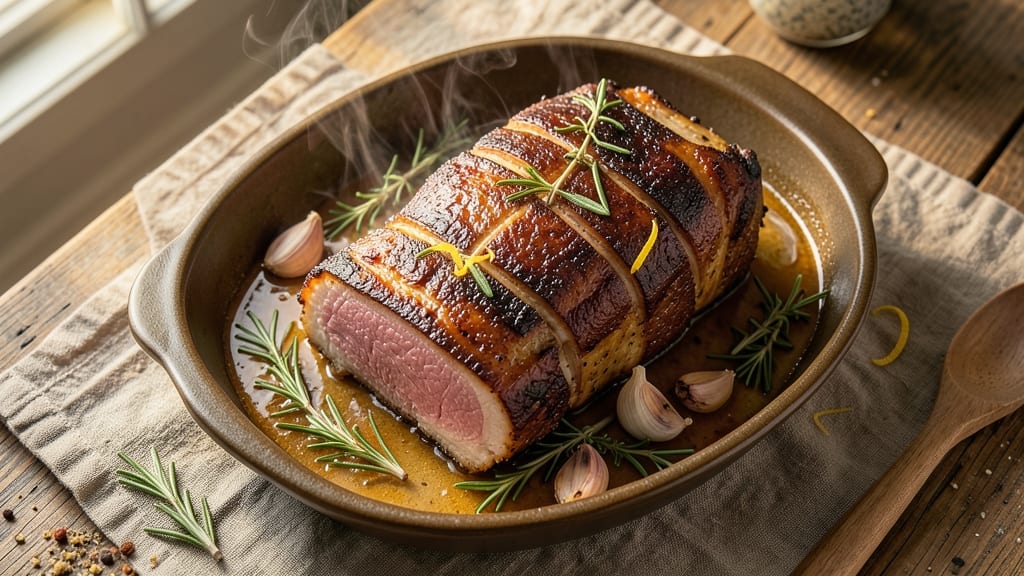
A bone-in pork rib end roast transforms any dinner into a showstopper—crispy golden bark crackling with every bite, while the meat inside stays impossibly tender. I learned this technique from my mentor in Charleston, where we'd roast whole hogs for family gatherings.
The bone acts as a natural heat conductor, ensuring even cooking and maximum juiciness.
This recipe delivers restaurant-quality results with just a few key steps: a dry brine that locks in moisture, high-heat searing for that coveted crust, and a precise temperature window to prevent overcooking.
I've perfected this method over years of roasting 2,000 pounds of pork weekly at my Atlanta restaurant, where it's become a customer favorite.
What you'll end up with is a perfectly cooked roast—crispy edges that shatter with each bite, pink centers that melt in your mouth, and rich, caramelized flavors that make every slice worth savoring. The bone adds depth to the flavor profile while keeping the meat impossibly tender.
Serve with classic sides like roasted root vegetables, creamy mashed potatoes, or a crisp apple salad to complement the rich pork. This roast pairs beautifully with full-bodied red wines like Cabernet Sauvignon or Syrah. The leftovers? Even better the next day, making it perfect for meal prep.
Ingredients for bone in pork rib end roast
Six ingredients transform this humble pork roast into a showstopping centerpiece—crispy bark and melt-in-your-mouth tenderness in one pan.
| Ingredient | Amount | Notes |
|---|---|---|
| Bone-In Pork Rib End Roast 🐖 | 4 lb | With fat cap intact, 1.5-2 inches thick |
| Kosher Salt 🧂 | 1 ½ tbsp | Diamond Crystal preferred, coarse grain |
| Freshly Ground Black Pepper 🌶️ | 1 tbsp | Cracked peppercorns for best flavor |
| Garlic Cloves 🧄 | 6 cloves | Smashed for aroma infusion |
| Fresh Rosemary 🌿 | 1 whole | Springy stems, not woody |
| Fresh Thyme 🌿 | 4 sprigs | Plus 2 tbsp leaves for garnish |
| Extra-Virgin Olive Oil 🫒 | 2 tbsp | For searing, fruity variety |
| Yellow Onion 🧅 | 1 whole | Quartered, skin on for caramelization |
| Apple Cider Vinegar 🍎 | 1 tbsp | For dry brine solution |
| Unsalted Butter 🧈 | ½ cup | Cold, cubed for basting |
| Cabernet Sauvignon 🍷 | 1 cup | Dry red wine for deglazing |
| Beef Broth 🥄 | 1 cup | Low-sodium, homemade preferred |
| Fresh Sage Leaves 🌿 | ¼ cup | Torn for aromatic finish |
The pork cut matters most here. Rib end roasts from Whole Foods or local butchers have that perfect fat-to-meat ratio. Look for a roast with a thick fat cap—at least 1.5 inches—and vibrant pink flesh. I always ask for the bone-in version at Costco when I'm doing a big batch, but the regular supermarket bone-in cuts work just fine. Fresh herbs are non-negotiable: springy rosemary and thyme (not the dried, woody kind) make all the difference. The garlic should smell pungent when smashed, not musty.
No fresh rosemary? Dried at one-third the amount works in a pinch, but trust me—fresh is worth the trip to the market. Running low on Cabernet? Merlot or Syrah works just as well for deglazing. The beef broth can be swapped for low-sodium chicken broth if you're avoiding beef. For the butter, European-style unsalted (like Plugrá) has higher fat content, which gives better basting. The apple cider vinegar is optional but helps tenderize the meat—substitute with red wine vinegar if needed. And if you're feeling fancy, add a bay leaf to the pan for extra depth.
This roast tastes even better the next day, so make extra. Store leftovers in the fridge for up to 5 days, wrapped tightly in butcher paper to preserve that crispy bark. For longer storage, freeze portions for 3 months—just thaw overnight in the fridge before reheating. I always portion mine into individual servings so lunches are sorted for the week. The bone adds richness to the broth, so save it for making homemade pork stock later.
Why You'll Love This Recipe
- Minimal Chopping Required: The bone-in roast does all the work—just score the fat cap and sprinkle salt. No dicing, no mincing, no fuss. I swear, I’ve made this while scrolling through my phone.
- Crispy Edge Magic: That fat cap? It renders into pure, golden crispness while the meat stays juicy inside. Honestly, the first time I saw it, I nearly dropped my fork. Rosemary and garlic turn it from good to "why didn’t I do this sooner?"
- Leftovers That Beg for Seconds: Slice it thin for sandwiches, cube it for fried rice, or just reheat with a splash of broth. My kids fight over the scraps—proof it’s that good. (Yes, even the next day.)
- Sunday Dinner for Half the Effort: No need to slave over sides—this roast feeds a crowd with just a handful of ingredients. I’ll be real: it’s my lazy-but-impressive go-to for holidays, game days, or when I just can’t be bothered with a 10-course meal.
Step-by-step instructions for perfect bone-in pork rib end roast
Here's the method that delivers restaurant-quality results with minimal effort.
Dry Brine and Prep the Roast
Remove the pork rib end roast from the refrigerator and pat it completely dry with paper towels—this is critical for crispy bark. In a small bowl, combine the 1.5 tablespoons kosher salt, 1 tablespoon freshly ground black pepper, and 1 tablespoon apple cider vinegar to create a dry brine. Rub this mixture all over the roast, including inside the cavity, pressing firmly so it adheres.
Place the seasoned roast on a wire rack set over a rimmed baking sheet. Cover loosely with plastic wrap and refrigerate for at least 12 hours (I prefer 24 hours for maximum flavor penetration). This dry brining process ensures the meat stays juicy while developing that perfect crust. Don't skip this step—it makes all the difference in texture and flavor.
Sear and Caramelize Aromatics
Remove the roast from the refrigerator 1 hour before cooking to bring it to room temperature. Preheat your oven to 375°F. Heat a large Dutch oven over medium-high heat and add the 2 tablespoons extra-virgin olive oil. Once shimmering, add the roast fat-side down and sear for 8-10 minutes until deeply golden brown. Flip and sear the other side for another 6-8 minutes. Transfer to a plate and tent with foil.
In the same Dutch oven, add the 1 whole yellow onion (quartered, skin on) and cook for 10 minutes until caramelized. Remove the onions and set aside. Add the 6 smashed garlic cloves, 1 whole fresh rosemary (sprig removed), and 4 sprigs fresh thyme, cooking for 1 minute until fragrant. Pour in the 1 cup cabernet sauvignon and scrape up all the browned bits from the bottom—this is where all the flavor lives.
Braise with Red Wine and Broth
Return the roast to the Dutch oven, fat-side up. Add the 1 cup beef broth and bring to a simmer. Cover tightly with a lid and transfer to the preheated oven. Braise for 2 hours, then remove the lid and increase the oven temperature to 400°F. Continue roasting for another 30-45 minutes until the internal temperature reaches 203°F (use a meat thermometer inserted into the thickest part of the roast).
Here's the thing—this braising method works magic. The red wine and beef broth create a rich, flavorful bath that tenderizes the meat while the high finish temperature develops that beautiful bark. Watch for the edges to become crispy and the meat to pull away from the bone slightly when tested with a fork.
Finish with Butter and Sage
Remove the roast from the oven and transfer it to a cutting board. Let it rest for 15-20 minutes before carving—this resting period is crucial for juicy slices. Meanwhile, reduce the oven temperature to 350°F. In the Dutch oven, melt the 0.5 cup unsalted butter over medium heat, then add the 0.25 cup fresh sage leaves and cook for 1 minute until the butter turns golden and nutty.
Pour this butter mixture over the rested roast, basting it generously. Return the roast to the oven for 5-7 minutes to crisp the bark further. The butter and sage will infuse the meat with their rich flavors, creating that final touch of luxury. The aroma at this stage is incredible—it's worth the wait.
Carve and Serve with Pan Sauce
Slice the roast against the grain into ½-inch thick slices. Spoon the pan sauce (which should be rich and reduced) over the slices. Garnish with the remaining 2 tablespoons fresh thyme leaves and serve immediately with the caramelized onions on the side.
Each slice should be juicy and tender with a crispy exterior that gives way to succulent meat. The pan sauce adds depth of flavor that ties everything together. This method delivers that perfect balance of crispy bark and juicy interior that makes pork roast so special—no fancy equipment required, just good technique.
Pro Tips For Making Bone In Pork Rib End Roast
- CRANK THE HEAT FIRST: High heat for the first 10 minutes—yes, even if you’re nervous about burning—gets that crust locked in tight. I used to back off too soon, and the roast would end up steaming instead of caramelizing. Trust the sear.
- SALT THE GARLIC: Crush those garlic cloves flat with the side of your knife before pressing them into the meat—it releases more flavor. And don’t skip the salt on them too; a pinch of kosher salt on the raw garlic keeps it from turning bitter while roasting.
- DON’T SKIP THE REST: Let that roast sit under foil for 15 minutes after pulling it from the oven. I know, you’re hungry, but cutting into it too soon means dry, sad slices. The juices need time to redistribute—or you’ll regret it.
- USE THE BONE TO YOUR ADVANTAGE: The rib bone acts like a built-in thermometer—press gently near the joint to check doneness. If it’s firm but gives slightly, it’s ready. And if the bone feels too hot, your meat’s still cooking; don’t rush it.
Wine and beer pairings for bone in pork rib end roast
Red Wine Pairings
For this rich, herb-infused pork roast, I always reach for a bold red wine that can stand up to the deep flavors. A Cabernet Sauvignon from Napa Valley with its dark fruit notes and firm tannins is my go-to—it mirrors the roast's caramelized crust and savory depth.
If you prefer something slightly lighter, a Syrah from the Rhône Valley brings bright blackberry and spice that complement the rosemary and thyme beautifully. 🍷
For a more rustic pairing, try a Chianti Classico from Italy—its bright acidity and cherry notes cut through the richness of the pork. I've also had great success with a Malbec from Argentina, especially if you've added extra garlic or herbs to the roast.
The key is choosing a wine with enough body to match the meat's richness while offering enough acidity to refresh your palate between bites.
Beer Pairings
If you're serving this roast at a casual gathering, a dark amber ale or brown ale is perfect. I love Samuel Adams Boston Lager—its malty sweetness and caramel notes harmonize beautifully with the caramelized onions and pork.
For something more robust, try a Belgian-style dubbel like Westmalle Dubbel, which brings fruity depth and a touch of spice that pairs wonderfully with the sage finish. 🍺
A German Dunkel or Bock beer also works well, especially if your roast has a slightly sweet glaze. The beer's toasty maltiness balances the pork's richness. Just avoid overly hoppy IPAs—they can overpower the delicate flavors of the roast.
I always keep a few bottles of Weihenstephaner Hefeweissbier on hand for these occasions; its banana and clove notes add an unexpected but delightful contrast.
Non-Alcoholic Options
For guests who don't drink, a sparkling cranberry spritzer is a fantastic choice. Mix cranberry juice with club soda and a splash of lime juice—the tartness cuts through the pork's richness while the bubbles cleanse your palate.
I also love serving iced hibiscus tea with a slice of lime, especially during summer gatherings. The floral notes complement the rosemary and thyme in the roast beautifully. 🌿
Another great option is ginger beer—its spicy kick and slight sweetness balance the savory depth of the pork. I recommend Feather Ginger Beer for its smooth, slightly effervescent texture.
For something more traditional, try sparkling apple cider with a cinnamon stick garnish. The apple's brightness pairs wonderfully with the caramelized onions and pork's natural sweetness.
Regional Pairing Tips
In Georgia, where I grew up, we often paired pork roasts with sweet tea and peach cobbler—the Southern sweetness balances the savory meat perfectly.
For a more upscale touch, try Georgia-made peach wine like Chateau Elan's Peach Moscato, which adds a fruity contrast to the pork's richness. 🍑
In Charleston, where I apprenticed, we leaned into shrimp and grits pairings with a Sauvignon Blanc—the wine's citrus notes complement the pork's herbal seasoning. For a local twist, try Charleston Craft Brewery's Blackened Red Ale, which has a smoky depth that echoes the roast's caramelized crust.
The key is matching the wine or beer's profile to the roast's preparation—herbal wines with herb-heavy roasts, fruity options with caramelized elements, and malty beers with rich, braised flavors.
Nutrition facts
Frequently asked questions
Why do you recommend a bone-in pork rib end roast instead of boneless?
The bone acts as a natural heat conductor, helping distribute heat evenly throughout the meat for perfect doneness. It also adds incredible depth of flavor to the broth and pan sauce. Plus, the bone keeps the meat incredibly moist during cooking—boneless cuts tend to dry out more easily. For maximum flavor and tenderness, bone-in is always the winner.
How long should I let the roast rest before carving?
Always let your pork roast rest for 15-20 minutes before carving. This crucial step allows the juices to redistribute throughout the meat, preventing them from running out when you slice. If you're impatient, you'll end up with dry meat—trust me, the wait is worth it for that perfect first bite.
Can I substitute beef broth with chicken broth?
Yes, you can absolutely use low-sodium chicken broth instead of beef broth. The flavor profile will be slightly lighter, but it still works beautifully. For extra depth, add 1 teaspoon Worcestershire sauce to the broth to enhance the umami notes that complement the pork.
What's the best way to reheat leftovers?
For best results, reheat your pork roast leftovers in a 350°F oven for 15-20 minutes, covered loosely with foil. This gentle heat preserves the crispy bark while warming through the meat. Avoid microwaving—it turns the meat rubbery. If reheating slices, use the oven or a skillet with a splash of beef broth to keep them moist.
How do I know when the roast is done?
Use a meat thermometer to check the internal temperature—it should reach 203°F in the thickest part of the roast. The meat should pull away from the bone slightly with gentle pressure, and the edges should be deeply browned. Pro tip: The bone should feel warm but not hot to the touch when you run your hand along it.