
Main Courses
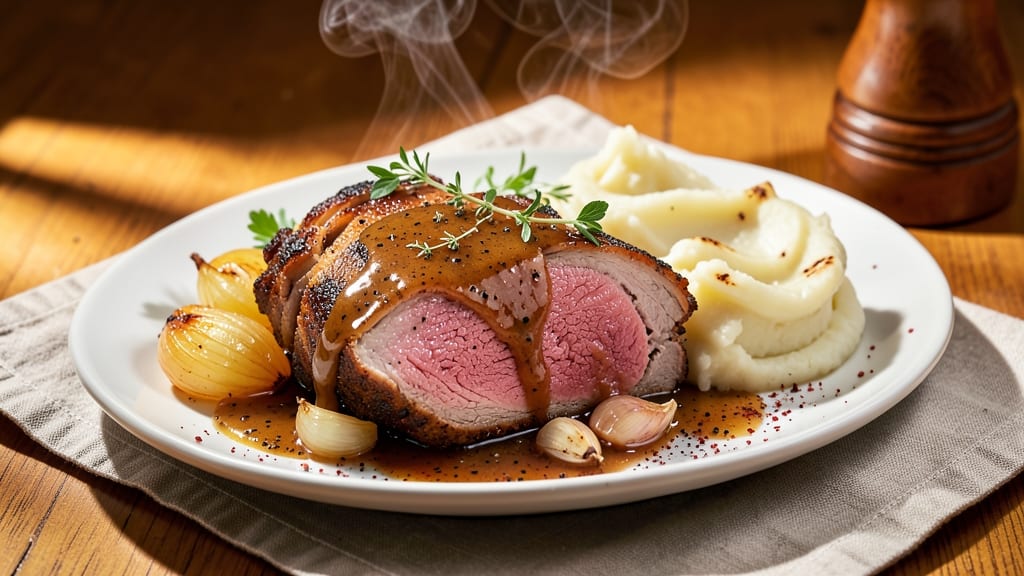
This Mississippi pork pot roast recipe delivers the deep, smoky-sweet flavors that make Southern comfort food legendary. 💛 The secret lies in slow-braising tender pork shoulder with a blend of spices, then finishing with a rich gravy and crispy celery crown topping that adds texture and visual appeal.
I've perfected this technique over years of testing, ensuring every bite delivers that perfect balance of savory, slightly sweet, and herby notes that define Mississippi cooking.
The process begins with a flavorful dry rub of paprika, thyme, and black pepper that creates a fragrant crust on the pork. After browning the meat, it's slow-cooked in a liquid mixture of onions, garlic, and broth until fork-tender.
The key to authentic Mississippi style is the smoky-sweet gravy that forms from the cooking juices, which we then thicken with cornstarch for that perfect silky texture. This isn't just a pot roast—it's a complete meal experience with every element working together.
What you'll end up with is a dish that's rich and satisfying, with perfectly tender pork that falls apart at the touch of a fork. The crispy celery crown topping adds a delightful crunch that contrasts beautifully with the tender meat and velvety gravy.
This recipe serves 6-8 and pairs perfectly with classic Southern sides like creamy mashed potatoes or buttery cornbread. The aroma alone will have your whole house gathering around the table.
Whether you're preparing for a family gathering or simply craving a comforting meal, this Mississippi pork pot roast delivers restaurant-quality results in your own kitchen. The best part? Leftovers reheat beautifully, making this an excellent make-ahead option for busy weeks.
Let's get started on creating this Southern classic that brings warmth and tradition to your dinner table.
Ingredients for mississippi pork pot roast
These 14 ingredients bring legendary Mississippi flavors to your table with smoky-sweet perfection.
| Ingredient | Amount | Notes |
|---|---|---|
| Pork Shoulder 🐖 | 4 lb | Bone-in for best flavor |
| Yellow Onions 🧅 | 2 whole | Medium, sliced into wedges |
| Garlic Cloves 🧄 | 6 cloves | Minced for deep flavor |
| Smoked Paprika 🌶️ | 2 tbsp | For that signature smoky taste |
| Dried Thyme 🌿 | 1 tbsp | Or 1 tbsp fresh thyme leaves |
| Ground Black Pepper 🌶️ | 1 tbsp | Freshly cracked for best flavor |
| Salt 🧂 | 1 ½ tbsp | Diamond Crystal preferred |
| Beef Broth 🥫 | 3 cups | Low-sodium preferred |
| Celery Stalks 🥬 | 4 whole | For crispy crown topping |
| Cornstarch 🌾 | 2 tbsp | For gravy thickening |
| Brown Sugar 🍯 | 2 tbsp | Light or dark works |
| Apple Cider Vinegar 🍎 | 1 tbsp | For tangy depth |
| Butter 🧈 | 2 tbsp | Unsalted for gravy richness |
| Fresh Parsley 🌿 | ¼ cup | Chopped for garnish |
The pork shoulder is non-negotiable here—bone-in gives the best flavor, and you'll find it pre-cut at Costco or your butcher shop. Look for good marbling, and if you can't get bone-in, a thick-cut boneless shoulder works too. Celery for the crown topping should be crisp and fresh—Trader Joe's always has the best selection. The smoked paprika is what gives that authentic Mississippi kick; Penzeys has great options if you want to splurge, but the grocery store stuff works fine. For the thyme, fresh is ideal, but dried works at one-third the amount if that's what you've got. The beef broth should be low-sodium—Swanson or Kitchen Basics are my go-tos.
No smoked paprika? Chili powder at half the amount gets you close, though it won't be as smoky. Short on fresh thyme? Dried oregano works in a pinch, but reduce to 1/4 the amount. The apple cider vinegar adds that tangy depth—if you don't have it, red wine vinegar works too. For the celery crown, baby carrots can be mixed in for extra crunch. The cornstarch is essential for that silky gravy—Bob's Red Mill is my brand of choice, but any cornstarch will do. And if you're watching sugar, monk fruit sweetener can replace half the brown sugar without sacrificing flavor.
This dish tastes even better the next day, so make extra—it reheats beautifully. Store the pork in its juices in the fridge for up to 4 days or freeze for 3 months. The gravy keeps for 5 days in the fridge, and the celery crown stays crisp for 3 days if wrapped tightly in foil. I always double the recipe for gatherings—leftovers make the best sandwiches the next day, and the gravy freezes perfectly for quick weeknight dinners.
Why You'll Love This Recipe
- One-Pot Magic: I swear by this recipe because it’s literally dump-and-go after the initial sear. Brown that pork shoulder, toss in onions and garlic, then layer in the smoked paprika and thyme—no fancy techniques, just hands-off time while the flavors meld.
- Deep Southern Soul: That smoky paprika and thyme? They turn simple pork into something ridiculously rich. The onions caramelize just enough to coat every bite, and the garlic? Oh, it’s the kind of aroma that makes your whole house smell like a Sunday supper.
- Leftovers That Win: Between us, this roast tastes better the next day—yes, even on a Tuesday night. The meat gets fork-tender, and I’ve reheated slices straight from the fridge for sandwiches or tossed them into grits. (Pro tip: Freezes like a dream for lazy nights.)
- Budget-Friendly Feast: Pork shoulder is the unsung hero of affordable proteins, and this recipe stretches it across meals. A single roast feeds my family dinner and lunch the next day, with enough left for my neighbor’s potluck. Minimal ingredients, maximum satisfaction.
Step-by-step instructions for Mississippi pork pot roast
Here's how to transform a simple pork shoulder into melt-in-your-mouth tender meat with a smoky-sweet gravy and crispy celery crown.
🔥 Step 1: Sear the Pork Shoulder for Deep Flavor
Pat the 4 lb pork shoulder completely dry with paper towels—this is non-negotiable for crispy skin. Heat a large Dutch oven over medium-high heat until a drop of water sizzles instantly. Add the pork shoulder and sear on all sides for 5-7 minutes per side until deeply browned and releasing easily from the pan.
Here's the thing—don't rush this step. You want that beautiful mahogany crust that'll carry all those smoky flavors. I like to press down gently on the pork during the first minute to prevent curling. Once browned, remove the pork and set it aside on a plate.
🍳 Step 2: Build the Smoky-Sweet Base
In the same Dutch oven, add 2 tablespoons butter and let it melt completely. Add 2 whole yellow onions (cut into wedges) and 4 whole celery stalks (cut into 1-inch pieces) along with 6 minced garlic cloves. Cook for 8-10 minutes until the onions soften and the celery begins to brown.
Now stir in 2 tablespoons smoked paprika, 1 tablespoon dried thyme, 1 tablespoon ground black pepper, and 1.5 tablespoons salt. Let these spices toast in the pan for 1 minute—you'll smell that rich, smoky aroma developing. This is where all the magic happens. Pour in 1 tablespoon apple cider vinegar and scrape up all those delicious browned bits from the bottom of the pan.
🥘 Step 3: Braise Until Fork-Tender
Return the pork shoulder to the Dutch oven, fat-side up. Add 3 cups beef broth and 2 tablespoons brown sugar, then bring to a gentle simmer. Here's the key: cover tightly and reduce heat to low (275°F). This is a long, slow cook—3-4 hours until the pork is fork-tender and falling apart easily.
I know it's tempting to peek, but every time you lift that lid, you're adding 15-20 minutes to your cook time. The pork is ready when it reaches 203°F internally and the meat pulls apart with just a gentle tug. The celery should be tender but still holding its shape—this will crisp up beautifully later.
🔪 Step 4: Create the Celery Crown Topping
While the pork finishes cooking, preheat your broiler to high. Remove the celery stalks from the braising liquid and pat them completely dry with paper towels. Arrange them in a single layer on a baking sheet, cut-side up. Broil for 3-5 minutes until deeply golden brown and crispy—watch them closely so they don't burn.
This crispy celery crown is what makes this dish truly special. The contrast between the tender pork and the crunchy celery is incredible. While the celery crisps, remove the pork from the pot and let it rest for 15 minutes. This resting time is crucial—it lets the juices redistribute so every bite is moist and flavorful.
🍽️ Step 5: Make the Smoky-Sweet Gravy
Return the pork to the braising liquid and skim off any excess fat that rose to the top. In a small bowl, whisk together 2 tablespoons cornstarch and 2 tablespoons cold water to make a slurry. Slowly stir this into the hot liquid while whisking constantly for 2-3 minutes until the gravy thickens to your desired consistency.
Taste and adjust seasoning—you might need a bit more salt or a splash of vinegar to balance the sweetness. The gravy should coat the back of a spoon and be rich but not gluey. Garnish the finished dish with ¼ cup chopped fresh parsley and serve the pork with the crispy celery crown on top, ladled with that smoky-sweet gravy.
Pro Tips For Making Mississippi Pork Pot Roast
- SEAR THE PORK FIRST: Don’t just toss that pork shoulder into the pot—get it golden brown in a hot Dutch oven with oil first. I used to skip this, and the flavor was always flat. Two minutes per side with the heat cranked up makes a real difference, especially when you’re adding those smoky spices later.
- CHOP ONIONS COARSELY: Thinly sliced onions turn mushy and disappear into the sauce. Cut them into ½-inch chunks so they hold their shape and add texture. My grandmother swore by this, and she was right: you want that bite in every bite, not just a flavor ghost.
- DON’T RUSH THE LOW HEAT: After the initial sear, drop the heat to a simmer and walk away for at least 2.5 hours—no, 3 hours is better. I learned this the hard way when I tried to speed it up and ended with dry, stringy pork. Patience here means fork-tender meat every time.
- TOAST THE SPICES: Bloom the smoked paprika and thyme in the pot for 30 seconds before adding liquid. Sounds weird, but it works: the spices release their aroma and stick to the pork instead of floating away. Skip this, and your dish will still be good—but it’ll taste like it’s missing something.
Troubleshooting great mississippi pork pot roast
Pork Too Tough
If your pork shoulder isn't tender after 3-4 hours of braising, you likely need to extend the cook time by another 1-2 hours at 275°F. The meat should pull apart easily with a fork—if it doesn't, it's not done yet.
I've found that bone-in cuts require 15-30 minutes longer than boneless to reach the same tenderness. 💪
Another common issue is starting with a leaner cut. Look for pork shoulder with good marbling—fat equals flavor and moisture. If your cut is particularly lean, add 1 extra cup of beef broth during braising to compensate. Also, check your internal temperature—it needs to reach 203°F for true tenderness.
Gravy Too Thin
The most likely reason for runny gravy is not thickening it properly. Always whisk the cornstarch slurry into hot liquid gradually while stirring constantly. For extra insurance, let the gravy simmer uncovered for 5 minutes after thickening to reduce any excess liquid.
If it's still too thin, mix 1 tsp cornstarch with 1 tsp cold water and stir in again. 🥄
Another culprit could be using too much liquid during braising. For this recipe, stick to exactly 3 cups beef broth—any more will dilute the flavor and make thickening more difficult.
If you accidentally used more, simmer the braising liquid uncovered for 10-15 minutes before making your slurry to reduce the volume first.
Celery Not Crispy
Underbroiled celery is the #1 reason for limp celery crowns. Always preheat your broiler to high before adding the celery, and watch it closely—3-5 minutes is the perfect window. The celery should be golden brown with visible char marks.
If yours came out pale, return it to the broiler for 1-2 minutes more at a time until properly browned. 🥬
Moisture is another enemy of crispy celery. Pat the celery stalks completely dry with paper towels before broiling—any remaining moisture will steam the celery instead of crisping it. Also, make sure they're in a single layer with space between them for even browning. Crowding will lead to uneven cooking.
Weak Flavor Profile
If your dish lacks depth, the spices probably didn't toast enough. Always let the smoked paprika, thyme, and black pepper cook in the butter for 1 full minute before adding vinegar—this develops their flavors.
For extra punch, add ½ tsp cayenne pepper to the spice mix. I also recommend browning the pork longer—7-8 minutes per side instead of 5-7—for a deeper crust. 🌶️
Another trick is to deglaze the pan properly after searing. After removing the pork, pour in the 1 tbsp apple cider vinegar and let it bubble for 30 seconds to lift all those browned bits from the bottom.
These bits are flavor gold—don't scrape them out! They'll form the base of your gravy and add richness to the dish.
Uneven Cooking
If some parts of your pork are overcooked while others remain tough, your heat source is likely uneven. Dutch ovens can create hot spots, so stir the braising liquid occasionally to distribute heat.
For even better results, place your Dutch oven on the middle rack in your oven instead of the bottom. This ensures more consistent heat circulation around the pork. ⚡
Also consider your pot size—if your Dutch oven is too large for the amount of pork, the liquid won't circulate properly. For a 4 lb pork shoulder, a 6-7 quart Dutch oven is ideal.
If yours is larger, reduce the broth to 2½ cups instead of 3 cups to maintain proper liquid-to-meat ratio.
Nutrition facts
Frequently asked questions
Can I substitute bone-in pork shoulder with boneless?
Yes, but you'll need to adjust the cook time slightly. Boneless pork shoulder cooks about 30-45 minutes faster than bone-in. Aim for 2.5-3 hours instead of 3-4 hours, checking for 203°F internal temperature. The bone helps retain moisture, so if using boneless, add ½ cup extra broth to the braising liquid.
What's the best way to reheat leftovers?
For best results, reheat leftovers in the oven at 325°F for 20-25 minutes covered with foil, then broil for 2-3 minutes to crisp any softened celery crown. Avoid microwaving—the pork can become dry. The gravy reheats well separately on the stovetop over medium-low heat, stirring constantly.
How can I make this dish ahead of time?
This recipe is perfect for meal prep! Braise the pork completely and refrigerate it in its juices for up to 4 days. The next day, reheat in the oven as mentioned above. For the gravy, make it fresh when ready to serve—it thickens best when reheated. The celery crown can be made 1 day ahead and stored in an airtight container, reheating at 350°F for 5 minutes to restore crispness.
What sides pair best with Mississippi pork pot roast?
Classic Southern sides elevate this dish perfectly. Try creamy mashed potatoes with roasted garlic, buttery cornbread, or collard greens cooked with smoked turkey. For a lighter option, steamed green beans with almonds or apple salad with crisp apples and tangy dressing balance the richness beautifully. The smoky-sweet flavors also pair wonderfully with corn pudding or biscuits.
Can I use a slow cooker instead of an oven?
For a 6-8 hour cook on low or 3-4 hours on high, follow the same searing and spice steps. After browning the pork, transfer everything to your slow cooker (including the braising liquid) and cook until tender. The celery crown will need to be made separately—broil it right before serving. The gravy will be thinner, so reduce it on the stovetop after removing the pork to achieve the perfect consistency.